


No moment wasted: the primary-care visit for adults with diabetes and low socio-economic status
- PMID: 25991075
- PMCID: PMC4697285
- DOI: 10.1017/S1463423615000134
No moment wasted: the primary-care visit for adults with diabetes and low socio-economic status
Abstract
Aim: To better understand the type and range of health issues initiated by patients and providers in 'high-quality' primary-care for adults with diabetes and low socio-economic status (SES).
Background: Although quality of care guidelines are straightforward, diabetes visits in primary care are often more complex than adhering to guidelines, especially in adults with low SES who experience many financial and environmental barriers to good care.
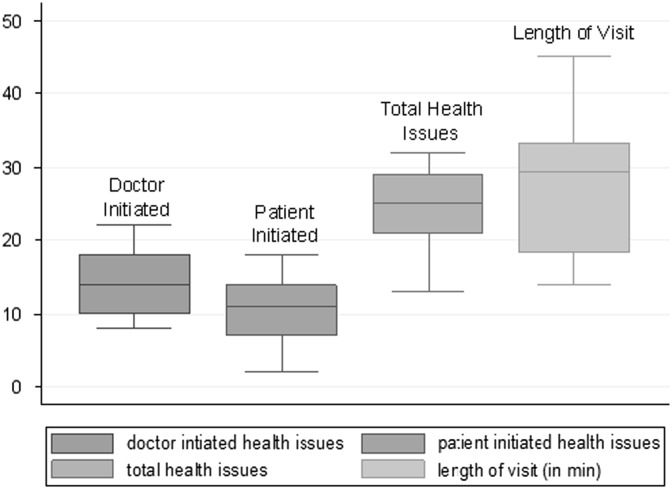
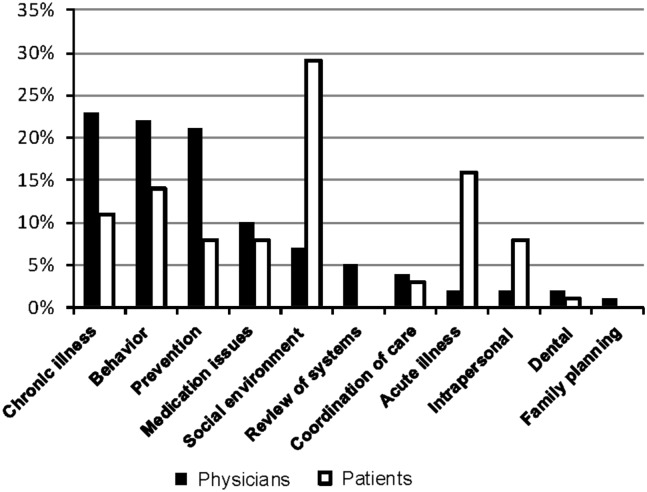
Methods: We conducted a qualitative study using direct observation of primary-care diabetes visits at an exemplar safety net practice in 2009-2010. Findings In a mainly African American (93%) low-income population with fair cardiovascular control (mean A1c 7.5%, BP 134/81 mmHg, and low-density lipoprotein cholesterol 100 mg/dL), visits addressed a variety of bio-psychosocial health issues [median: 25 problems/visit (range 13-32)]. Physicians most frequently initiated discussions about chronic diseases, prevention, and health behavior. Patients most frequently initiated discussions about social environment and acute symptoms followed by prevention and health behavior.
Conclusions: Primary-care visits by diabetes patients with low SES address a surprising number and diversity of problems. Emerging new models of primary-care delivery and quality measurement should allow adequate time and resources to address the range of tasks necessary for integrating biomedical and psychosocial concerns to improve the health of socio-economically disadvantaged patients.
Keywords: diabetes; primary care; qualitative research.
Figures
References
-
- AHRQ. 2010: National healthcare disparities report. Agency for Healthcare Research and Quality. Retrieved 19 July 2013 from http://www.ahrq.gov/research/findings/nhqrdr/nhdr10/pdf/nhdr10.pdf.
-
- Boeije H. 2002: A purposeful approach to the constant comparative method in the analysis of qualitative interviews. Quality and Quantity 36, 391–409.
Publication types
MeSH terms
Grants and funding
LinkOut - more resources
Full Text Sources
Medical
