


Simplified type 3 implant placement, after alveolar ridge preservation: a case study
- PMID: 25992262
- PMCID: PMC4402685
Simplified type 3 implant placement, after alveolar ridge preservation: a case study
Abstract
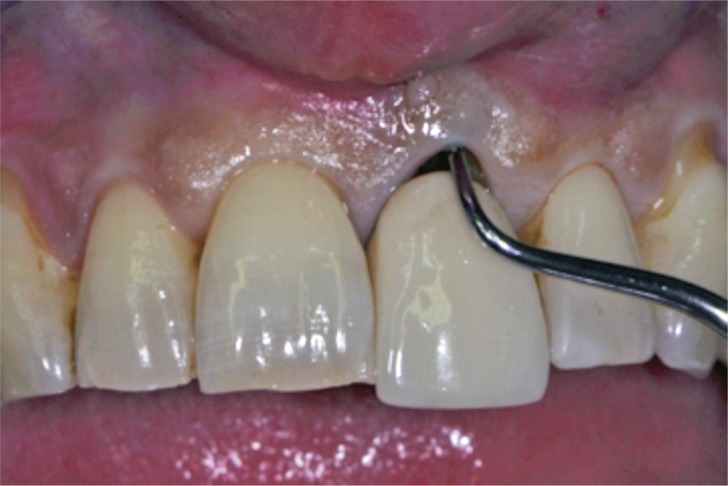
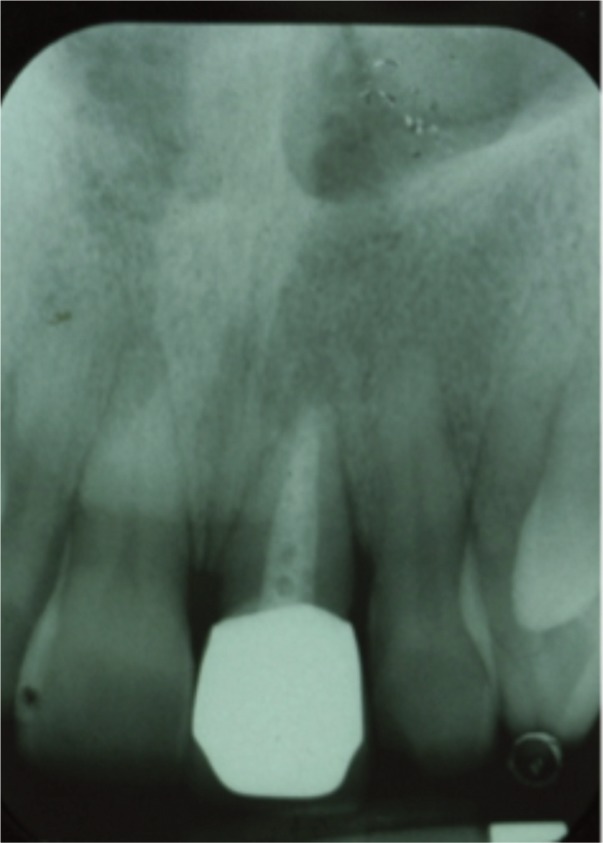
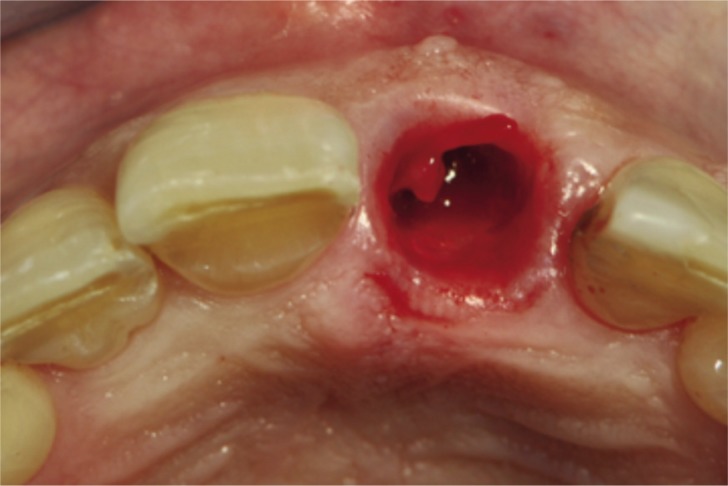
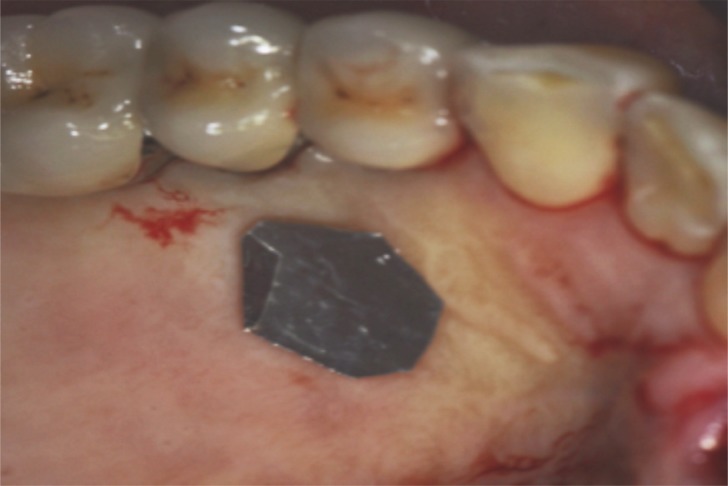
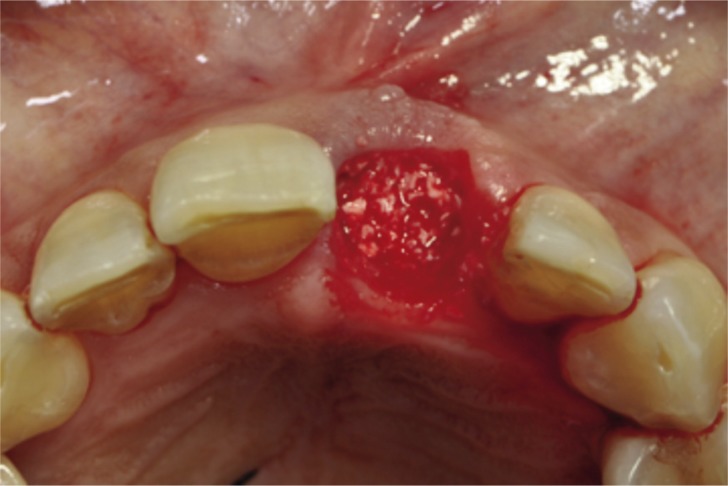
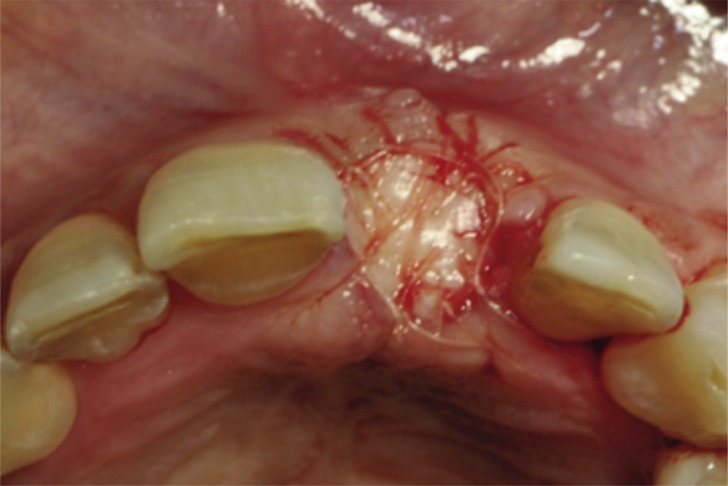
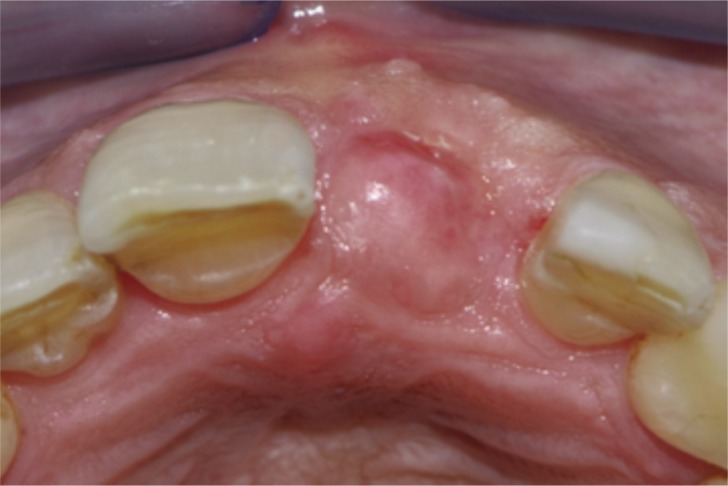
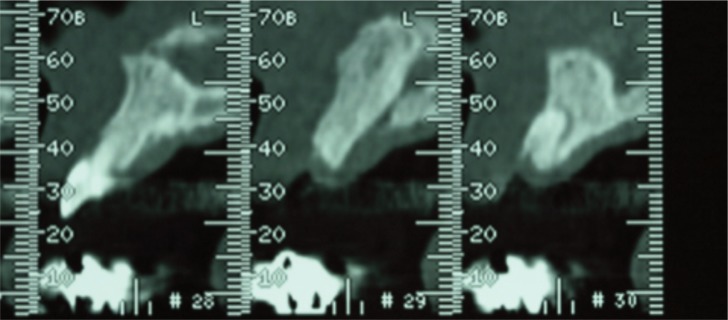
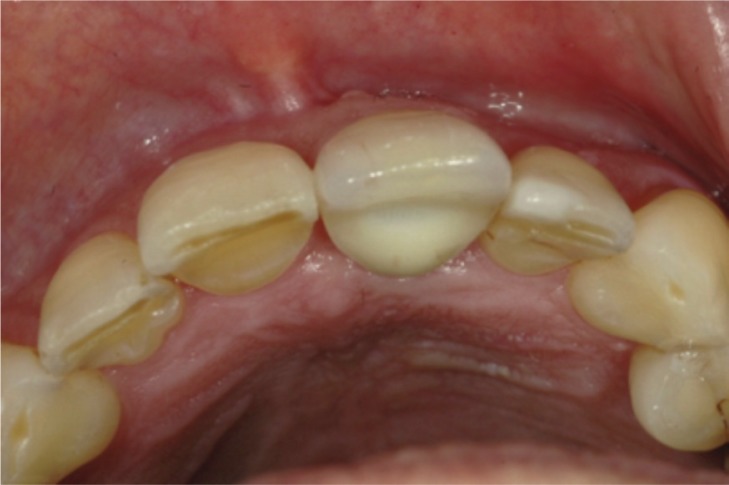
Alveolar ridge, after tooth extraction, could reduce its volume up to 50% in buccal-lingual width in the first twelve months and residual dimensions could interfere with correct three dimensional placement of implants and influence negatively treatment outcomes with regard to function and aesthetic aspects. Over the last decades, several approaches have been proposed and tested in order to prevent ridge volumetric contraction and provide maximum bone availability for implant procedure. This article presents a case study with a single anterior tooth replacement, illustrating socket seal technique followed by a type 3 timing implant placement. Immediately after tooth extraction, residual socket was grafted using Deproteinized Bovine Bone Mineral and a free gingival punch harvested from palate. After 3 months, a root-form titanium implant was inserted without additional regenerative procedures. Follow-up examination revealed favourable preservation of soft tissue width and height in the aesthetic area. Socket seal approach maximizes soft tissue healing, preserving ridge envelope and the subsequent implant placement, furthermore, results simplified, as any augmentation techniques are required. Clinical advantages of this method include predictable preservation of the soft tissues, favourable healing features, easy handling of graft materials and a positive benefit-cost ratio.
Keywords: gbr; ridge preservation; socket preservation.
Figures
References
-
- Tan WL, Wong TLT, Wong MCM, Lang NP. A systematic review of post-extractional alveolar hard and soft tissue dimensional changes in humans. Clin Oral Impl Res. 2012;23(Suppl. 5):1–21. - PubMed
-
- Van der Weijden F, Dell’Acqua F, Slot DE. Alveolar bone dimensional changes of post-extraction sockets in humans: a systematic review. J Clin Periodontol. 2009;36:1048–1058. - PubMed
-
- Darby I, Chen S, De Poi R. Ridge preservation: What is it and when should it be considered? Aust Dent J. 2008;53:11–21. - PubMed
-
- Dietrich U, Lippold R, Dirmeier T, Behneke N, Wagner W. Statistische Ergebnisse zur Implantatprognose am Beispiel von 2017 IMZ-Implantaten unterschiedlicher Indikationen der letzen 13 Jahre. Zeitschrift für Zahnärztliche Implantologie. 1993;9:9–18.
-
- Darby I, Chen S, Buser D. Ridge Preservation Techniques for Implant Therapy. Int J Oral Maxillofac Implants. 2009;24:260–271. - PubMed
Publication types
LinkOut - more resources
Full Text Sources