. 2015 May 20;10(5):e0126161.
doi: 10.1371/journal.pone.0126161. eCollection 2015.

Two Novel Motifs of Watermelon Silver Mottle Virus NSs Protein Are Responsible for RNA Silencing Suppression and Pathogenicity

Affiliations

Two Novel Motifs of Watermelon Silver Mottle Virus NSs Protein Are Responsible for RNA Silencing Suppression and Pathogenicity

Chung-Hao Huang et al. PLoS One. .

Abstract

The NSs protein of Watermelon silver mottle virus (WSMoV) is the RNA silencing suppressor and pathogenicity determinant. In this study, serial deletion and point-mutation mutagenesis of conserved regions (CR) of NSs protein were performed, and the silencing suppression function was analyzed through agroinfiltration in Nicotiana benthamiana plants. We found two amino acid (aa) residues, H113 and Y398, are novel functional residues for RNA silencing suppression. Our further analyses demonstrated that H113 at the common epitope (CE) ((109)KFTMHNQ(117)), which is highly conserved in Asia type tospoviruses, and the benzene ring of Y398 at the C-terminal β-sheet motif ((397)IYFL(400)) affect NSs mRNA stability and protein stability, respectively, and are thus critical for NSs RNA silencing suppression. Additionally, protein expression of other six deleted (ΔCR1-ΔCR6) and five point-mutated (Y15A, Y27A, G180A, R181A and R212A) mutants were hampered and their silencing suppression ability was abolished. The accumulation of the mutant mRNAs and proteins, except Y398A, could be rescued or enhanced by co-infiltration with potyviral suppressor HC-Pro. When assayed with the attenuated Zucchini yellow mosaic virus vector in squash plants, the recombinants carrying individual seven point-mutated NSs proteins displayed symptoms much milder than the recombinant carrying the wild type NSs protein, suggesting that these aa residues also affect viral pathogenicity by suppressing the host silencing mechanism.


Conflict of interest statement

Competing Interests: The authors have declared that no competing interests exist.

Figures

Fig 1
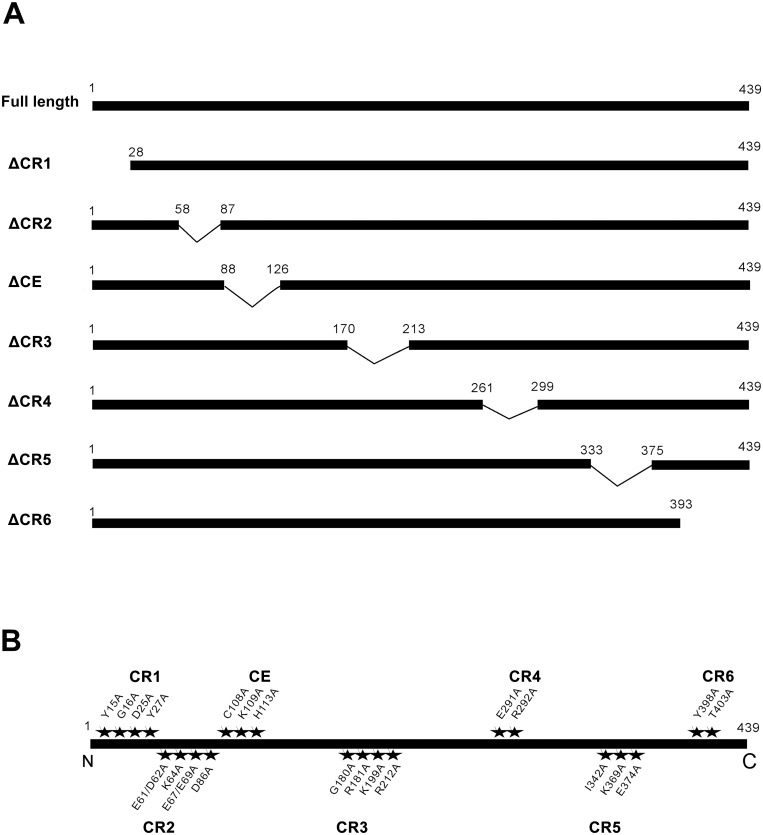
Fig 1. Mutated NSs proteins for analyzing RNA silencing suppression function.
(A) The maps of different mutants with individual deletions of the highly conserved regions (ΔCR1-ΔCR 6) or the common epitope NSscon (ΔCE) of the NSs protein of Watermelon silver mottle virus (WSMoV). The aa positions of the individual deleted regions are indicated. (B) The aa positions locating on each conserved region chosen for alanine-mutagenesis in this study.
Fig 2
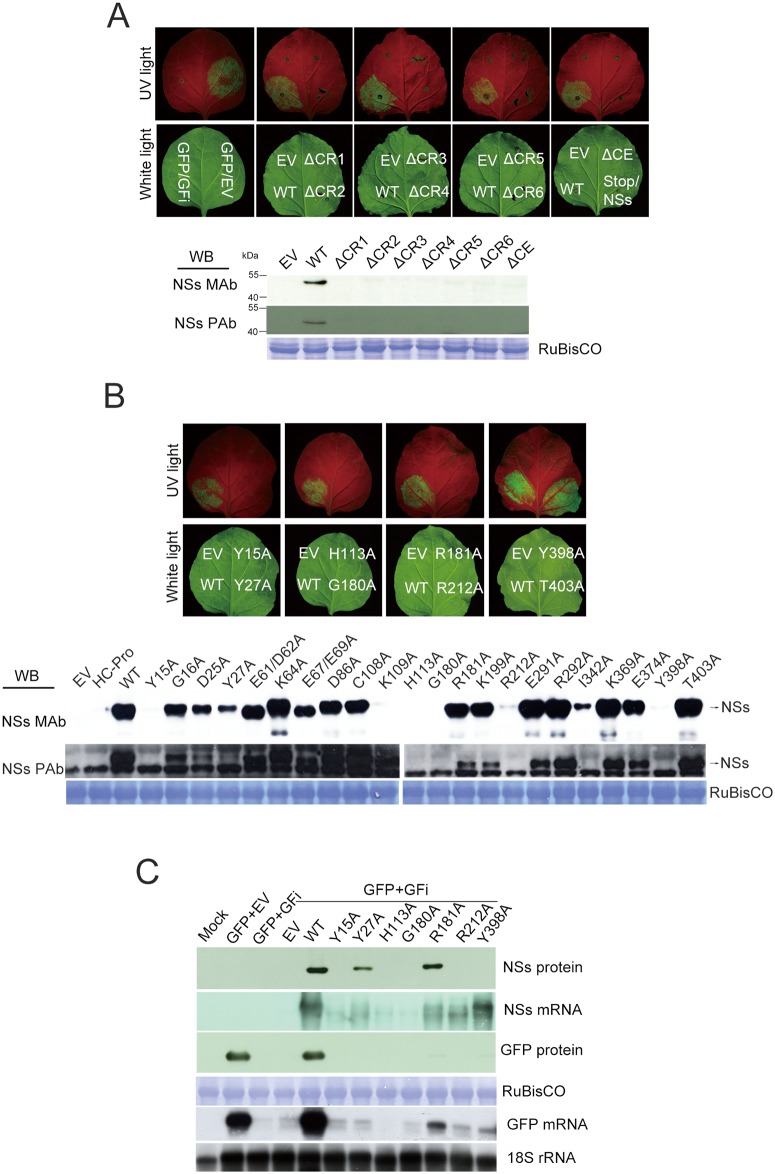
Fig 2. Analysis of RNA silencing suppression function of individually deleted or point-mutated NSs proteins by agroinfiltration in N. benthamiana plants.
The leaf areas agroinfiltrated with each deleted (A, upper panel) or point-mutated (B, upper panel) NSs constructs were examined under UV and white light. The GFP fluorescence was recorded at 4 days after co-infiltration (dpa) of Agrobacterium separately carrying pBA-GFP (the expresser), pBA-GFi (the silencing inducer) and individual constructs with deleted or point mutated NSs proteins described in Fig 1A and 1B. Western blotting was performed for the detection of individually deleted (A, lower panel) or point-mutated (B, lower panel) NSs proteins expressed at 4 dpa. NSs monoclonal (MAb) and NSs polyclonal antibodies (PAb) were used for detecting NSs protein or NSs protein in which the common epitope was mutated, respectively. Expression levels of point-mutated NSs proteins, NSs mRNA, GFP and GFP mRNA were detected at 4 dpa (C). Coomassie blue-stained RuBisCO protein was used as loading controls for proteins and 18S rRNA used as loading controls for RNAs.
Fig 3
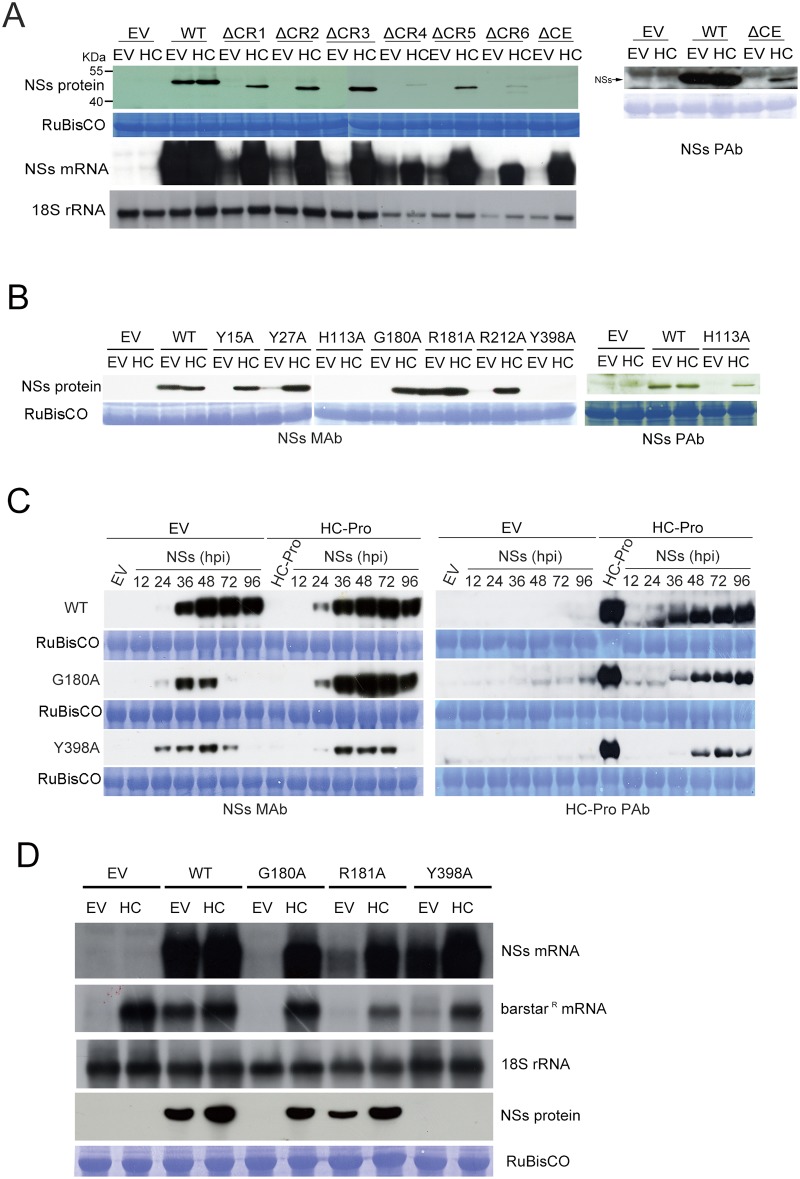
Fig 3. Expression levels of deleted and point-mutated NSs proteins analyzed by co-infiltration with potyviral suppressor HC-Pro.
(A) Expression levels of protein and mRNA of deleted NSs mutants, following co-infiltration of the empty vector (EV) or HC-Pro (HC), detected at 4 day post agroinfiltration (dpa) by anti-NSs MAb (left panel) or PAb (right panel) and α-32P labeled NSs-probe, respectively. (B) Expression levels of point-mutated NSs proteins, following co-infiltration with the empty vector or HC-Pro, detected at 4 dpa by anti-NSs MAb (left panel) or PAb (right panel). (C) Time-course detection of the protein expression levels of the NSs mutants, G180A and Y398A, at different hours post infiltration (hpi) with EV or HC, detected by anti-NSs MAb (left panel) or anti-HC-Pro PAb (right panel). (D) Expression levels of G180A, R181A and Y398A NSs proteins, mRNA and barstarR mRNA following co-infiltration of EV or HC construct, detected at 4 dpa. Coomassie Blue stained-RuBisCO proteins or 18S rRNA were used as loading controls.
Fig 4
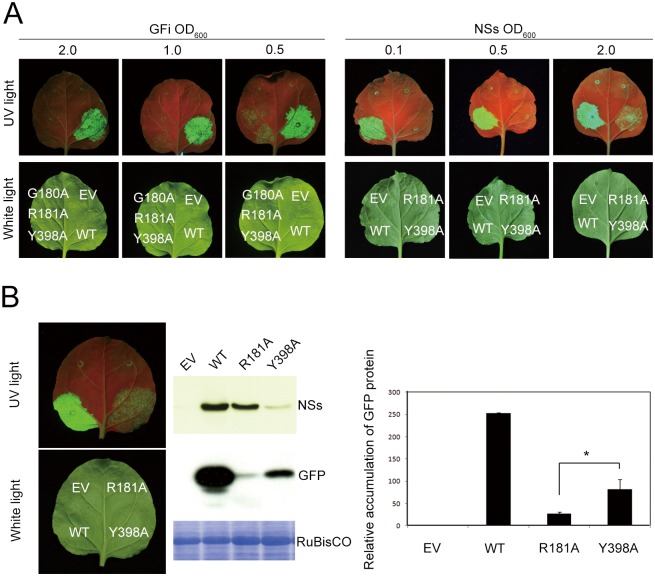
Fig 4. Analysis of RNA silencing suppression capability of mutated R181A and Y398A NSs proteins.
(A) GFP intensity at leaf areas co-infiltrated with Agrobacterium strain carrying individual point-mutated NSs constructs and the strains separately carrying pBA-GFP and pBA-GFi constructs, recorded under white light or UV light illumination at 4 days post agroinfiltration (dpa). The concentrations of Agrobacterium culture carrying pBA-GFi (left panel) or individual NSs (right panel) constructs are shown on the top of each panel. The concentrations of Agrobacterium carrying pBA-GFP and NSs constructs (left panel) or pBA-GFP and pBA-GFi constructs (right panel) were adjusted to OD600 = 1.0. (B) Left panel: silencing suppression analyzed at 4 dpa. The relative proportions of Agrobacterium was 1:0.5:2 for GFP:GFi:NSs. Middle panel: western blotting was conducted for detection of mutated NSs protein and GFP protein from the leaf areas co-infiltrated with Agrobacterium cultures carrying GFP, hairpin GFP and individual NSs constructs. Total protein was extracted at 4 dpa. Coomassie blue stained RuBisCO proteins were used as loading controls. Right panel: The number indicates the relative accumulation of GFP co-infiltrated with individual NSs constructs, as quantified by Kodak image system 4000MM software. Statistically significant difference is indicated by “*”(n = 3, P = 0.012 < 0.05.).
Fig 5
Fig 5. Characterization of Y398 on NSs self-interaction and protein stability.
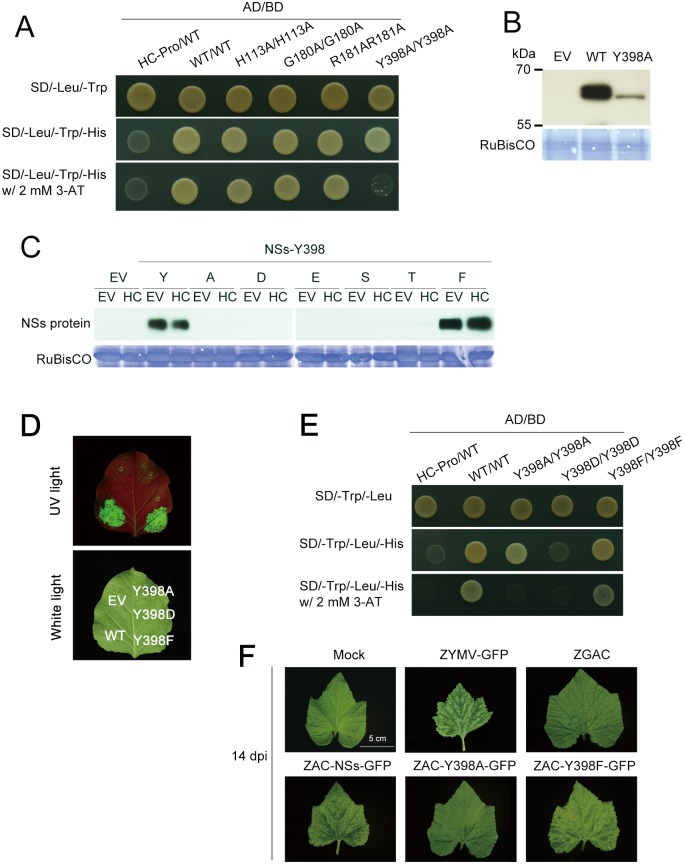
(A) Self-interaction analysis of NSs and mutants protein. Each co-transformed yeast cells grown on SD medium lacking Histidine (His), Leucine (Leu) and Tryptophan (Trp) without or with 2 mM of 3-AT. AD: activation domain, BD: binding domain. (B) Western blotting for detection of NSs protein expressed in yeast cells which were transformed with wild type NSs or Y398A construct. (C) Western blotting for detection of individual point-mutated NSs constructs, including wild type Y, mutated A, D, E, S, T, and F residues at the aa position 398 of NSs protein, co-infiltrated with empty vector (EV) or HC-Pro (HC-Pro) construct at 4 days post-agroinfiltration (dpa). Anti-NSs MAb was used for detecting NSs protein. Coomassie blue stained RuBisCO proteins were used as loading controls. (D) The RNA silencing suppression function of mutated NSs, Y398A, Y398D and Y398F, analyzed at 4 dpa. The relative proportions of Agrobacterium was 1:0.5:1 for GFP:GFi:NSs. (E) The self-interaction of mutated NSs, Y398A, Y398D and Y398F were examined by yeast two hybrid analysis. (F) Symptoms on squash plants after inoculation of individual ZYMV recombinants carrying Y398A or Y398F at 14 days post-infection.
Fig 6
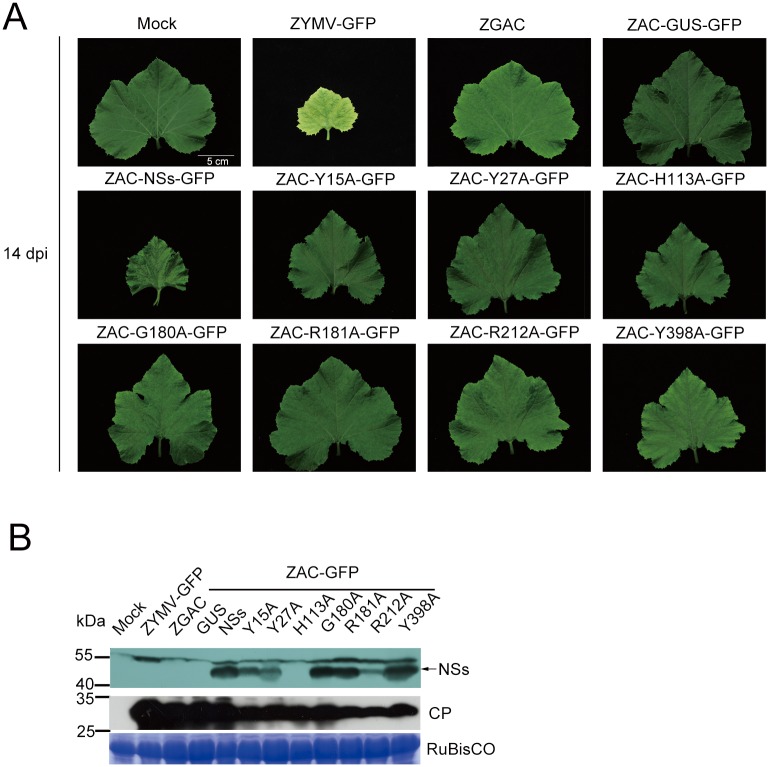
Fig 6. Symptoms on squash plants after inoculation with Zucchini yellow mosaic virus (ZYMV) recombinant viruses carrying different point-mutated NSs proteins.
(A) Symptoms on squash plants inoculated with individual ZYMV recombinants at 14 days post-infection (dpi). (B) Detection of mutated NSs proteins expressed by individual ZYMV recombinants at 14 dpi using anti-NSs MAb or anti-ZYMV CP PAb. Coomassie blue-stained RuBisCO protein was used as loading controls.

References

    1. Curaba J, Chen X. Biochemical activities of Arabidopsis RNA-dependent RNA polymerase 6. J Biol Chem. 2008; 283: 3059–3066. - PMC - PubMed
    1. Fukunaga R, Doudna JA. dsRNA with 5' overhangs contributes to endogenous and antiviral RNA silencing pathways in plants. EMBO J. 2009; 28: 545–555. 10.1038/emboj.2009.2 - DOI - PMC - PubMed
    1. Peragine A, Yoshikawa M, Wu G, Albrecht HL, Poethig RS. SGS3 and SGS2/SDE1/RDR6 are required for juvenile development and the production of trans-acting siRNAs in Arabidopsis. Genes Dev. 2004; 18: 2368–2379. - PMC - PubMed
    1. Mourrain P, Beclin C, Elmayan T, Feuerbach F, Godon C, Morel JB, et al. Arabidopsis SGS2 and SGS3 genes are required for posttranscriptional gene silencing and natural virus resistance. Cell. 2000; 101: 533–542. - PubMed
    1. Ruiz-Ferrer V, Voinnet O. Roles of plant small RNAs in biotic stress responses. Annu Rev Plant Biol. 2009; 60: 485–510. 10.1146/annurev.arplant.043008.092111 - DOI - PubMed

Publication types

MeSH terms

LinkOut - more resources