


Alcohol-related risk of suicidal ideation, suicide attempt, and completed suicide: a meta-analysis
- PMID: 25993344
- PMCID: PMC4439031
- DOI: 10.1371/journal.pone.0126870
Alcohol-related risk of suicidal ideation, suicide attempt, and completed suicide: a meta-analysis
Erratum in
-
Correction: Alcohol-Related Risk of Suicidal Ideation, Suicide Attempt, and Completed Suicide: A Meta-Analysis.PLoS One. 2020 Oct 29;15(10):e0241874. doi: 10.1371/journal.pone.0241874. eCollection 2020. PLoS One. 2020. PMID: 33119688 Free PMC article.
Expression of concern in
-
Expression of Concern: Alcohol-Related Risk of Suicidal Ideation, Suicide Attempt, and Completed Suicide: A Meta-Analysis.PLoS One. 2022 Dec 19;17(12):e0279589. doi: 10.1371/journal.pone.0279589. eCollection 2022. PLoS One. 2022. PMID: 36534677 Free PMC article. No abstract available.
Abstract
Background: Several original studies have investigated the effect of alcohol use disorder (AUD) on suicidal thought and behavior, but there are serious discrepancies across the studies. Thus, a systematic assessment of the association between AUD and suicide is required.
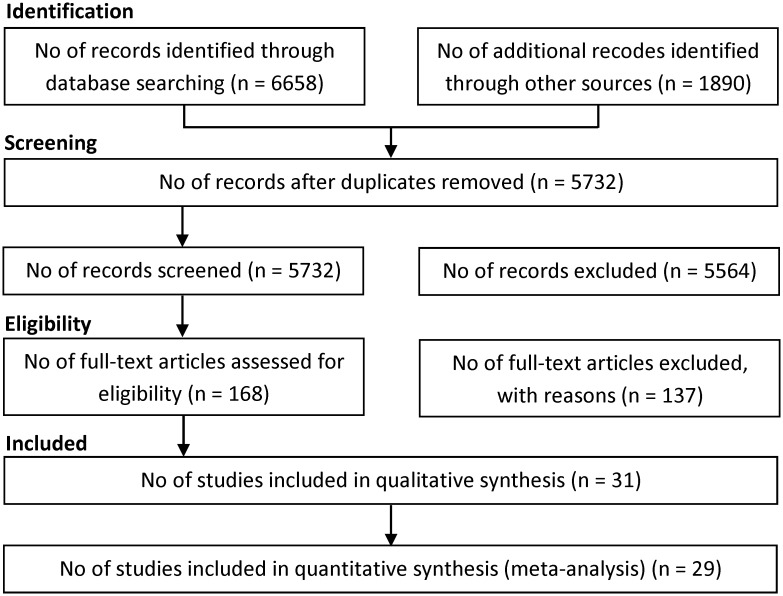
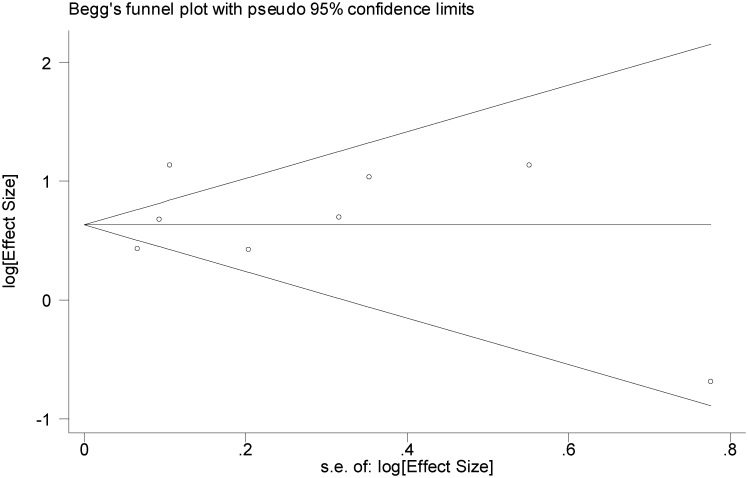
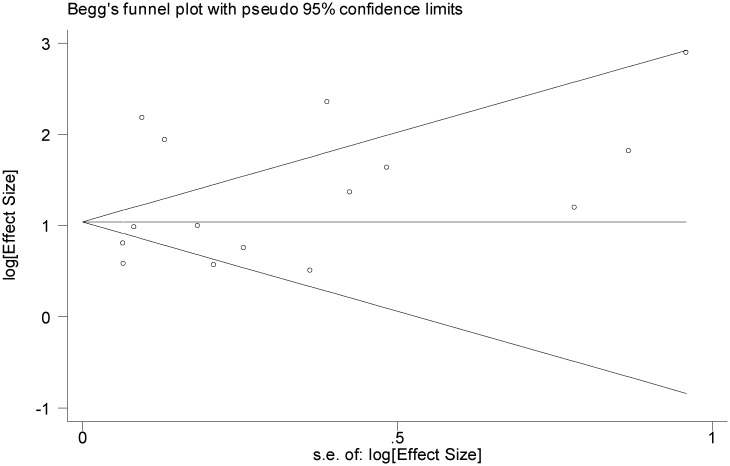
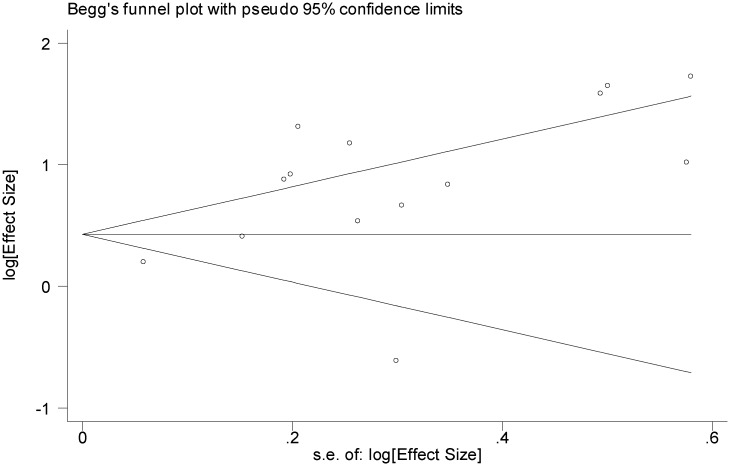
Methods: We searched PubMed, Web of Science, and Scopus until February 2015. We also searched the Psycinfo web site and journals and contacted authors. We included observational (cohort, case-control, and cross-sectional) studies addressing the association between AUD and suicide. The exposure of interest was AUD. The primary outcomes were suicidal ideation, suicide attempt, and completed suicide. We assessed heterogeneity using Q-test and I2 statistic. We explored publication bias using the Egger's and Begg's tests and funnel plot. We meta-analyzed the data with the random-effects models. For each outcome we calculated the overall odds ratio (OR) or risk ratio (RR) with 95% confidence intervals (CI).
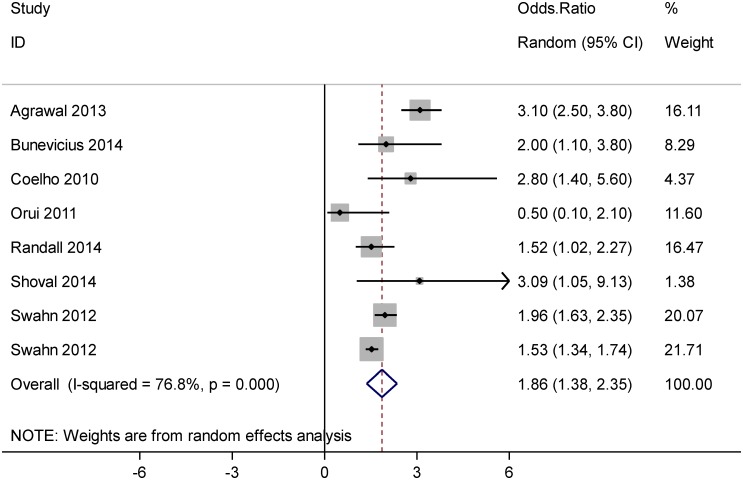
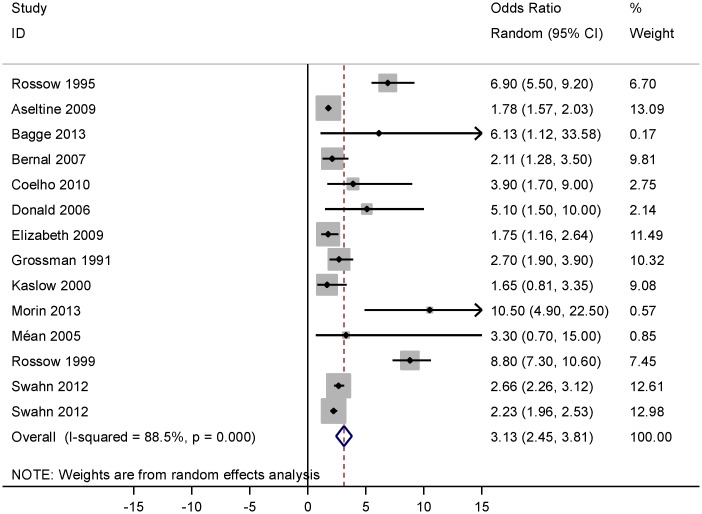
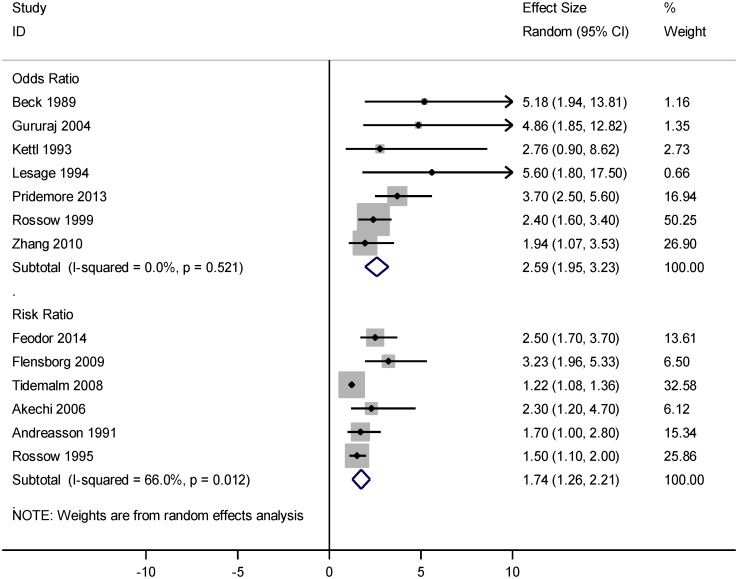
Results: We included 31 out of 8548 retrieved studies, with 420,732 participants. There was a significant association between AUD and suicidal ideation (OR=1.86; 95% CI: 1.38, 2.35), suicide attempt (OR=3.13; 95% CI: 2.45, 3.81); and completed suicide (OR=2.59; 95% CI: 1.95, 3.23 and RR=1.74; 95% CI: 1.26, 2.21). There was a significant heterogeneity among the studies, but little concern to the presence of publication bias.
Conclusions: There is sufficient evidence that AUD significantly increases the risk of suicidal ideation, suicide attempt, and completed suicide. Therefore, AUD can be considered an important predictor of suicide and a great source of premature death.
Conflict of interest statement
Figures
References
-
- World Health Organization. Suicide prevention. Geneva: WHO; 2013.
-
- World Health Organization; Suicide prevention (SUPRE). Geneva: WHO; 2013.
-
- Centers for Disease Control and Prevention. Understanding suicide: fact sheet. Atlanta: CDC; 2013.
-
- World Health Organization. 10 facts on injuries and violence Beginning. Geneva: WHO; 2013.
Publication types
MeSH terms
Substances
LinkOut - more resources
Full Text Sources
Other Literature Sources
Medical
