


Patient-controlled epidural analgesia or multimodal pain regimen with periarticular injection after total hip arthroplasty: a randomized, double-blind, placebo-controlled study
- PMID: 25995489
- PMCID: PMC4430099
- DOI: 10.2106/JBJS.N.00698
Patient-controlled epidural analgesia or multimodal pain regimen with periarticular injection after total hip arthroplasty: a randomized, double-blind, placebo-controlled study
Abstract
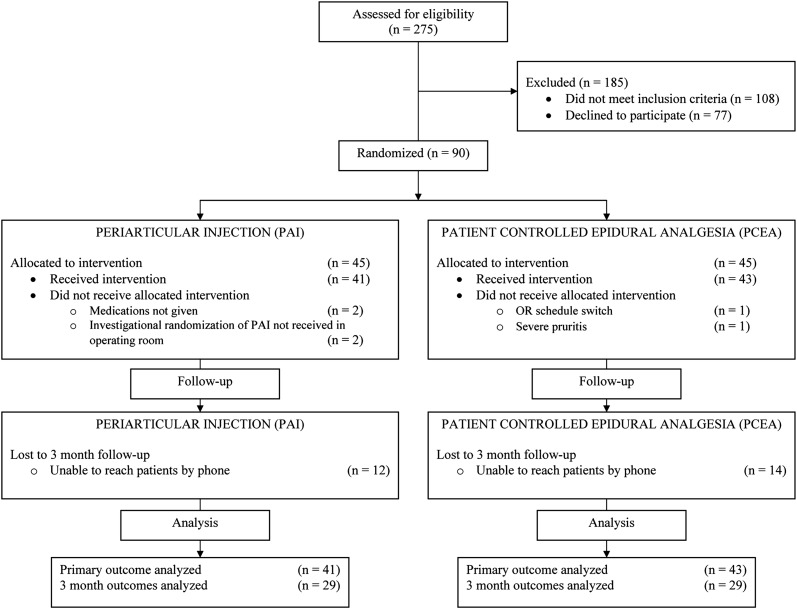
Background: The optimal postoperative analgesia after primary total hip arthroplasty remains in question. This randomized, double-blind, placebo-controlled study compared the use of patient-controlled epidural analgesia (PCEA) with use of a multimodal pain regimen including periarticular injection (PAI). We hypothesized that PAI would lead to earlier readiness for discharge, decreased opioid consumption, and lower pain scores.
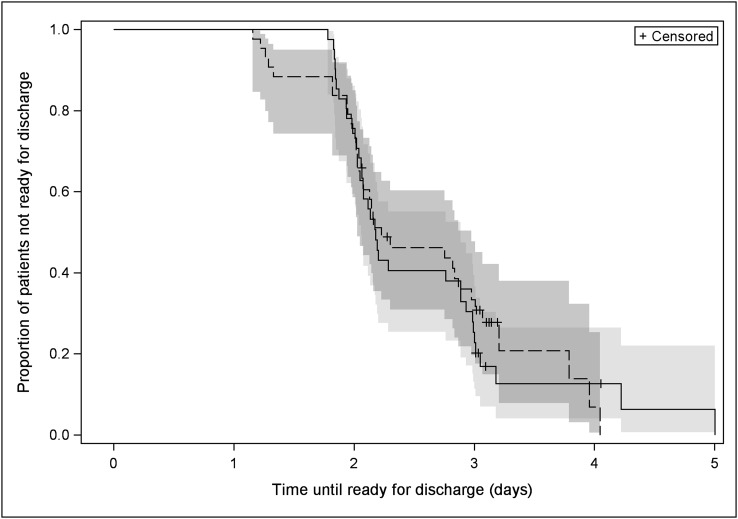
Methods: Forty-one patients received PAI, and forty-three patients received PCEA. Preoperatively, both groups were administered dexamethasone (6 mg, orally). The PAI group received a clonidine patch and sustained-release oxycodone (10 mg), while the PCEA group had placebo. Both groups received combined spinal-epidural anesthesia and used an epidural pain pump postoperatively; the PAI group had normal saline solution, while the PCEA group had bupivacaine and hydromorphone. The primary outcome, readiness for discharge, required the discontinuation of the epidural, a pain score of <4 (numeric rating scale) without parenteral narcotics, normal eating, minimal nausea, urination without a catheter, a dry surgical wound, no acute medical problems, and the ability to independently transfer and walk 12.2 m (40 ft).
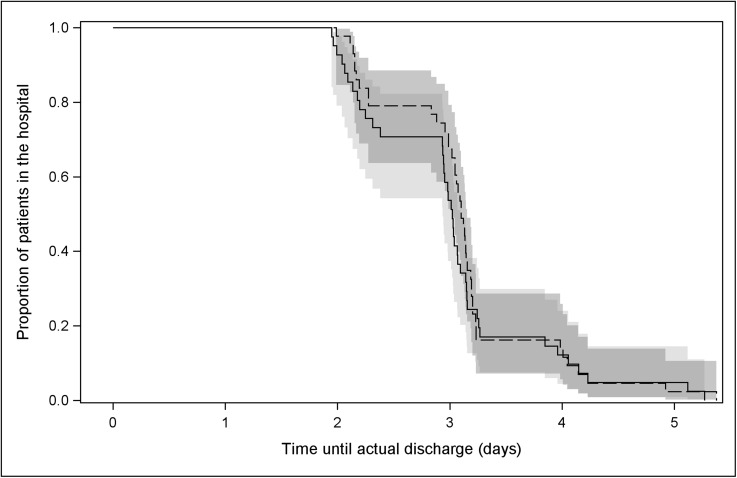
Results: The mean time to readiness for discharge (and standard deviation) was 2.4 ± 0.7 days (PAI) compared with 2.3 ± 0.8 days (PCEA) (p = 0.86). The mean length of stay was 3.0 ± 0.8 days (PAI) compared with 3.1 ± 0.7 days (PCEA) (p = 0.46). A significant mean difference in pain score of 0.74 with ambulation (p = 0.01; 95% confidence interval [CI], 0.18 to 1.31) and 0.80 during physical therapy (p = 0.03; 95% CI, 0.09 to 1.51) favored the PCEA group. The mean opioid consumption (oral morphine equivalents in milligrams) was significantly higher in the PAI group on postoperative day 0 (43 ± 21 compared with 28 ± 23; p = 0.002) and postoperative days 0 through 2 (136 ± 59 compared with 90 ± 79; p = 0.004). Opioid-Related Symptom Distress Scale (ORSDS) composite scores for severity and bothersomeness as well as scores for nausea, vomiting, and itchiness were significantly higher in the PCEA group (p < 0.05). Quality of Recovery-40 scores and patient satisfaction were similar.
Conclusions: PAI did not decrease the time to discharge and was associated with higher pain scores and greater opioid consumption but lower ORSDS scores compared with PCEA. The choice for analgesic regimen may depend on a particular patient's threshold for pain and the potential side effects.
Copyright © 2015 by The Journal of Bone and Joint Surgery, Incorporated.
Figures
Comment in
-
Patient-Controlled Epidural Analgesia After Total Hip Arthroplasty: Ready for Prime Time?J Bone Joint Surg Am. 2015 May 20;97(10):e46. doi: 10.2106/JBJS.O.00256. J Bone Joint Surg Am. 2015. PMID: 25995503 No abstract available.
References
-
- Kurtz S, Ong K, Lau E, Mowat F, Halpern M. Projections of primary and revision hip and knee arthroplasty in the United States from 2005 to 2030. J Bone Joint Surg Am. 2007April;89(4):780-5. - PubMed
-
- Apfelbaum JL, Chen C, Mehta SS, Gan TJ. Postoperative pain experience: results from a national survey suggest postoperative pain continues to be undermanaged. Anesth Analg. 2003August;97(2):534-40. - PubMed
-
- Parvizi J, Bloomfield MR. Multimodal pain management in orthopedics: implications for joint arthroplasty surgery. Orthopedics. 2013February;36(2)(Suppl):7-14. - PubMed
-
- Singelyn FJ, Deyaert M, Joris D, Pendeville E, Gouverneur JM. Effects of intravenous patient-controlled analgesia with morphine, continuous epidural analgesia, and continuous three-in-one block on postoperative pain and knee rehabilitation after unilateral total knee arthroplasty. Anesth Analg. 1998July;87(1):88-92. - PubMed
-
- Kroll MA, Otis JC, Sculco TP, Lee AC, Paget SA, Bruckenstein R, Jensen DA. The relationship of stride characteristics to pain before and after total knee arthroplasty. Clin Orthop Relat Res. 1989February;239:191-5. - PubMed
Publication types
MeSH terms
Substances
Grants and funding
LinkOut - more resources
Full Text Sources
Medical
