


Pharmacokinetics of mitragynine in man
- PMID: 25995615
- PMCID: PMC4425236
- DOI: 10.2147/DDDT.S79658
Pharmacokinetics of mitragynine in man
Abstract
Background: Kratom, known botanically as Mitragyna speciosa (Korth.), is an indigenous tree in Southeast Asia. Kratom is currently easily available worldwide via special shops and the Internet to use as a drug of abuse, opioid alternative, or pain killer. So far, the pharmacokinetics of this plant has been studied only in animals, and there is no such study in humans. The major abundant active alkaloid in Kratom, mitragynine, is one of the promising new chemical substances to be developed as a new drug. The aim of this study was to examine the pharmacokinetics of mitragynine and assess the linearity in pharmacokinetics in chronic users.
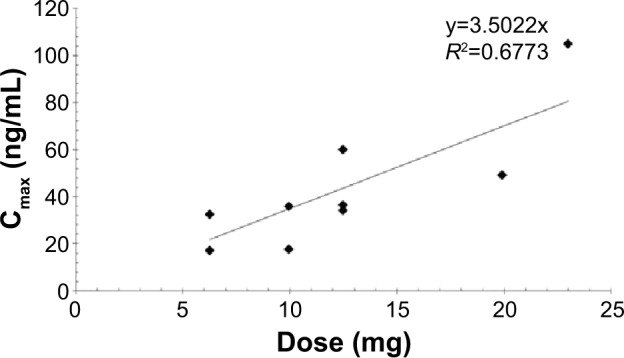
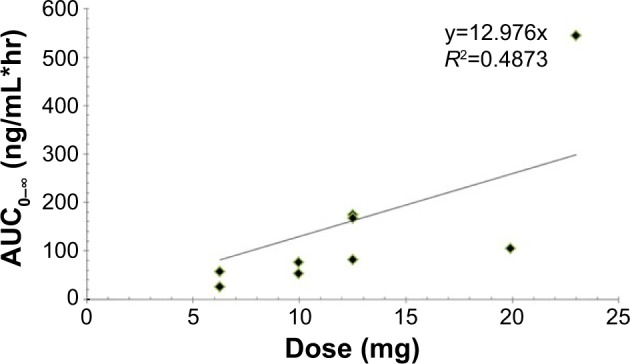
Methods: Since Kratom is illegal in Thailand, studies in healthy subjects would be unethical. We therefore conducted a prospective study by enrolling ten chronic, regular, healthy users. We adjusted the steady state in each subject by giving a known amount of Kratom tea for 7 days before commencement of the experiment. We admitted and gave different oral doses to subjects to confirm linearity in pharmacokinetics. The mitragynine blood concentrations at 17 times points and the urine concentrations during the 24-hour period were collected and measured by liquid chromatography-tandem mass spectrometry method.
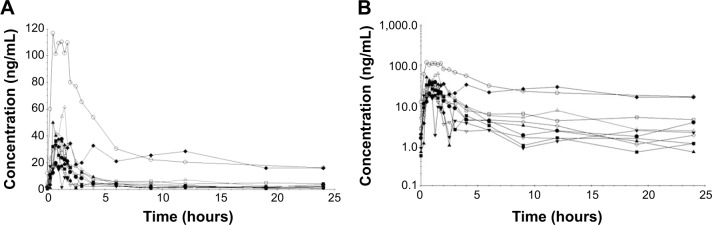
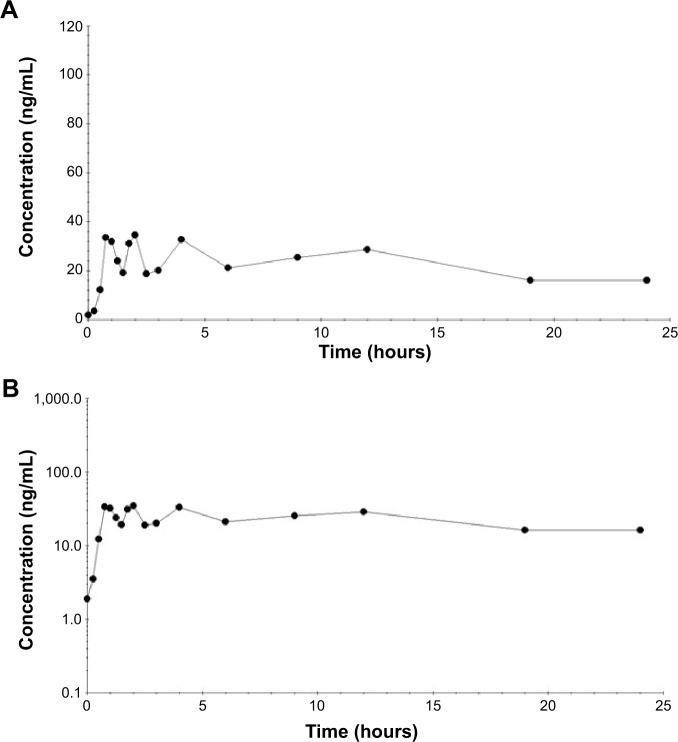
Results: Ten male subjects completed the study without adverse reactions. The median duration of abuse was 1.75 years. We analyzed one subject separately due to the abnormal behavior of blood concentration. From data of nine subjects, the pharmacokinetic parameters established were time to reach the maximum plasma concentration (0.83±0.35 hour), terminal half-life (23.24±16.07 hours), and the apparent volume of distribution (38.04±24.32 L/kg). The urine excretion of unchanged form was 0.14%. The pharmacokinetics were observed to be oral two-compartment model.
Conclusion: This was the first pharmacokinetic study in humans, which demonstrated linearity and was consistent with the oral two-compartment model with a terminal half-life of about 1 day. The pharmacokinetic linearity and parameters reported are necessary pharmacological information of Kratom, and there is a possibility for it to be developed medically as a pain killer or better opioid substitute in the future.
Keywords: human; kratom; pharmacokinetics.
Figures
References
-
- Puff C, Chayamarit K, Chamchumroon V. Rubiaceae of Thailand: A Pictorial Guide to Indigeneous and Cultivated Genera. Bangkok: Forest Herbarium, National Park, Wildlife and Plant Conservation Department; 2005.
-
- Hassan Z, Muzaimi M, Navaratnam V, et al. From Kratom to mitragynine and its derivatives: physiological and behavioural effects related to use, abuse, and addiction. Neurosci Biobehav Rev. 2013;37(2):138–151. - PubMed
-
- Suwanlert S. A study of kratom eaters in Thailand. Bull Narc. 1975;27(3):21–27. - PubMed
-
- Babu KM, McCurdy CR, Boyer EW. Opioid receptors and legal highs: Salvia divinorum and Kratom. Clin Toxicol (Phila) 2008;46(2):146–152. - PubMed
MeSH terms
Substances
LinkOut - more resources
Full Text Sources
Other Literature Sources
