


Combined autologous bone marrow mononuclear cell and gene therapy as the last resort for patients with critical limb ischemia
- PMID: 25995748
- PMCID: PMC4424239
- DOI: 10.5114/aoms.2013.39935
Combined autologous bone marrow mononuclear cell and gene therapy as the last resort for patients with critical limb ischemia
Abstract
Introduction: Our study was designed to investigate the safety and efficacy of combined autologous bone marrow mononuclear cell (MNC) and gene therapy in comparison to conventional drug therapy in patients with critical limb ischemia (CLI).
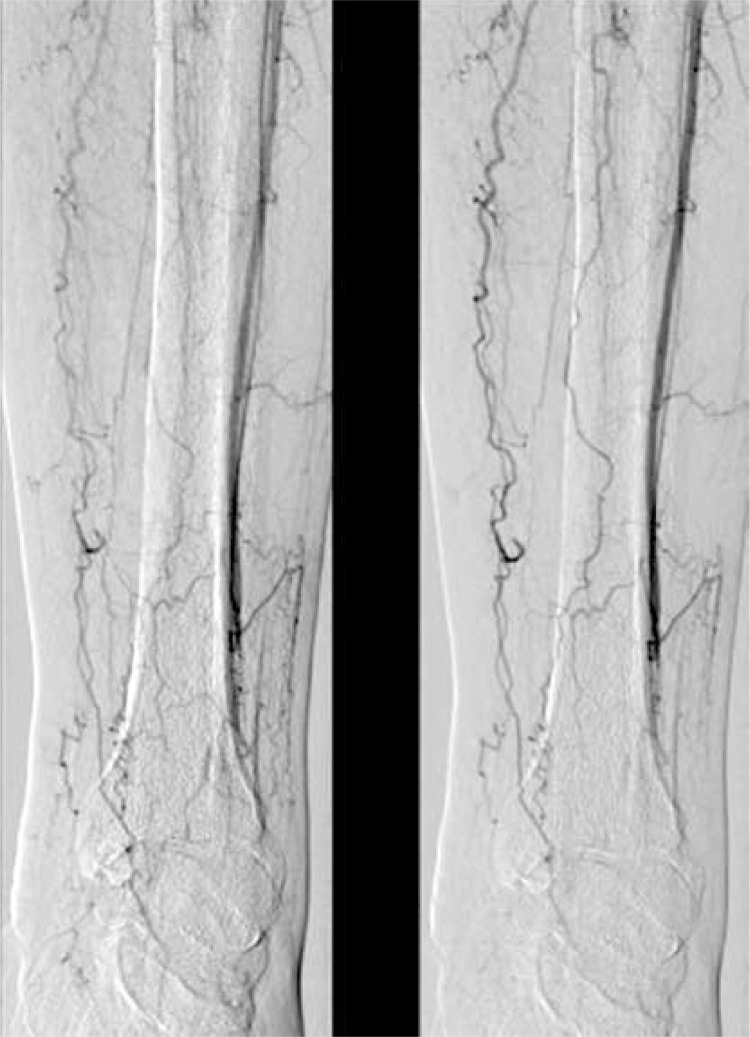
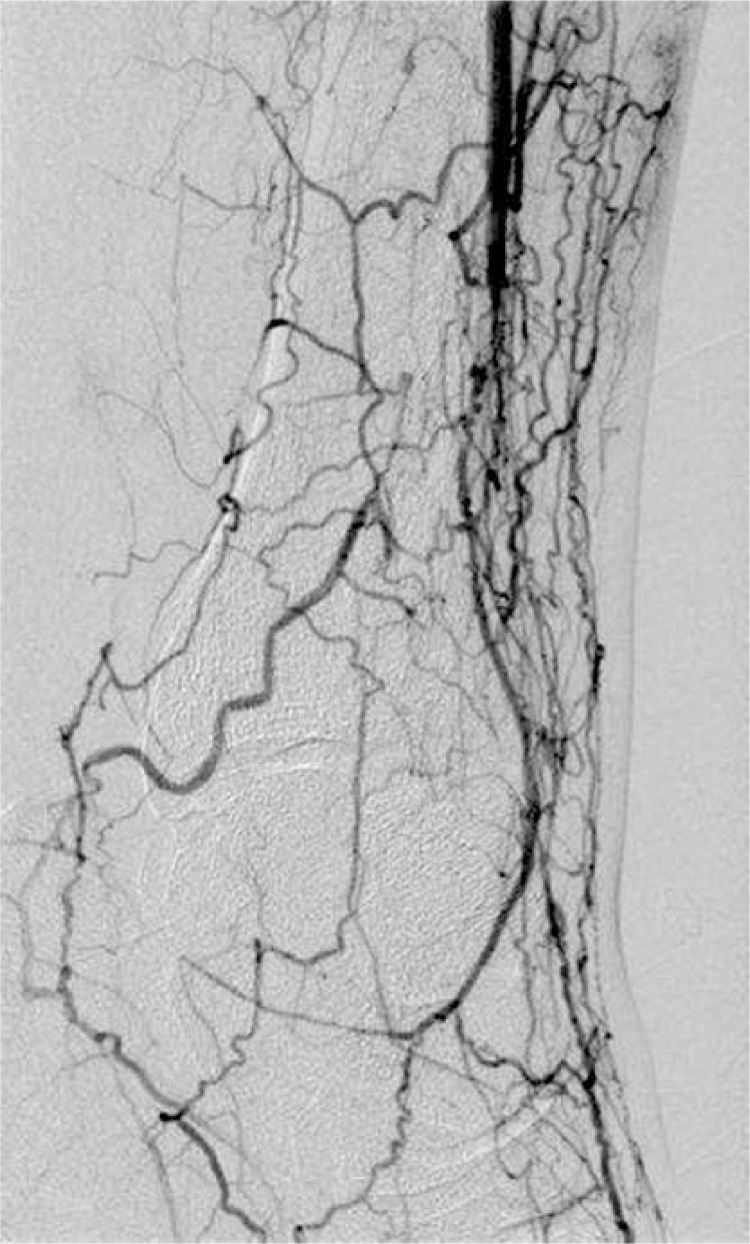
Material and methods: Thirty-two patients with CLI persisting for 12-48 months (average time 27.5 months) were randomized into 2 groups, each group consisting of 16 patients. In the first group, administration of autologous bone marrow MNC and vascular endothelial growth factor (VEGF) plasmid was performed. The patients from the second group were treated pharmacologically with pentoxifylline. Ankle-brachial index (ABI) was measured and angiography was performed before and finally 3 months after treatment. The pain was evaluated using the Visual Analog Scale (VAS) before and after 3 months.
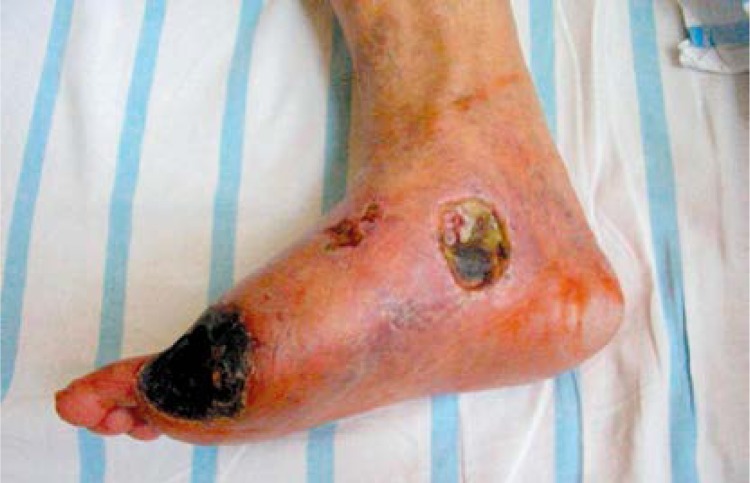
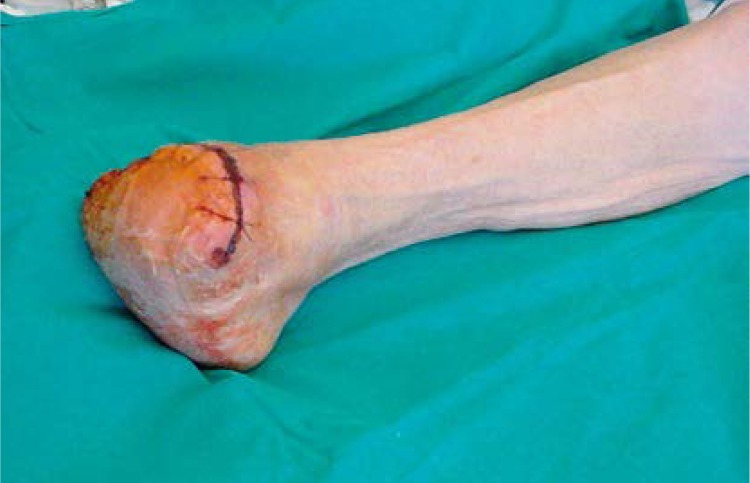
Results: Ankle-brachial index improved significantly from 0.29 ±0.21 to 0.52 ±0.23 (p < 0.001) in 12 patients (75.0%) 3 months after the experimental therapy in group 1. In this group angiography showed the development of collateral vessels. Ischemic ulcers healed completely in 11 patients (68.75%). In group 2 the ABI did not improve in any patient; moreover the complete healing of skin ulcers was not found in any of the patients of this group. Amputation was performed in 4 (25.0%) patients in group 1, and in 8 patients (50%) from group 2.
Conclusions: These data after 3-month follow-up indicate that intramuscular injection of MNC combined with gene therapy in patients with chronic CLI is safe, and a more feasible and effective method of treatment than the conventional therapy. However, both therapies are limited by the degree of microcirculation damage.
Keywords: atherosclerosis obliterans; critical limb ischemia; gene therapy; marrow stem cells.
Figures
References
-
- Dormandy J, Mahir M, Ascady G, et al. Fate of the patient with chronic leg ischaemia. A review article. J Cardiovasc Surg (Torino) 1989;30:50–7. - PubMed
-
- Vogt MT, Wolfson SK, Kuller LH. Lower extremity arterial disease and the aging process: a review. J Clin Epidemiol. 1992;45:529–42. - PubMed
-
- Creager MA. Medical management of peripheral arterial disease. Cardiol Rev. 2001;9:238–45. - PubMed
LinkOut - more resources
Full Text Sources
Other Literature Sources
Research Materials
Miscellaneous
