


A genome-wide sib-pair scan for quantitative language traits reveals linkage to chromosomes 10 and 13
- PMID: 25997078
- PMCID: PMC4755290
- DOI: 10.1111/gbb.12223
A genome-wide sib-pair scan for quantitative language traits reveals linkage to chromosomes 10 and 13
Abstract
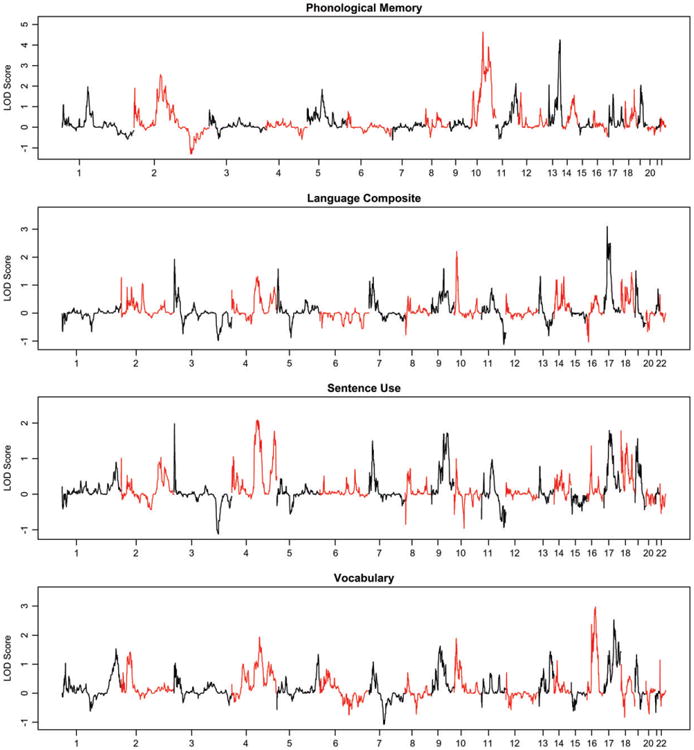
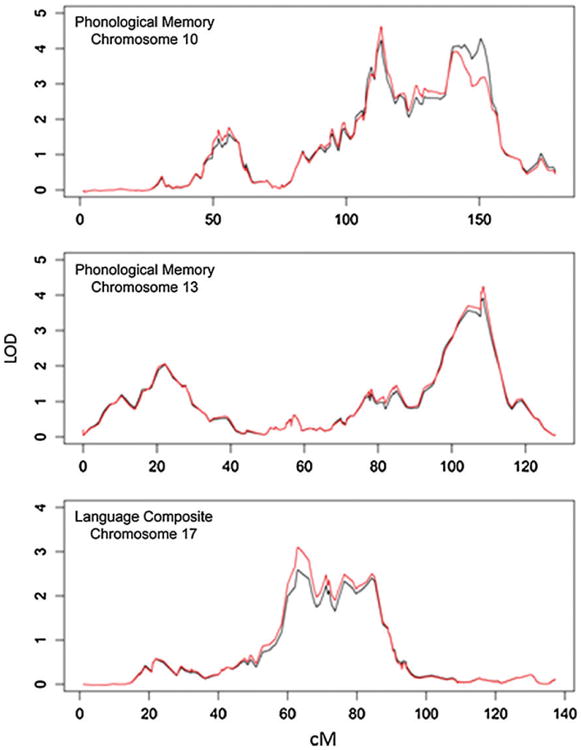
Although there is considerable evidence that individual differences in language development are highly heritable, there have been few genome-wide scans to locate genes associated with the trait. Previous analyses of language impairment have yielded replicable evidence for linkage to regions on chromosomes 16q, 19q, 13q (within lab) and at 13q (between labs). Here we report the first linkage study to screen the continuum of language ability, from normal to disordered, as found in the general population. 383 children from 147 sib-ships (214 sib-pairs) were genotyped on the Illumina(®) Linkage IVb Marker Panel using three composite language-related phenotypes and a measure of phonological memory (PM). Two regions (10q23.33; 13q33.3) yielded genome-wide significant peaks for linkage with PM. A peak suggestive of linkage was also found at 17q12 for the overall language composite. This study presents two novel genetic loci for the study of language development and disorders, but fails to replicate findings by previous groups. Possible reasons for this are discussed.
Keywords: Genetics; individual differences; language development; language impairment; linkage.
© 2015 John Wiley & Sons Ltd and International Behavioural and Neural Genetics Society.
Figures
References
Publication types
MeSH terms
Grants and funding
LinkOut - more resources
Full Text Sources
Other Literature Sources
Miscellaneous
