


Cabergoline plus metformin therapy effects on menstrual irregularity and androgen system in polycystic ovary syndrome women with hyperprolactinemia
- PMID: 25999998
- PMCID: PMC4426146
Cabergoline plus metformin therapy effects on menstrual irregularity and androgen system in polycystic ovary syndrome women with hyperprolactinemia
Abstract
Background: 30% of patients with polycystic ovary syndrome (PCOS) show mild, transient hyperprolactinemia. It is suggested that a reduction of the dopamine inhibitory effect might raise both prolactin and luteinizing hormone.
Objective: To investigate the adjuvant cabergoline therapy effects on menstrual irregularity and androgen system in PCOS women with hyperprolactinemia.
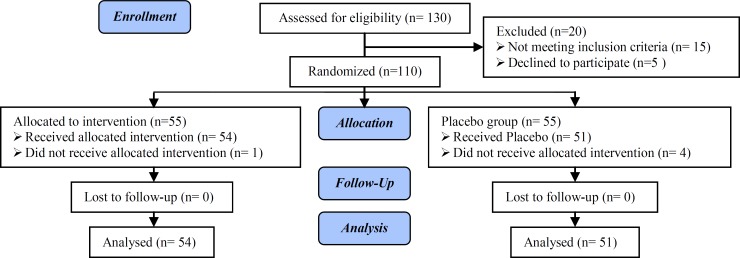
Materials and methods: This randomized clinical trial was done on 110 polycystic ovary syndrome women with increased serum prolactin concentration [1.5 fold more than normal level (>37.5 ng/ml)]. Participants were divided into two groups: Case group (n=55) treated with metformin 1gr/day and cabergoline 0.5 mg/week for 4 months and control group (n=55) treated with metformin 1g/day and placebo weekly. Testosterone, prolactin, and dehydroepiandrosterone sulfate level were measured before and four months after intervention in two groups. Also, situation of menstrual cycles asked and recorded before and after intervention.
Results: We found decrease in the mean of dehydroepiandrosterone sulfate, weight and total testosterone level in the two groups after intervention but their changes were not significant. Patients in case group showed a significant decrease in serum prolactin level before and after intervention (p<0.001), but no difference was found in control group. All patients in both studied groups had irregular menstrual cycles, which regulate after intervention and the difference was significant (p=0.02).
Conclusion: The results showed that cabergoline can be used as a safe administration in PCOS patients with hyperprolactinemia to improve the menstrual cycles. Considering that the administration of cabergoline plus metformin may reduce the required duration and dose of metformin, patient acceptability of this approach is higher.
Keywords: Cabergoline; Laboratory findings; Menstrualcycle; Metformin; Polycystic ovarian syndrome.
References
-
- Boomsma CM, Eijkemans MJC, Hughes EG, Visser GHA, Fauser BCJM, Macklon NS. A meta-analysis of pregnancy outcomes in women with polycystic ovary syndrome. Human Reprod Update. 2006;12:673–683. - PubMed
-
- Stein IF, Leventhal ML. Amenorrhea associated with bilateral polycystic ovaries. Am J Obstet Gynecol. 1935;29:181–191.
-
- Franks S, Stark J, Hardy K. Follicle dynamics and anovulation in polycystic ovary syndrome. Hum Reprod Update. 2008;14:367–378. - PubMed
-
- Knochenhauer ES, Key TJ, Kahsar-Miller M, Waggoner W, Boots LR, Azziz R. Prevalence of the polycystic ovary syndrome in unselected black and white women of the outheastern United States: a prospective study. J Clin Endocrinol Metab. 1998;83:3078–3082. - PubMed
-
- Diamanti-Kandarakis E, Katsikis I, Piperi C, Kandaraki E, Piouka A, Papavassiliou AG, et al. Increased serum advanced glycation end-products is a distinct finding in lean women with polycystic ovary syndrome (PCOS) Clin Endocrinol (Oxf) 2008;69:634–641. - PubMed
LinkOut - more resources
Full Text Sources