


Vitamin D and inflammatory bowel disease
- PMID: 26000293
- PMCID: PMC4427008
- DOI: 10.1155/2015/470805
Vitamin D and inflammatory bowel disease
Abstract
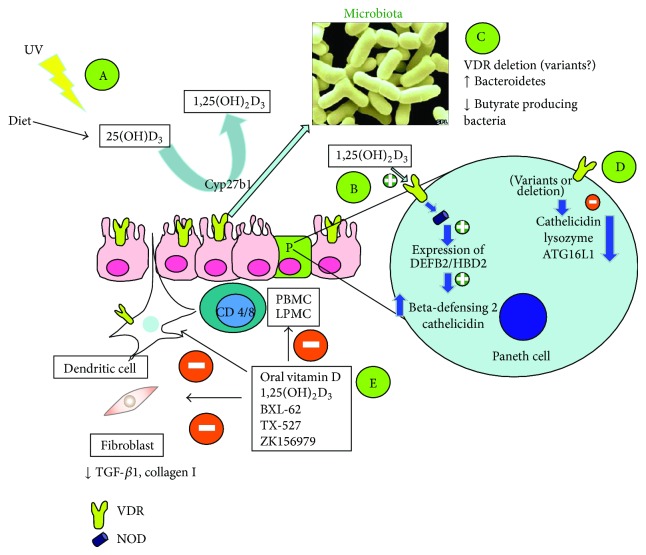
Vitamin D deficiency has been recognized as an environmental risk factor for Crohn's disease since the early 80s. Initially, this finding was correlated with metabolic bone disease. Low serum 25-hydroxyvitamin D levels have been repeatedly reported in inflammatory bowel diseases together with a relationship between vitamin D status and disease activity. Subsequently, low serum vitamin D levels have been reported in various immune-related diseases pointing to an immunoregulatory role. Indeed, vitamin D and its receptor (VDR) are known to interact with different players of the immune homeostasis by controlling cell proliferation, antigen receptor signalling, and intestinal barrier function. Moreover, 1,25-dihydroxyvitamin D is implicated in NOD2-mediated expression of defensin-β2, the latter known to play a crucial role in the pathogenesis of Crohn's disease (IBD1 gene), and several genetic variants of the vitamin D receptor have been identified as Crohn's disease candidate susceptibility genes. From animal models we have learned that deletion of the VDR gene was associated with a more severe disease. There is a growing body of evidence concerning the therapeutic role of vitamin D/synthetic vitamin D receptor agonists in clinical and experimental models of inflammatory bowel disease far beyond the role of calcium homeostasis and bone metabolism.
Figures
References
-
- Jones G., Strugnell S. A., DeLuca H. F. Current understanding of the molecular actions of vitamin D. Physiological Reviews. 1998;78(4):1193–1231. - PubMed
Publication types
MeSH terms
Substances
LinkOut - more resources
Full Text Sources
Other Literature Sources
Medical
