


Effective coverage and systems effectiveness for malaria case management in sub-Saharan African countries
- PMID: 26000856
- PMCID: PMC4441512
- DOI: 10.1371/journal.pone.0127818
Effective coverage and systems effectiveness for malaria case management in sub-Saharan African countries
Abstract
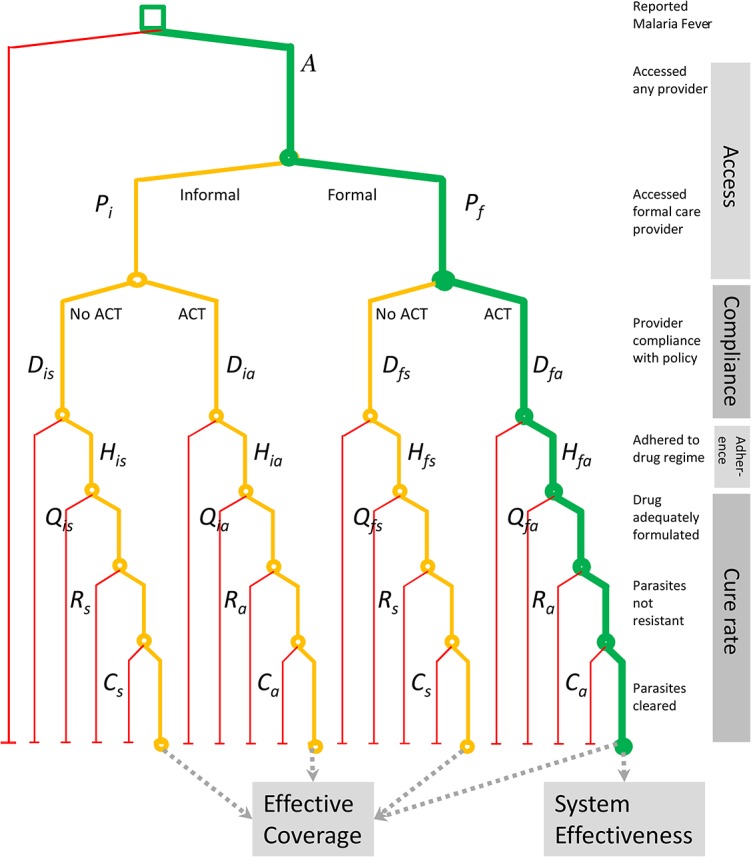
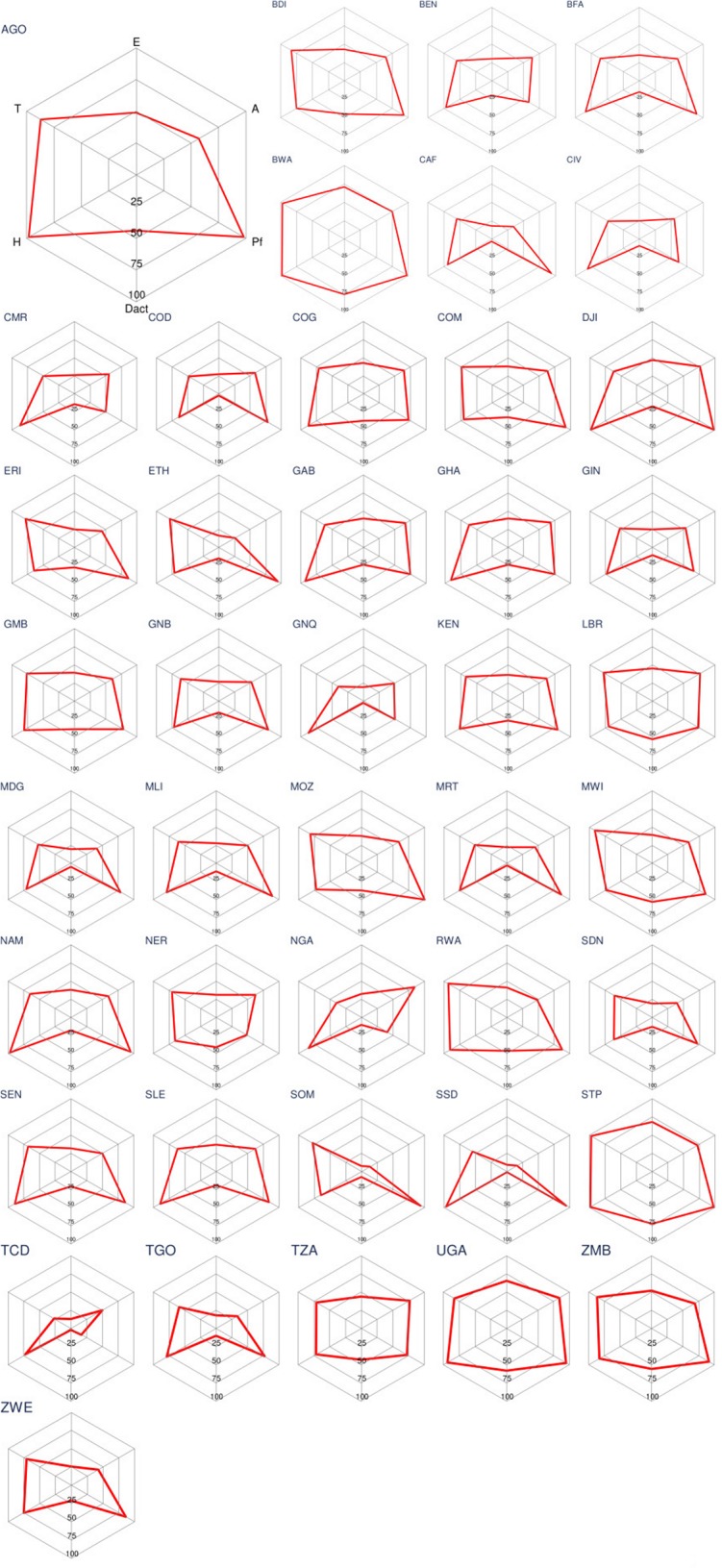
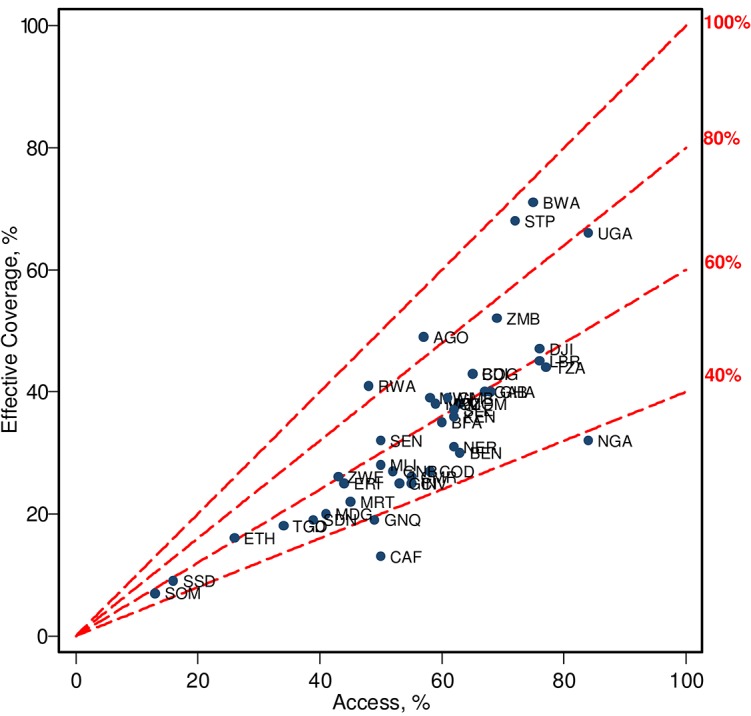
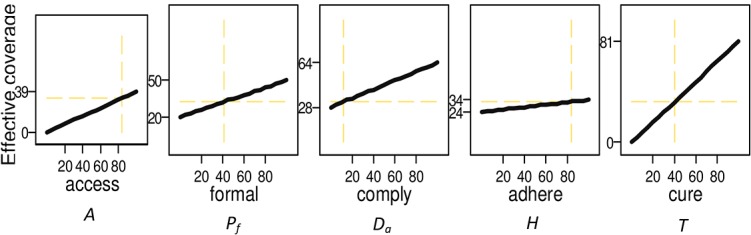
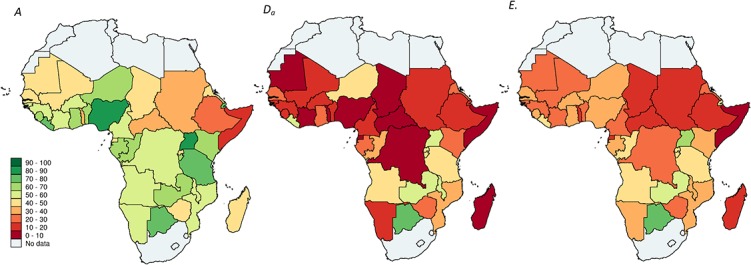
Scale-up of malaria preventive and control interventions over the last decade resulted in substantial declines in mortality and morbidity from the disease in sub-Saharan Africa and many other parts of the world. Sustaining these gains will depend on the health system performance. Treatment provides individual benefits by curing infection and preventing progression to severe disease as well as community-level benefits by reducing the infectious reservoir and averting emergence and spread of drug resistance. However many patients with malaria do not access care, providers do not comply with treatment guidelines, and hence, patients do not necessarily receive the correct regimen. Even when the correct regimen is administered some patients will not adhere and others will be treated with counterfeit or substandard medication leading to treatment failures and spread of drug resistance. We apply systems effectiveness concepts that explicitly consider implications of health system factors such as treatment seeking, provider compliance, adherence, and quality of medication to estimate treatment outcomes for malaria case management. We compile data for these indicators to derive estimates of effective coverage for 43 high-burden Sub-Saharan African countries. Parameters are populated from the Demographic and Health Surveys and other published sources. We assess the relative importance of these factors on the level of effective coverage and consider variation in these health systems indicators across countries. Our findings suggest that effective coverage for malaria case management ranges from 8% to 72% in the region. Different factors account for health system inefficiencies in different countries. Significant losses in effectiveness of treatment are estimated in all countries. The patterns of inter-country variation suggest that these are system failures that are amenable to change. Identifying the reasons for the poor health system performance and intervening to tackle them become key priority areas for malaria control and elimination policies in the region.
Conflict of interest statement
Figures
References
-
- World Health Organization (2012) World Malaria Report 2012.
-
- Stratton L, O'Neill MS, Kruk ME, Bell ML (2008) The persistent problem of malaria: Addressing the fundamental causes of a global killer. Social Science & Medicine 67: 854–862. - PubMed
Publication types
MeSH terms
LinkOut - more resources
Full Text Sources
Other Literature Sources
Medical
