


Assessing coverage, equity and quality gaps in maternal and neonatal care in sub-saharan Africa: an integrated approach
- PMID: 26000964
- PMCID: PMC4441493
- DOI: 10.1371/journal.pone.0127827
Assessing coverage, equity and quality gaps in maternal and neonatal care in sub-saharan Africa: an integrated approach
Erratum in
-
Correction: Assessing Coverage, Equity and Quality Gaps in Maternal and Neonatal Care in Sub-Saharan Africa: An Integrated Approach.PLoS One. 2015 Jun 19;10(6):e0130859. doi: 10.1371/journal.pone.0130859. eCollection 2015. PLoS One. 2015. PMID: 26090812 Free PMC article. No abstract available.
Abstract
Background: Gaps in coverage, equity and quality of health services hinder the achievement of the Millennium Development Goals 4 and 5 in most countries of sub-Saharan Africa as well as in other high-burden countries, yet few studies attempt to assess all these dimensions as part of the situation analysis. We present the base-line data of a project aimed at simultaneously addressing coverage, equity and quality issues in maternal and neonatal health care in five districts belonging to three African countries.
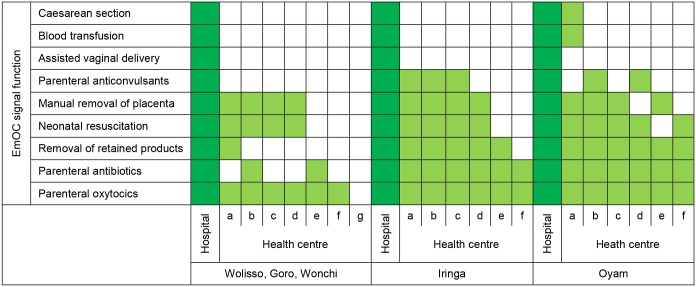
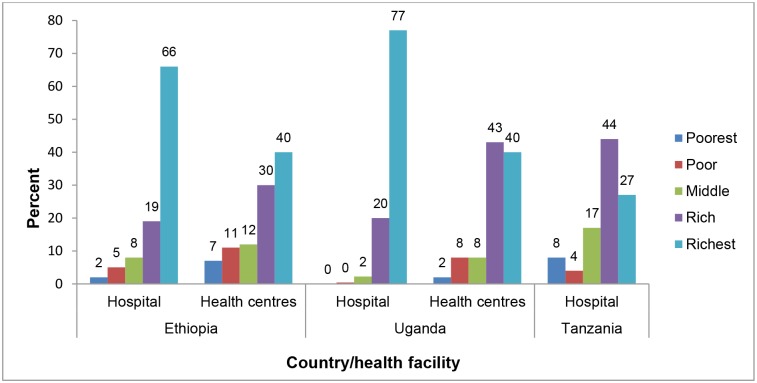
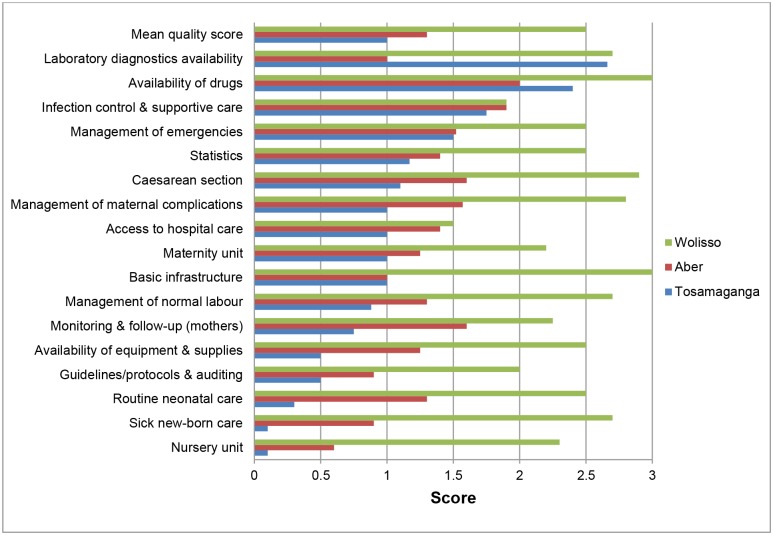
Methods: Data were collected in cross-sectional studies with three types of tools. Coverage was assessed in three hospitals and 19 health centres (HCs) utilising emergency obstetric and newborn care needs assessment tools developed by the Averting Maternal Death and Disability program. Emergency obstetrics care (EmOC) indicators were calculated. Equity was assessed in three hospitals and 13 HCs by means of proxy wealth indices and women delivering in health facilities were compared with those in the general population to identify inequities. Quality was assessed in three hospitals using the World Health Organization's maternal and neonatal quality of hospital care assessment tool which evaluates the whole range of aspects of obstetric and neonatal care and produces an average score for each main area of care.
Results: All the three hospitals qualified as comprehensive EmOC facilities but none of the HCs qualified for basic EmOC. None of the districts met the minimum requisites for EmOC indicators. In two out of three hospitals, there were major quality gaps which were generally greater in neonatal care, management of emergency and complicated cases and monitoring. Higher access to care was coupled by low quality and good quality by very low access. Stark inequities in utilisation of institutional delivery care were present in all districts and across all health facilities, especially at hospital level.
Conclusion: Our findings confirm the existence of serious issues regarding coverage, equity and quality of health care for mothers and newborns in all study districts. Gaps in one dimension hinder the potential gains in health outcomes deriving from good performances in other dimensions, thus confirm the need for a three-dimensional profiling of health care provision as a basis for data-driven planning.
Conflict of interest statement
Figures
References
-
- Wang H, Liddell CA, Coates MM, Mooney MD, Levitz CE, Schumacher AE, et al. Global, regional, and national levels of neonatal, infant, and under-5 mortality during 1990–2013: a systematic analysis for the Global Burden of Disease Study 2013. Lancet. 2014;384(9947):957–79. Epub 2014/05/07. 10.1016/s0140-6736(14)60497-9 - DOI - PMC - PubMed
-
- Commission on Social Determinants of Health. Closing the gap in a generation: health equity through action on the social determinants of health Final Report of the Commission on Social Determinants of Health. Geneva: WHO; 2008.
-
- World Health Organisation. Strengthening health systems to improve health outcomes: WHO’s framework for action. Geneva: WHO; 2007. 10.1186/s12916-015-0309-4 - DOI
Publication types
MeSH terms
LinkOut - more resources
Full Text Sources
Other Literature Sources
Medical
Miscellaneous
