


Developing a targeted, theory-informed implementation intervention using two theoretical frameworks to address health professional and organisational factors: a case study to improve the management of mild traumatic brain injury in the emergency department
- PMID: 26003785
- PMCID: PMC4446082
- DOI: 10.1186/s13012-015-0264-7
Developing a targeted, theory-informed implementation intervention using two theoretical frameworks to address health professional and organisational factors: a case study to improve the management of mild traumatic brain injury in the emergency department
Abstract
Background: Despite the availability of evidence-based guidelines for the management of mild traumatic brain injury in the emergency department (ED), variations in practice exist. Interventions designed to implement recommended behaviours can reduce this variation. Using theory to inform intervention development is advocated; however, there is no consensus on how to select or apply theory. Integrative theoretical frameworks, based on syntheses of theories and theoretical constructs relevant to implementation, have the potential to assist in the intervention development process. This paper describes the process of applying two theoretical frameworks to investigate the factors influencing recommended behaviours and the choice of behaviour change techniques and modes of delivery for an implementation intervention.
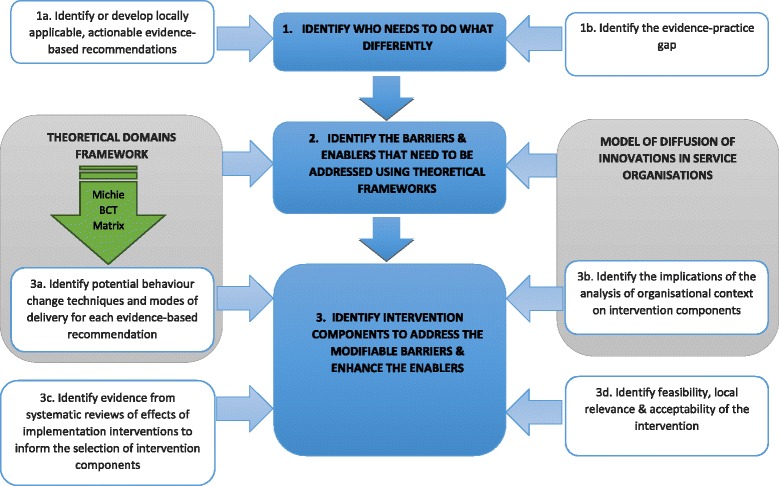
Methods: A stepped approach was followed: (i) identification of locally applicable and actionable evidence-based recommendations as targets for change, (ii) selection and use of two theoretical frameworks for identifying barriers to and enablers of change (Theoretical Domains Framework and Model of Diffusion of Innovations in Service Organisations) and (iii) identification and operationalisation of intervention components (behaviour change techniques and modes of delivery) to address the barriers and enhance the enablers, informed by theory, evidence and feasibility/acceptability considerations. We illustrate this process in relation to one recommendation, prospective assessment of post-traumatic amnesia (PTA) by ED staff using a validated tool.
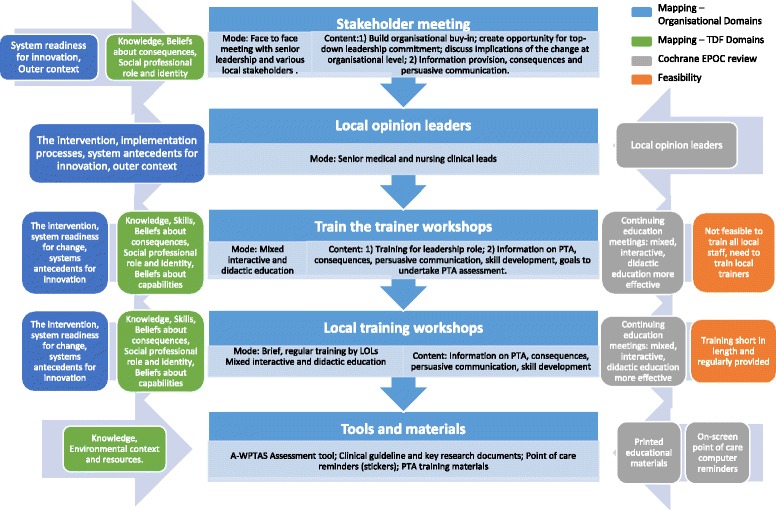
Results: Four recommendations for managing mild traumatic brain injury were targeted with the intervention. The intervention targeting the PTA recommendation consisted of 14 behaviour change techniques and addressed 6 theoretical domains and 5 organisational domains. The mode of delivery was informed by six Cochrane reviews. It was delivered via five intervention components : (i) local stakeholder meetings, (ii) identification of local opinion leader teams, (iii) a train-the-trainer workshop for appointed local opinion leaders, (iv) local training workshops for delivery by trained local opinion leaders and (v) provision of tools and materials to prompt recommended behaviours.
Conclusions: Two theoretical frameworks were used in a complementary manner to inform intervention development in managing mild traumatic brain injury in the ED. The effectiveness and cost-effectiveness of the developed intervention is being evaluated in a cluster randomised trial, part of the Neurotrauma Evidence Translation (NET) program.
Figures
References
-
- Michie S, Johnston M, Francis JJ, Hardeman W, Eccles M. From theory to intervention: mapping theoretically derived behavioural determinants to behaviour change techniques. Appl Psychol. 2008;57:660–80. doi: 10.1111/j.1464-0597.2008.00341.x. - DOI
-
- WIDER recommendations to improve reporting of the content of behaviour change interventions. [http://www.implementationscience.com/content/supplementary/1748-5908-7-7...]
Publication types
MeSH terms
LinkOut - more resources
Full Text Sources
Other Literature Sources
