


Patients with chronic obstructive pulmonary disease and chronically colonized with Haemophilus influenzae during stable disease phase have increased airway inflammation
- PMID: 26005341
- PMCID: PMC4427610
- DOI: 10.2147/COPD.S78748
Patients with chronic obstructive pulmonary disease and chronically colonized with Haemophilus influenzae during stable disease phase have increased airway inflammation
Abstract
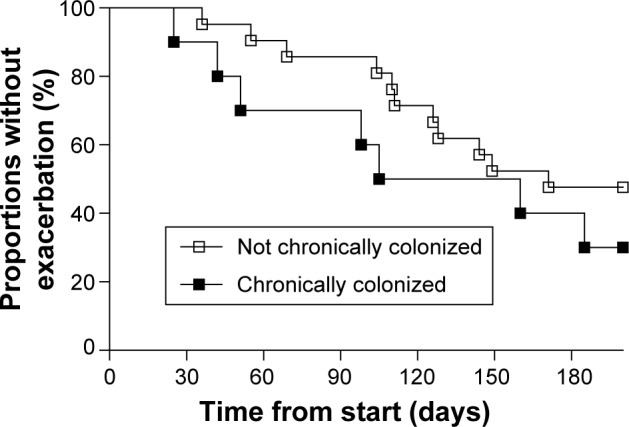
Background: Some patients with chronic obstructive pulmonary disease (COPD) show increased airway inflammation and bacterial colonization during stable phase. The aim of this study was to follow COPD patients and investigate chronic colonization with pathogenic bacteria during stable disease phase, and relate these findings to clinical parameters, inflammatory pattern, lung function, and exacerbations.
Methods: Forty-three patients with COPD were included while in a stable state and followed up monthly until exacerbation or for a maximum of 6 months. The patients completed the Clinical COPD Questionnaire and Medical Research Council dyspnea scale questionnaires, and exhaled breath condensate was collected, followed by spirometry, impulse oscillometry, and sputum induction.
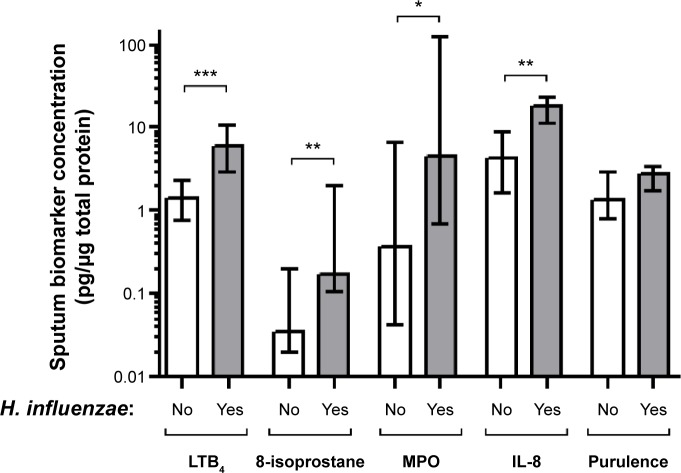
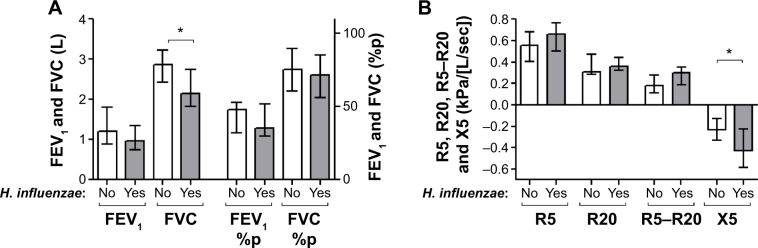
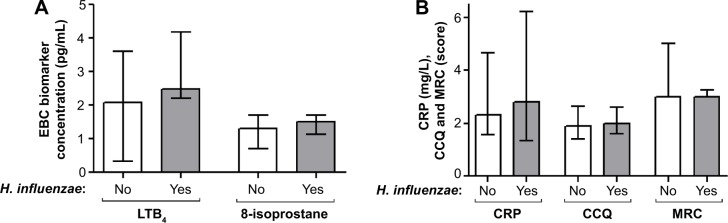
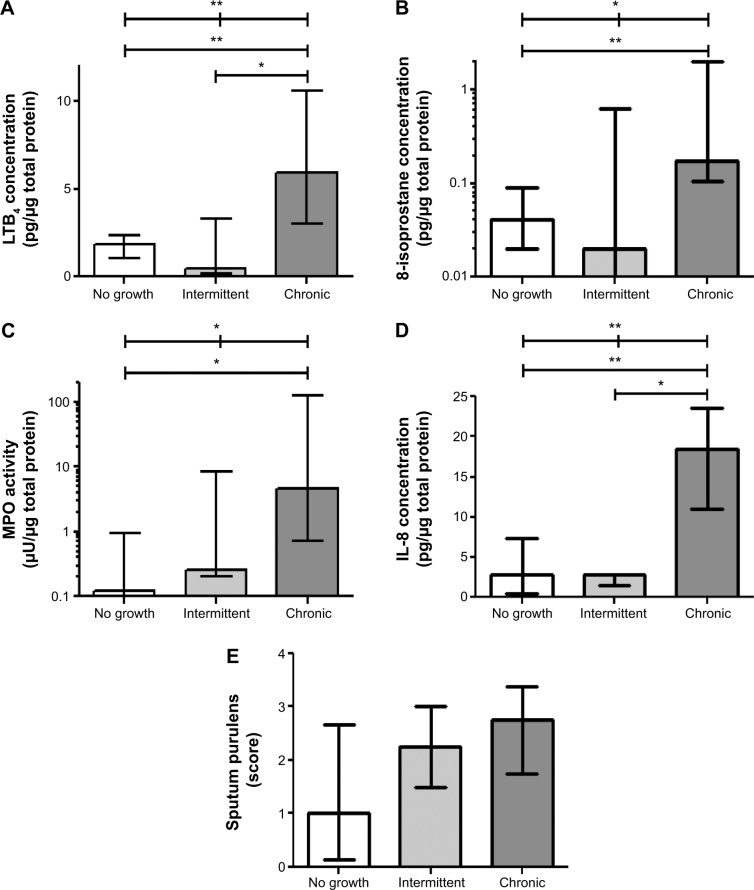
Results: Ten patients were chronically colonized (ie, colonized at all visits) with Haemophilus influenzae during stable phase. These patients had higher sputum levels of leukotriene B4 (P<0.001), 8-isoprostane (P=0.002), myeloperoxidase activity (P=0.028), and interleukin-8 (P=0.02) during stable phase when compared with other patients. In addition, they had lower forced vital capacity (P=0.035) and reactance at 5 Hz (P=0.034), but there was no difference in forced expiratory volume in 1 second (FEV1), FEV1 % predicted, forced vital capacity % predicted, exhaled breath condensate biomarkers, C-reactive protein, or Clinical COPD Questionnaire and Medical Research Council dyspnea scale results. Three patients had intermittent colonization (colonized at only some visits) of H. influenzae during stable phase, and had lower levels of inflammatory biomarkers in sputum when compared with the chronically colonized patients. The difference in airway inflammation seen during stable phase in patients chronically colonized with H. influenzae was not observed during exacerbations.
Conclusion: Some COPD patients who were chronically colonized with H. influenzae during stable phase showed increased airway inflammation and reduced lung volumes when compared with non-chronically colonized patients.
Keywords: biomarker; chronic obstructive pulmonary disease; colonization; inflammation; spirometry; sputum.
Figures
References
-
- Di SA, Capelli A, Lusuardi M, et al. Severity of airflow limitation is associated with severity of airway inflammation in smokers. Am J Respir Crit Care Med. 1998;158(4):1277–1285. - PubMed
-
- Desai H, Eschberger K, Wrona C, et al. Bacterial colonization increases daily symptoms in patients with chronic obstructive pulmonary disease. Ann Am Thorac Soc. 2014;11(3):303–309. - PubMed
-
- Banerjee D, Khair OA, Honeybourne D. Impact of sputum bacteria on airway inflammation and health status in clinical stable COPD. Eur Respir J. 2004;23(5):685–691. - PubMed
Publication types
MeSH terms
Substances
LinkOut - more resources
Full Text Sources
Medical
Research Materials
