


Discovery of Quinazoline-Based Fluorescent Probes to α1-Adrenergic Receptors
- PMID: 26005522
- PMCID: PMC4434465
- DOI: 10.1021/ml5004298
Discovery of Quinazoline-Based Fluorescent Probes to α1-Adrenergic Receptors
Abstract
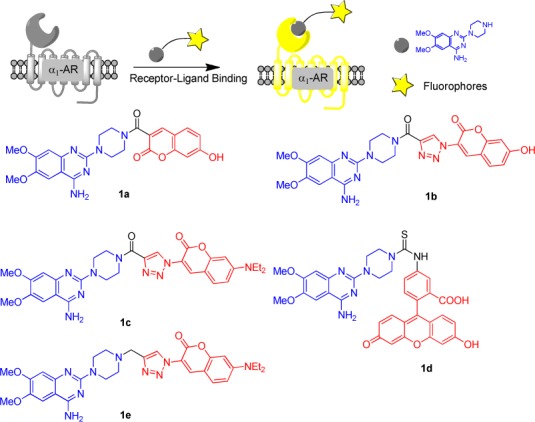
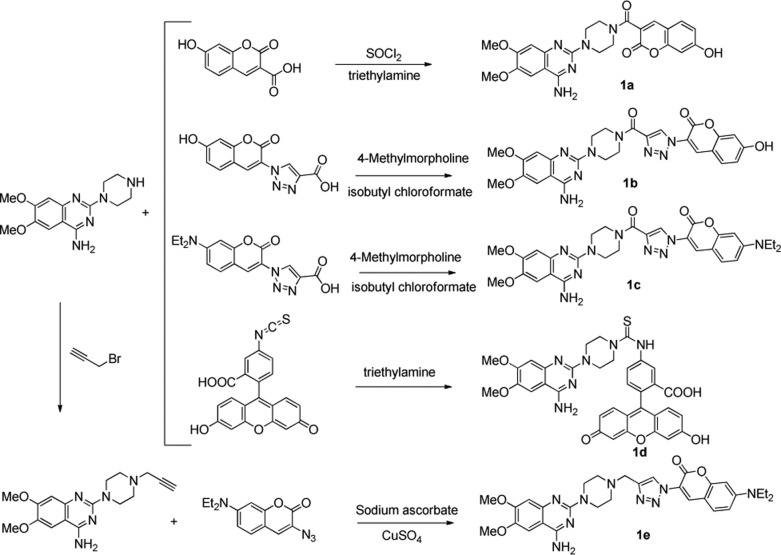
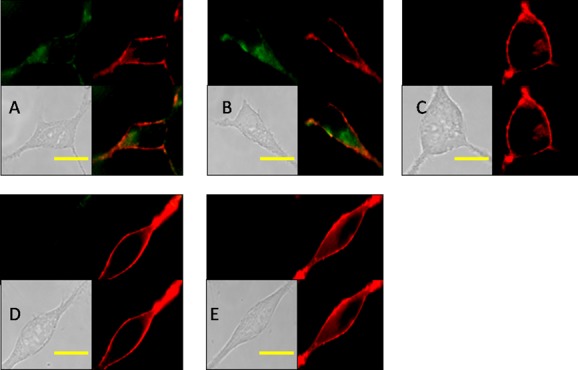
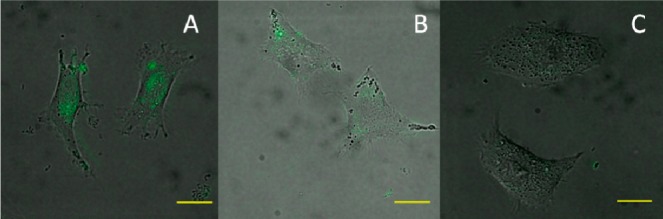
α1-Adrenergic receptors (α1-ARs), as the essential members of G protein-coupled receptors (GPCRs), can mediate numerous physiological responses in the sympathetic nervous system. In the current research, a series of quinazoline-based small-molecule fluorescent probes to α1-ARs (1a-1e), including two parts, a pharmacophore for α1-AR recognition and a fluorophore for visualization, were well designed and synthesized. The biological evaluation results displayed that these probes held reasonable fluorescent properties, high affinity, accepted cell toxicity, and excellent subcellular localization imaging potential for α1-ARs.
Keywords: cell imaging; fluorescent probes; quinazoline; subcellular localization; α1-Adrenergic receptors.
Conflict of interest statement
The authors declare no competing financial interest.
Figures
References
-
- Li W.; Du L.; Li M. Alkaloids and flavonoids as α1-adrenergic receptor antagonists. Curr. Med. Chem. 2011, 18, 4923–4932. - PubMed
-
- Ruffolo R. R. Jr; Hieble J. P. Adrenoceptor pharmacology: urogenital applications. Eur. Urol. 1999, 36, 17–22. - PubMed
-
- Forray C.; Noble S. A. Subtype selective α1-adrenoceptor antagonists for the treatment of benign prostatic hyperplasia. Expert Opin. Invest. Drug. 1999, 8, 2073–2094. - PubMed
-
- Nagarathnam D.; Wetzel J.; Miao S.; Marzabadi M.; Chiu G.; Wong W.; Hong X.; Fang J.; Forray C.; Branchek T. Design and synthesis of novel α1a adrenoceptor-selective dihydropyridine antagonists for the treatment of benign prostatic hyperplasia. J. Med. Chem. 1998, 41, 5320–5333. - PubMed
LinkOut - more resources
Full Text Sources
Other Literature Sources
Chemical Information
Research Materials
