


LYRA, a webserver for lymphocyte receptor structural modeling
- PMID: 26007650
- PMCID: PMC4489227
- DOI: 10.1093/nar/gkv535
LYRA, a webserver for lymphocyte receptor structural modeling
Abstract
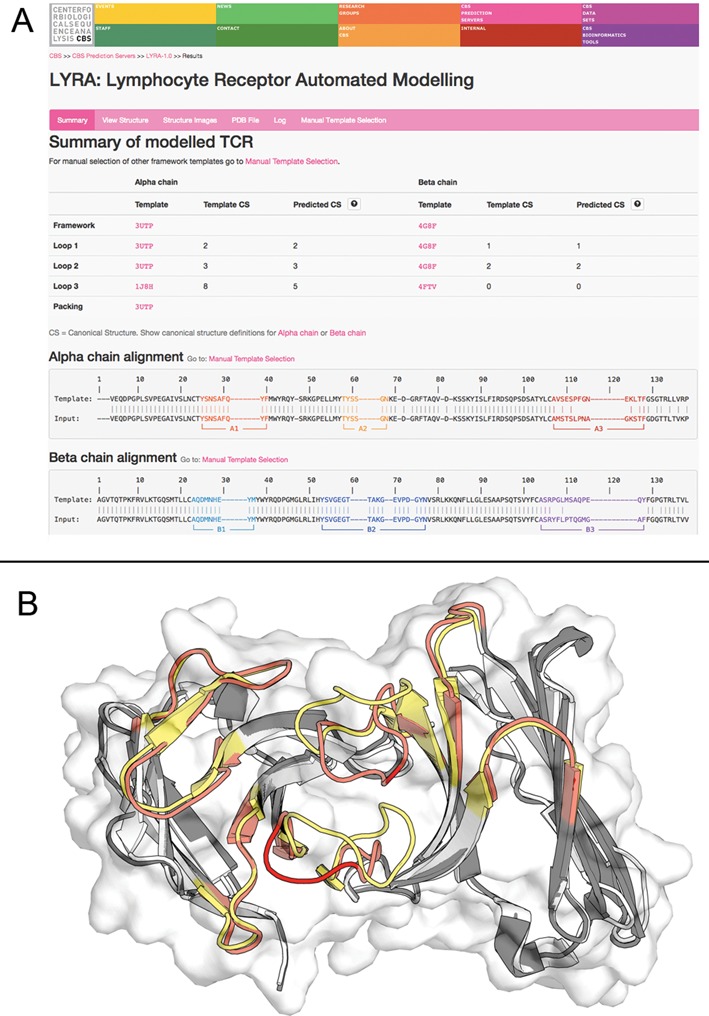
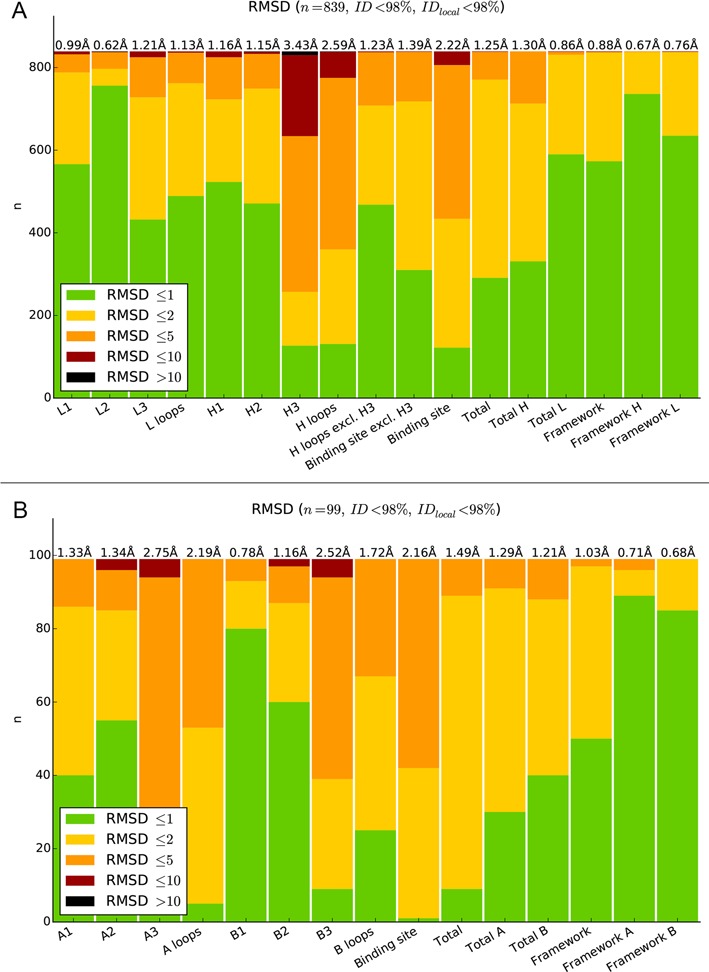
The accurate structural modeling of B- and T-cell receptors is fundamental to gain a detailed insight in the mechanisms underlying immunity and in developing new drugs and therapies. The LYRA (LYmphocyte Receptor Automated modeling) web server (http://www.cbs.dtu.dk/services/LYRA/) implements a complete and automated method for building of B- and T-cell receptor structural models starting from their amino acid sequence alone. The webserver is freely available and easy to use for non-specialists. Upon submission, LYRA automatically generates alignments using ad hoc profiles, predicts the structural class of each hypervariable loop, selects the best templates in an automatic fashion, and provides within minutes a complete 3D model that can be downloaded or inspected online. Experienced users can manually select or exclude template structures according to case specific information. LYRA is based on the canonical structure method, that in the last 30 years has been successfully used to generate antibody models of high accuracy, and in our benchmarks this approach proves to achieve similarly good results on TCR modeling, with a benchmarked average RMSD accuracy of 1.29 and 1.48 Å for B- and T-cell receptors, respectively. To the best of our knowledge, LYRA is the first automated server for the prediction of TCR structure.
© The Author(s) 2015. Published by Oxford University Press on behalf of Nucleic Acids Research.
Figures
References
-
- Janeway C. Immunobiology : The Immune System in Health and Disease. 6th edn. NY: Garland Science; 2005.
-
- Marcatili P., Ghiotto F., Tenca C., Chailyan A., Mazzarello A.N., Yan X.J., Colombo M., Albesiano E., Bagnara D., Cutrona G., et al. Igs expressed by chronic lymphocytic leukemia B cells show limited binding-site structure variability. J. Immunol. 2013;190:5771–5778. - PubMed
-
- Shirai H., Prades C., Vita R., Marcatili P., Popovic B., Xu J., Overington J.P., Hirayama K., Soga S., Tsunoyama K., et al. Antibody informatics for drug discovery. Biochim. Biophys. Acta. 2014;1844:2002–2015. - PubMed
Publication types
MeSH terms
Substances
Grants and funding
LinkOut - more resources
Full Text Sources
Other Literature Sources
