Review
doi: 10.4103/2229-5178.156381.
Clinical photography in dermatology using smartphones: An overview
Affiliations
- PMID: 26009708
- PMCID: PMC4439742
- DOI: 10.4103/2229-5178.156381
Item in Clipboard
Review
Clinical photography in dermatology using smartphones: An overview
Indian Dermatol Online J.
2015 May-Jun.
Abstract
The smartphone is one of the biggest revolutions in the era of information technology. Its built in camera offers several advantages. Dermatologists, who handle a specialty that is inherently visual, are most benefited by this handy technology. Here in this article, we attempt to provide an overview of smartphone photography in clinical dermatology in order to help the dermatologist to get the best out of the available camera for clinical imaging and storage.
Keywords: Applications; apps; clinical photography; imaging; smartphone.
Conflict of interest statement
Figures
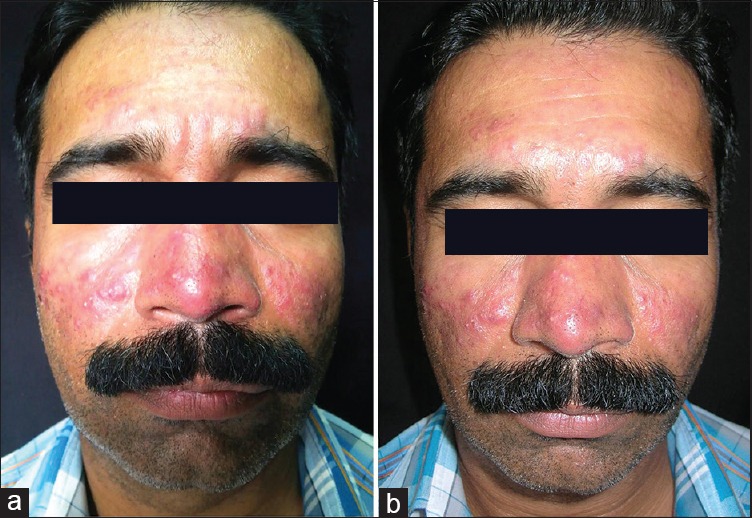
A comparison of clinical images of the face of a patient with rosacea taken with a (a) BlackBerry Z10™ Smartphone camera 8MP and (b) a dedicated camera Nikon Cool Pix4MP. The image with the mobile phone is distinctly less sharp though it too conveys enough information about the nature of the lesions. The slight distortion of the facial shape is also noticeable with the mobile phone image
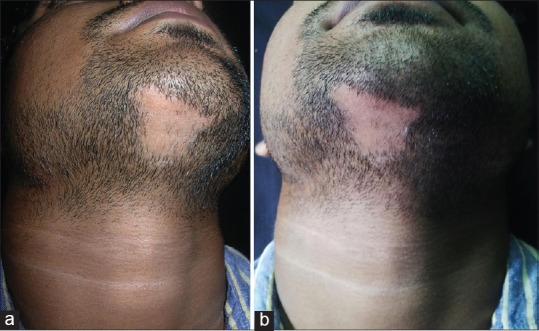
Images taken with (a) Compact camera and (b) Smartphone showing the blurriness of the image, which was not so evident on preview and hence deceptive on the large screen of the smartphone
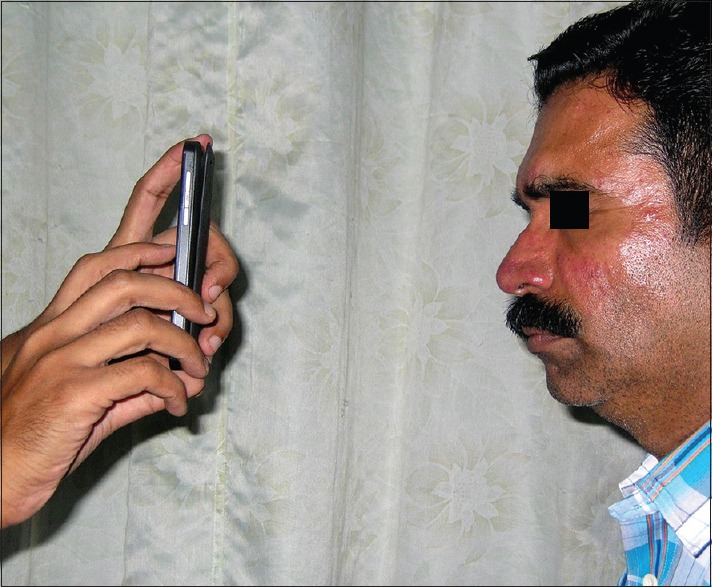
Ideal positioning of the mobile phone for taking images of lesions over the face
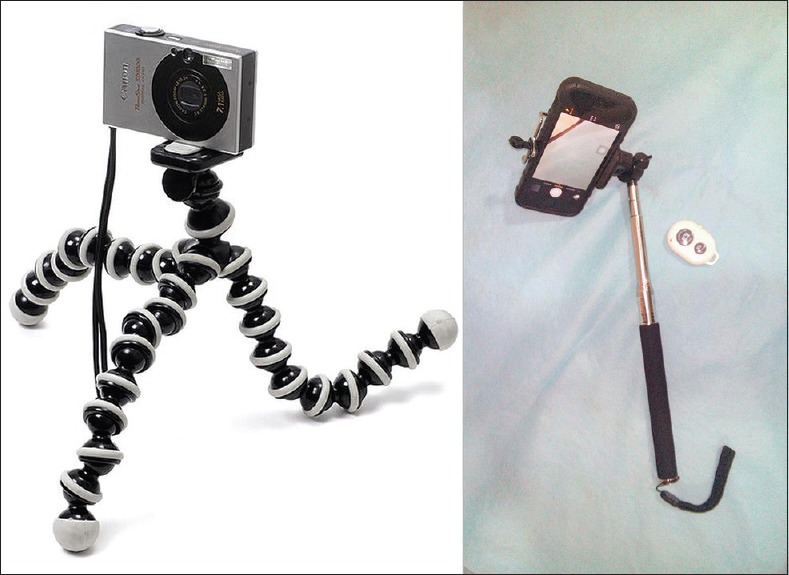
(a) Gorillapod, a very versatile and handy tool to avoid shake for close-up photography. Image accessed from http://commons.wikimedia.org/wiki/File:Gorillapod-with-camera.jpg (b) Monopod for smartphone. (Image Courtesy of Dr. Feroz K., Consultant Dermatologist, Skin Care Clinic, Kannur, Kerala, India)
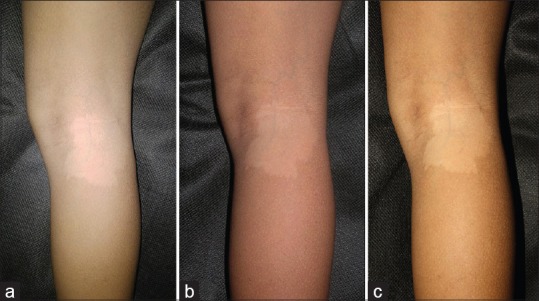
Images of a nevus depigmentosus patch in a child taken in auto flash mode. (a) Smartphone camera (BlackBerry Z10™) (b) CANON EOS™450D (c) NikonCoolPix™ 4800. The excessive “whiteness” of the lesion is evident in the image shot with the smartphone
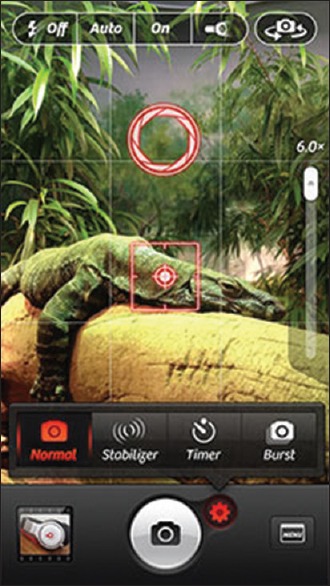
Camera+ app screenshot: Allows advanced controls such as independent focus and exposure
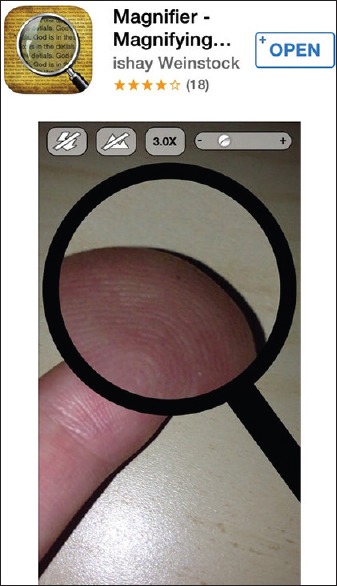
Screenshot of the Magnifier app: Allow up to 3×-4× magnification and image capture
References
-
- Vinekar A, Gilbert C, Dogra M, Kurian M, Shainesh G, Shetty B, et al. The KIDROP model of combining strategies for providing retinopathy of prematurity screening in underserved areas in India using wide-field imaging, tele-medicine, non-physician graders and smart phone reporting. Indian J Ophthalmol. 2014;62:41–9. - PMC - PubMed
-
- Kunde L, McMeniman E, Parker M. Clinical photography in dermatology: Ethical and medico-legal considerations in the age of digital and smartphone technology. Australas J Dermatol. 2013;54:192–7. - PubMed
-
- Kaliyadan F, Manoj J, Venkitakrishnan S, Dharmaratnam AD. Basic digital photography in dermatology. Indian J Dermatol Venereol Leprol. 2008;74:532–6. - PubMed
Publication types
LinkOut - more resources
Full Text Sources
Other Literature Sources