Efficacy and moderators of a family group cognitive-behavioral preventive intervention for children of parents with depression
- PMID: 26009786
- PMCID: PMC4445475
- DOI: 10.1037/a0039053
Efficacy and moderators of a family group cognitive-behavioral preventive intervention for children of parents with depression
Abstract
Objective: Building on an earlier study (Compas, Forehand, Thigpen, et al., 2011), tests of main effects and potential moderators of a family group cognitive-behavioral (FGCB) preventive intervention for children of parents with a history of depression are reported.
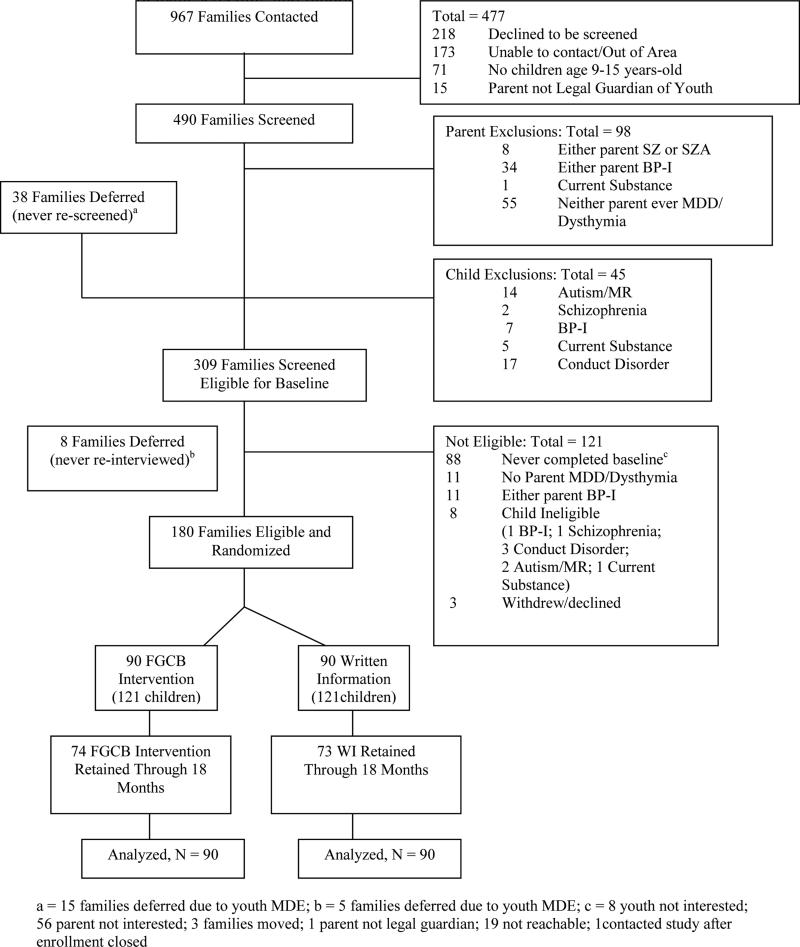
Method: Assessed a sample of 180 families (242 children ages 9-15 years) in a randomized controlled trial assessed at 2, 6, 12, 18 and 24 months after baseline.
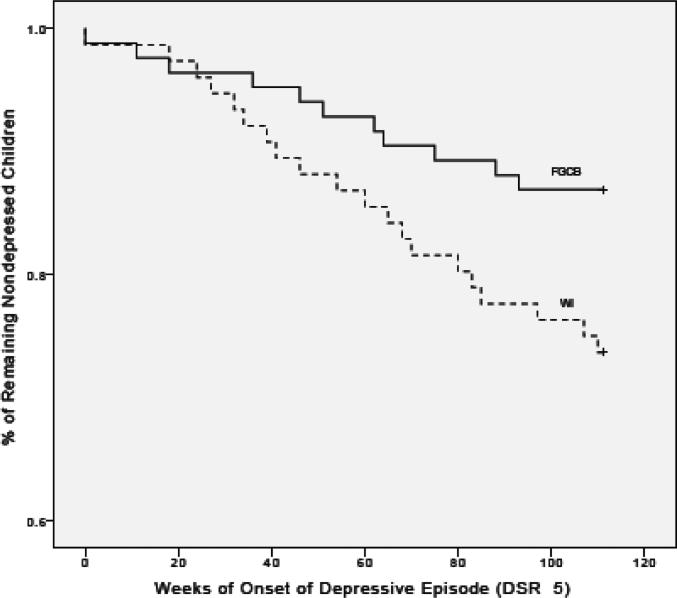
Results: Significant effects favoring the FGCB intervention over a written information comparison condition were found on measures of children's symptoms of depression, mixed anxiety/depression, internalizing problems, and externalizing problems, with multiple effects maintained at 18 and 24 months, and on incidence of child episodes of major depressive disorder over the 24 months. Effects were stronger for child self-reports than for parent reports. Minimal evidence was found for child age, child gender, parental education, parental depressive symptoms, or presence of a current parental depressive episode at baseline as moderators of the FGCB intervention.
Conclusions: The findings provide support for sustained and robust effects of this preventive intervention.
(c) 2015 APA, all rights reserved).
Figures
References
-
- Achenbach TM, Rescorla LA. Manual for ASEBA School-Age Forms and Profiles. University of Vermont, Research Center for Children, Youth, and Families; Burlington, VT: 2001.
-
- Aiken LS, West SG. Multiple regression: Testing and interpreting interactions. Sage Publications; Thousand Oaks, CA: 1991.
Publication types
MeSH terms
Grants and funding
LinkOut - more resources
Full Text Sources
Other Literature Sources
Medical