


The posterior medial cortex in urologic chronic pelvic pain syndrome: detachment from default mode network-a resting-state study from the MAPP Research Network
- PMID: 26010458
- PMCID: PMC4545714
- DOI: 10.1097/j.pain.0000000000000238
The posterior medial cortex in urologic chronic pelvic pain syndrome: detachment from default mode network-a resting-state study from the MAPP Research Network
Abstract
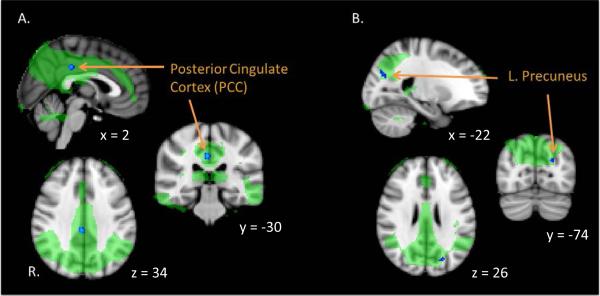
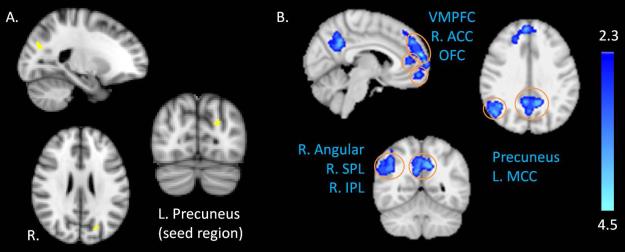
Altered resting-state (RS) brain activity, as a measure of functional connectivity (FC), is commonly observed in chronic pain. Identifying a reliable signature pattern of altered RS activity for chronic pain could provide strong mechanistic insights and serve as a highly beneficial neuroimaging-based diagnostic tool. We collected and analyzed RS functional magnetic resonance imaging data from female patients with urologic chronic pelvic pain syndrome (N = 45) and matched healthy participants (N = 45) as part of an NIDDK-funded multicenter project (www.mappnetwork.org). Using dual regression and seed-based analyses, we observed significantly decreased FC of the default mode network to 2 regions in the posterior medial cortex (PMC): the posterior cingulate cortex (PCC) and the left precuneus (threshold-free cluster enhancement, family-wise error corrected P < 0.05). Further investigation revealed that patients demonstrated increased FC between the PCC and several brain regions implicated in pain, sensory, motor, and emotion regulation processes (eg, insular cortex, dorsolateral prefrontal cortex, thalamus, globus pallidus, putamen, amygdala, hippocampus). The left precuneus demonstrated decreased FC to several regions of pain processing, reward, and higher executive functioning within the prefrontal (orbitofrontal, anterior cingulate, ventromedial prefrontal) and parietal cortices (angular gyrus, superior and inferior parietal lobules). The altered PMC connectivity was associated with several phenotype measures, including pain and urologic symptom intensity, depression, anxiety, quality of relationships, and self-esteem levels in patients. Collectively, these findings indicate that in patients with urologic chronic pelvic pain syndrome, regions of the PMC are detached from the default mode network, whereas neurological processes of self-referential thought and introspection may be joined to pain and emotion regulatory processes.
Figures

References
-
- Apkarian AV. Cortical pathophysiology of chronic pain. Novartis Found Symp. 2004;261:239–245. discussion 245-261. - PubMed
Publication types
MeSH terms
Grants and funding
- U01 DK082345/DK/NIDDK NIH HHS/United States
- U01 DK082315/DK/NIDDK NIH HHS/United States
- DK82342/DK/NIDDK NIH HHS/United States
- L30 DK103288/DK/NIDDK NIH HHS/United States
- DK82370/DK/NIDDK NIH HHS/United States
- U01 DK082333/DK/NIDDK NIH HHS/United States
- K24 DA29262/DA/NIDA NIH HHS/United States
- U24 DK082316/DK/NIDDK NIH HHS/United States
- DK82315/DK/NIDDK NIH HHS/United States
- P30 CA060553/CA/NCI NIH HHS/United States
- DK82344/DK/NIDDK NIH HHS/United States
- U01 DK082325/DK/NIDDK NIH HHS/United States
- T32 GM089626/GM/NIGMS NIH HHS/United States
- U01 DK082370/DK/NIDDK NIH HHS/United States
- U01 DK082342/DK/NIDDK NIH HHS/United States
- DK82345/DK/NIDDK NIH HHS/United States
- DK82316/DK/NIDDK NIH HHS/United States
- U01 DK082316/DK/NIDDK NIH HHS/United States
- K24 DA029262/DA/NIDA NIH HHS/United States
- U01 DK082344/DK/NIDDK NIH HHS/United States
- T32 GM89626/GM/NIGMS NIH HHS/United States
- DK82333/DK/NIDDK NIH HHS/United States
- U24 DK082333/DK/NIDDK NIH HHS/United States
- DK82325/DK/NIDDK NIH HHS/United States
LinkOut - more resources
Full Text Sources
Other Literature Sources
Medical
