


Quantifying the ozone and ultraviolet benefits already achieved by the Montreal Protocol
- PMID: 26011106
- PMCID: PMC4455099
- DOI: 10.1038/ncomms8233
Quantifying the ozone and ultraviolet benefits already achieved by the Montreal Protocol
Abstract
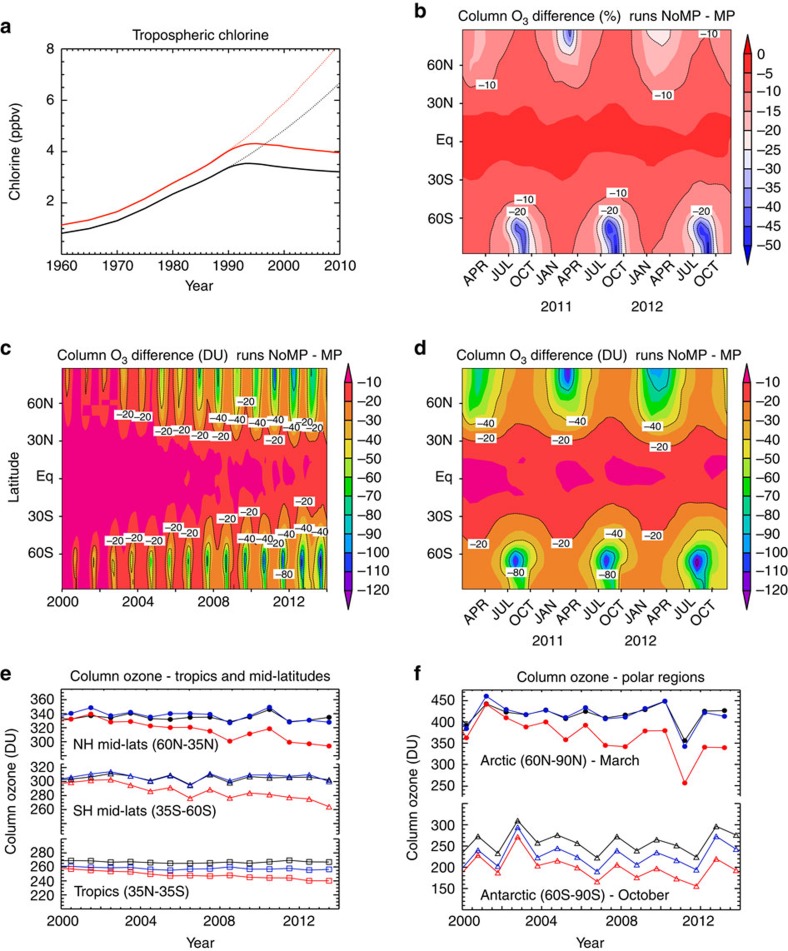
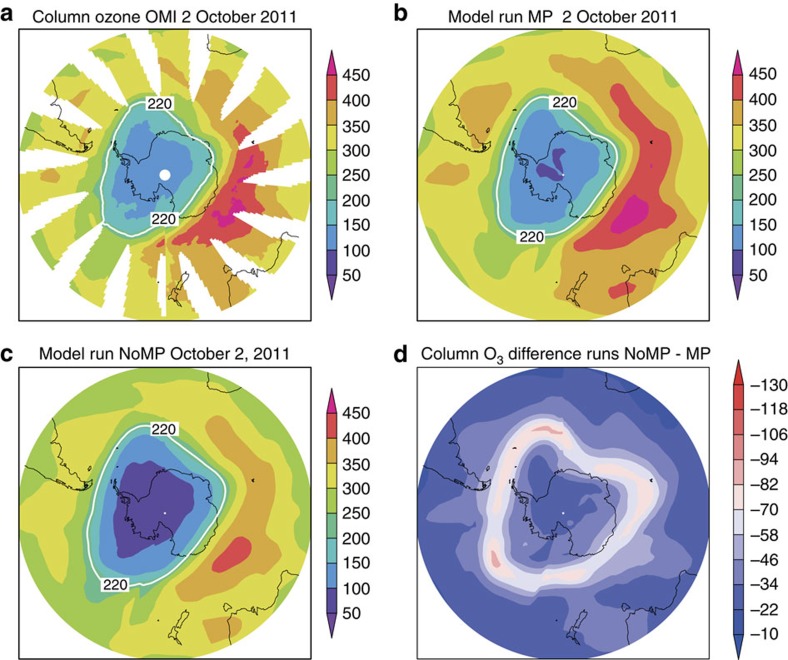
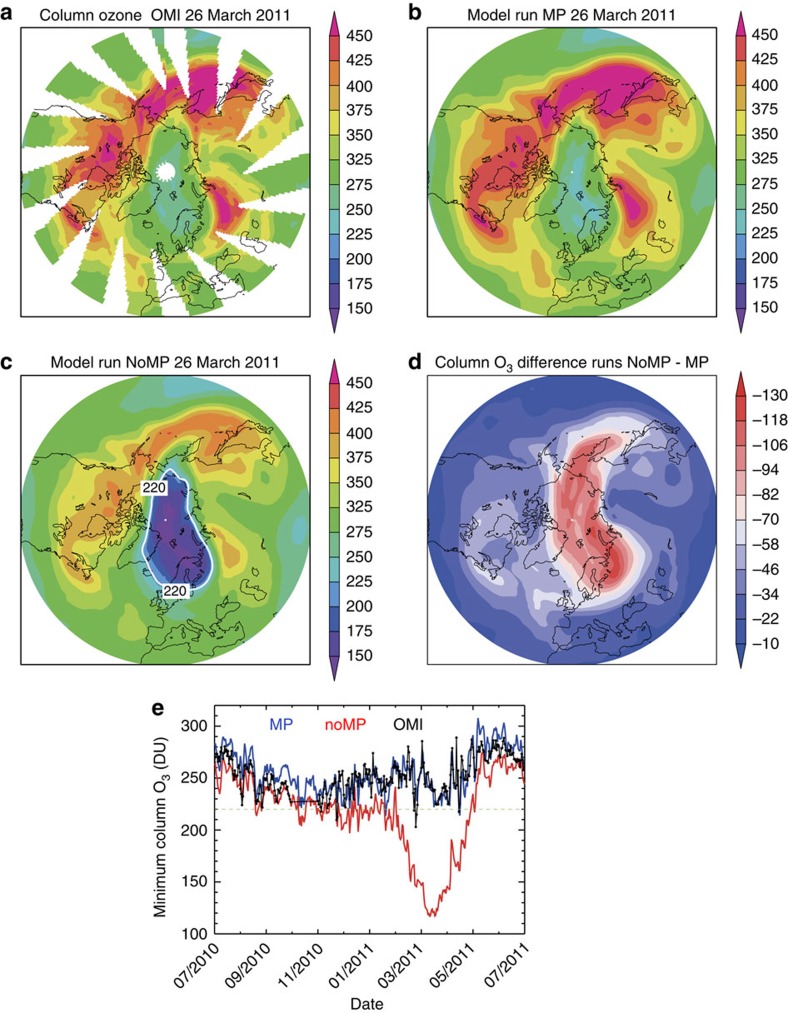
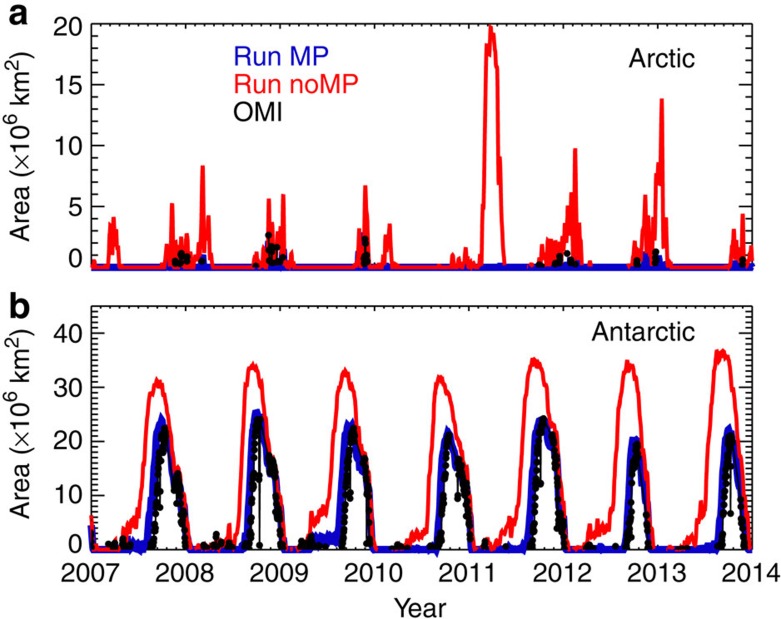
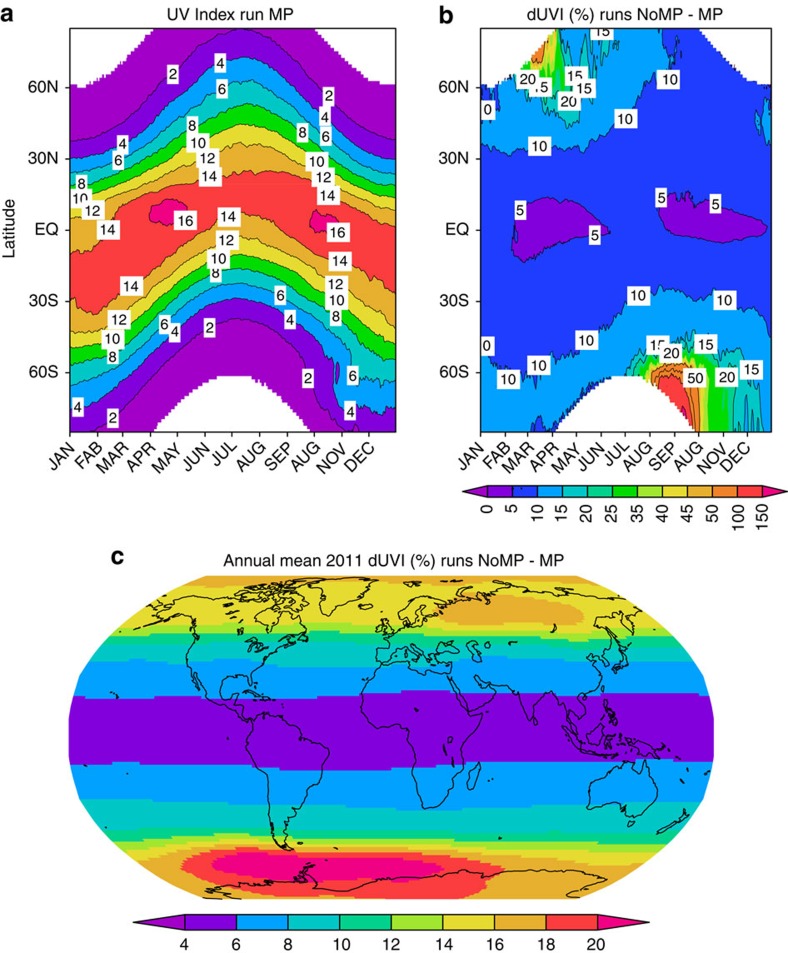
Chlorine- and bromine-containing ozone-depleting substances (ODSs) are controlled by the 1987 Montreal Protocol. In consequence, atmospheric equivalent chlorine peaked in 1993 and has been declining slowly since then. Consistent with this, models project a gradual increase in stratospheric ozone with the Antarctic ozone hole expected to disappear by ∼2050. However, we show that by 2013 the Montreal Protocol had already achieved significant benefits for the ozone layer. Using a 3D atmospheric chemistry transport model, we demonstrate that much larger ozone depletion than observed has been avoided by the protocol, with beneficial impacts on surface ultraviolet. A deep Arctic ozone hole, with column values <120 DU, would have occurred given meteorological conditions in 2011. The Antarctic ozone hole would have grown in size by 40% by 2013, with enhanced loss at subpolar latitudes. The decline over northern hemisphere middle latitudes would have continued, more than doubling to ∼15% by 2013.
Figures
References
-
- Molina M. J. & Rowland F. S. Stratospheric sink for chlorofluoromethanes: chlorine atom-catalysed destruction of ozone. Nature 249, 810–812 (1974).
-
- Farman J. C., Gardiner B. G. & Shanklin J. D. Large losses of total ozone in Antarctica reveal seasonal ClOx/NOx interaction. Nature 315, 207–210 (1985).
-
- Solomon S. Stratospheric ozone depletion: a review of concepts and history. Rev. Geophys. 37, 275–316 (1999).
-
- Salawitch R. J. et al. Chemical loss of ozone in the Arctic polar vortex in the winter of 1991-1992. Science 261, 1146–1149 (1993). - PubMed
-
- Rex M. et al. Prolonged stratospheric ozone loss in the 1995-96 Arctic winter. Nature 389, 835–838 (1997).
Publication types
LinkOut - more resources
Full Text Sources
Other Literature Sources
