


Changes in cortical N-methyl-D-aspartate receptors and post-synaptic density protein 95 in schizophrenia, mood disorders and suicide
- PMID: 26013316
- PMCID: PMC7683009
- DOI: 10.1177/0004867415586601
Changes in cortical N-methyl-D-aspartate receptors and post-synaptic density protein 95 in schizophrenia, mood disorders and suicide
Abstract
Objectives: In humans, depending on dose, blocking the N-methyl-D-aspartate receptor (NMDAR) with ketamine can cause psychomimetic or antidepressant effects. The overall outcome for drugs such as ketamine depends on dose and the number of its available binding sites in the central nervous system, and to understand something of the latter variable we measure NMDAR in the frontal pole, dorsolateral prefrontal, anterior cingulate and parietal cortices from people with schizophrenia, bipolar disorder, major depressive disorders and age/sex matched controls.
Method: We measured levels of NMDARs (using [(3)H]MK-801 binding) and NMDAR sub-unit mRNAs (GRINs: using in situ hybridisation) as well as post-synaptic density protein 95 (anterior cingulate cortex only; not major depressive disorders: an NMDAR post-synaptic associated protein) in bipolar disorder, schizophrenia and controls.
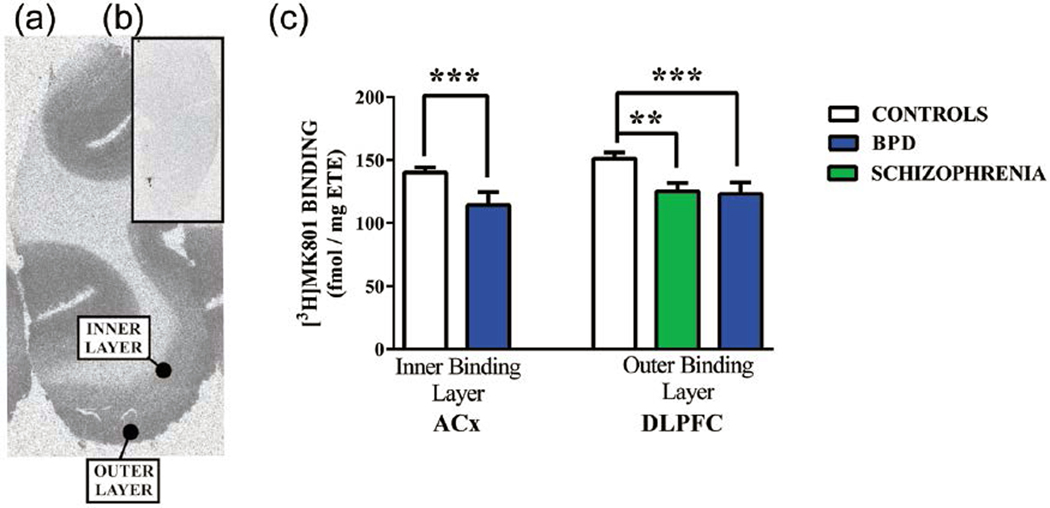
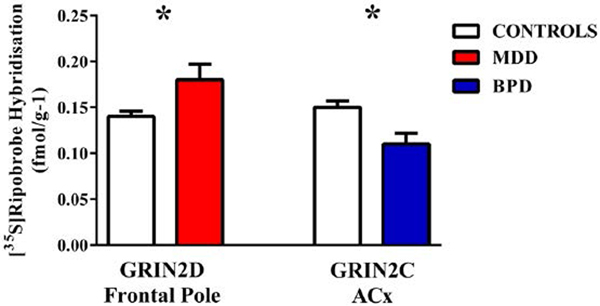
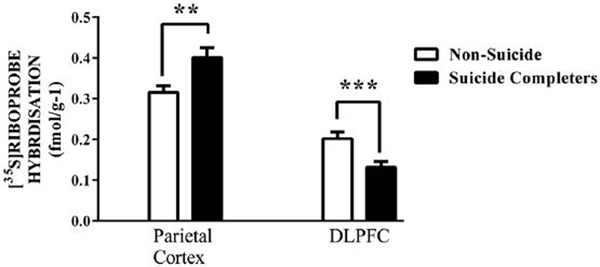
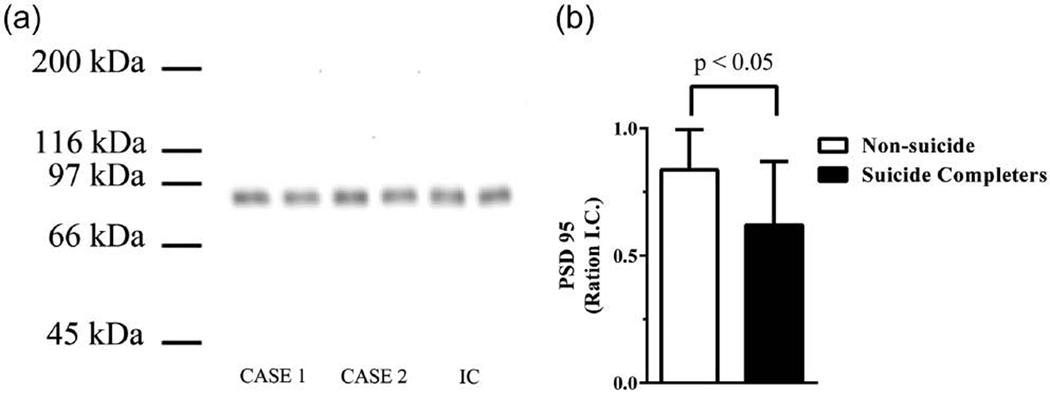
Results: Compared to controls, levels of NMDAR were lower in the outer laminae of the dorsolateral prefrontal cortex (-17%, p = 0.01) in people with schizophrenia. In bipolar disorder, levels of NMDAR binding (laminae IV-VI; -19%, p < 0.01) and GRIN2C mRNA (laminae I-VI; -27%, p < 0.05) were lower in the anterior cingulate cortex and NMDAR binding was lower in the outer lamina IV of the dorsolateral prefrontal cortex (-19%, p < 0.01). In major depressive disorders, levels of GRIN2D mRNA were higher in frontal pole (+22%, p < 0.05). In suicide completers, levels of GRIN2B mRNA were higher in parietal cortex (+20%, p < 0.01) but lower (-35%, p = 0.02) in dorsolateral prefrontal cortex while post-synaptic density protein 95 was higher (+26%, p < 0.05) in anterior cingulate cortex.
Conclusion: These data suggest that differences in cortical NMDAR expression and post-synaptic density protein 95 are present in psychiatric disorders and suicide completion and may contribute to different responses to ketamine.
Keywords: NMDA; Schizophrenia; bipolar disorders; cortex; major depressive disorders.
© The Royal Australian and New Zealand College of Psychiatrists 2015.
Conflict of interest statement
Declaration of interest
None of the authors have any conflict of interest, and the research described in this manuscript was completed in the absence of any commercial or financial relationships that could be construed as a potential conflict of interest. E.S. has previously received honorarium from Astra-Zeneca and travel support from GSK that were unrelated to this research.
Figures
References
-
- Basham ME, Nordeen EJ and Nordeen KW (1996) Blockade of NMDA receptors in the anterior forebrain impairs sensory acquisition in the zebra finch (Poephila guttata). Neurobiology of Learning and Memory 66: 295–304. - PubMed
-
- Beneyto M and Meador-Woodruff JH (2008) Lamina-specific abnormalities of NMDA receptor-associated postsynaptic protein transcripts in the prefrontal cortex in schizophrenia and bipolar disorder. Neuropsychopharmacology 33: 2175–2186. - PubMed
-
- Beneyto M, Kristiansen LV, Oni-Orisan A, et al. (2007) Abnormal glutamate receptor expression in the medial temporal lobe in schizophrenia and mood disorders. Neuropsychopharmacology 32: 1888–1902. - PubMed
Publication types
MeSH terms
Substances
Grants and funding
LinkOut - more resources
Full Text Sources
Other Literature Sources
Medical
Miscellaneous
