


Response Rates to Anticonvulsant Trials in Patients with Triphasic-Wave EEG Patterns of Uncertain Significance
- PMID: 26013921
- PMCID: PMC4870012
- DOI: 10.1007/s12028-015-0151-8
Response Rates to Anticonvulsant Trials in Patients with Triphasic-Wave EEG Patterns of Uncertain Significance
Abstract
Background: Generalized triphasic waves (TPWs) occur in both metabolic encephalopathies and non-convulsive status epilepticus (NCSE). Empiric trials of benzodiazepines (BZDs) or non-sedating AED (NSAEDs) are commonly used to differentiate the two, but the utility of such trials is debated. The goal of this study was to assess response rates of such trials and investigate whether metabolic profile differences affect the likelihood of a response.
Methods: Three institutions within the Critical Care EEG Monitoring Research Consortium retrospectively identified patients with unexplained encephalopathy and TPWs who had undergone a trial of BZD and/or NSAEDs to differentiate between ictal and non-ictal patterns. We assessed responder rates and compared metabolic profiles of responders and non-responders. Response was defined as resolution of the EEG pattern and either unequivocal improvement in encephalopathy or appearance of previously absent normal EEG patterns, and further categorized as immediate (within <2 h of trial initiation) or delayed (>2 h from trial initiation).
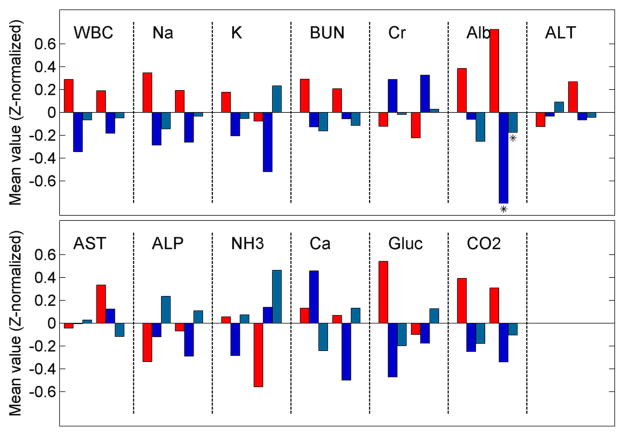
Results: We identified 64 patients with TPWs who had an empiric trial of BZD and/or NSAED. Most patients (71.9%) were admitted with metabolic derangements and/or infection. Positive clinical responses occurred in 10/53 (18.9%) treated with BZDs. Responses to NSAEDs occurred in 19/45 (42.2%), being immediate in 6.7%, delayed but definite in 20.0%, and delayed but equivocal in 15.6%. Overall, 22/64 (34.4%) showed a definite response to either BZDs or NSAEDs, and 7/64 (10.9%) showed a possible response. Metabolic differences of responders versus non-responders were statistically insignificant, except that the 48-h low value of albumin in the BZD responder group was lower than in the non-responder group.
Conclusions: Similar metabolic profiles in patients with encephalopathy and TPWs between responders and non-responders to anticonvulsants suggest that predicting responders a priori is difficult. The high responder rate suggests that empiric trials of anticonvulsants indeed provide useful clinical information. The more than twofold higher response rate to NSAEDs suggests that this strategy may be preferable to BZDs. Further prospective investigation is warranted.
Keywords: Encephalopathy; Generalized periodic discharges; Non-convulsive status epilepticus; Triphasic waves.
Figures
References
-
- Bahamon-Dussan JE, Celesia GG, Grigg-Damberger MM. Prognostic significance of EEG triphasic waves in patients with altered state of consciousness. J Clin Neurophysiol Off Publ Am Electroencephalogr Soc. 1989;6:313–9. - PubMed
-
- Eidelman LA, Putterman D, Putterman C, Sprung CL. The spectrum of septic encephalopathy. Definitions, etiologies, and mortalities. JAMA. 1996;275:470–3. - PubMed
-
- Ely EW, Shintani A, Truman B, Speroff T, Gordon SM, Harrell FE, et al. Delirium as a predictor of mortality in mechanically ventilated patients in the intensive care unit. JAMA. 2004;291:1753–62. - PubMed
-
- Ogunyemi A. Triphasic waves during post-ictal stupor. Can J Neurol Sci. 1996;23:208–12. - PubMed
Publication types
MeSH terms
Substances
Grants and funding
LinkOut - more resources
Full Text Sources
Other Literature Sources
Medical
