


Appendicitis in children less than five years old: A challenge for the general practitioner
- PMID: 26015876
- PMCID: PMC4438437
- DOI: 10.5409/wjcp.v4.i2.19
Appendicitis in children less than five years old: A challenge for the general practitioner
Abstract
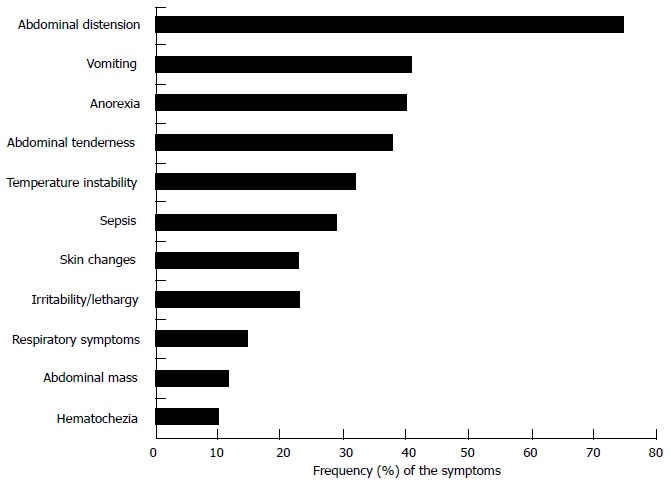
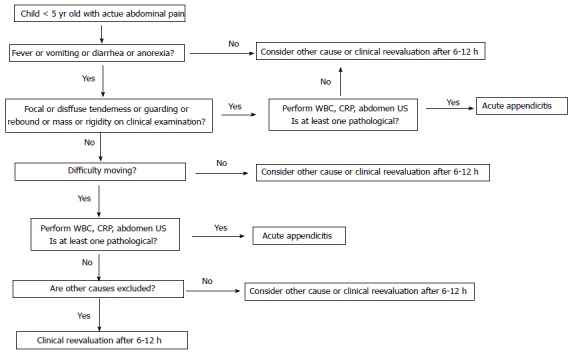
Acute appendicitis is one of the most common indications for abdominal surgery in pediatrics with peak incidence in the second decade of life. Acute appendicitis in the first years of life is an uncommon event. The clinical presentation is often varied and the diagnosis may be overshadowed by other medical conditions. Gastroenteritis is the most common misdiagnosis, with a history of diarrhea present in 33% to 41% of patients. Pain is the most common presenting symptom in children less than 5 years old, followed by vomiting, fever, anorexia and diarrhea. The most common physical sign is focal tenderness (61% of the patients) followed by guarding (55%), diffuse tenderness (39%), rebound (32%), and mass (6%). Neonatal appendicitis is a very rare disease with high mortality; presenting symptoms are nonspecific with abdominal distension representing the main clinical presentation. The younger the patient, the earlier perforation occurs: 70% of patients less than 3 years develop a perforation within 48 h of onset of symptoms. A timely diagnosis reduces the risk of complications. We highlight the epidemiology, pathophysiology, clinical signs and laboratory clues of appendicitis in young children and suggest an algorithm for early diagnosis.
Keywords: Appendicitis; Appendicitis complications; Children; Early diagnosis; Newborn.
Figures
References
-
- Addiss DG, Shaffer N, Fowler BS, Tauxe RV. The epidemiology of appendicitis and appendectomy in the United States. Am J Epidemiol. 1990;132:910–925. - PubMed
-
- Hall MJ, DeFrances CJ, Williams SN, Golosinskiy A, Schwartzman A. National Hospital Discharge Survey: 2007 summary. Natl Health Stat Report. 2010;(29):1–20, 24. - PubMed
-
- Horwitz JR, Gursoy M, Jaksic T, Lally KP. Importance of diarrhea as a presenting symptom of appendicitis in very young children. Am J Surg. 1997;173:80–82. - PubMed
-
- Irish MS, Pearl RH, Caty MG, Glick PL. The approach to common abdominal diagnosis in infants and children. Pediatr Clin North Am. 1998;45:729–772. - PubMed
Publication types
LinkOut - more resources
Full Text Sources
Other Literature Sources
Medical
