


Aggregated clumps of lithistid sponges: a singular, reef-like bathyal habitat with relevant paleontological connections
- PMID: 26016786
- PMCID: PMC4446211
- DOI: 10.1371/journal.pone.0125378
Aggregated clumps of lithistid sponges: a singular, reef-like bathyal habitat with relevant paleontological connections
Abstract
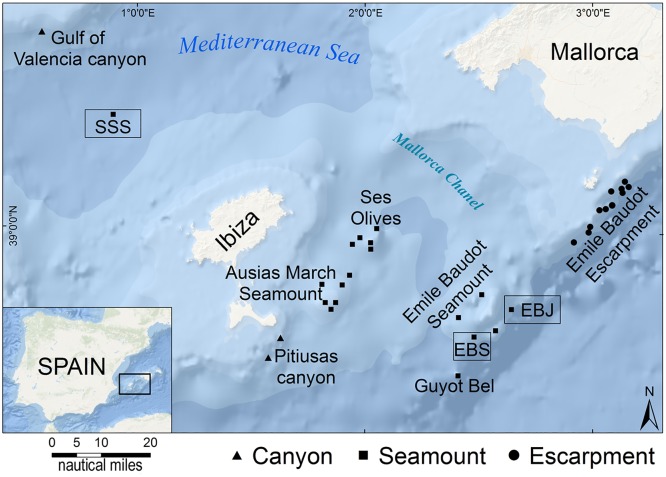
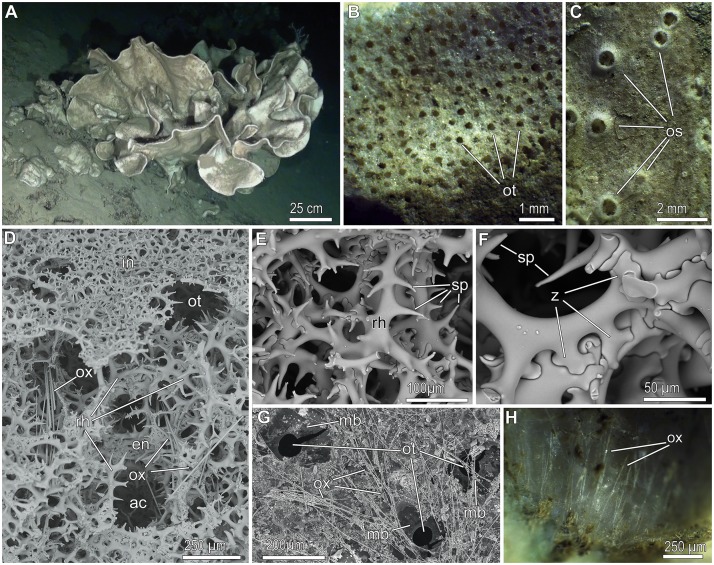
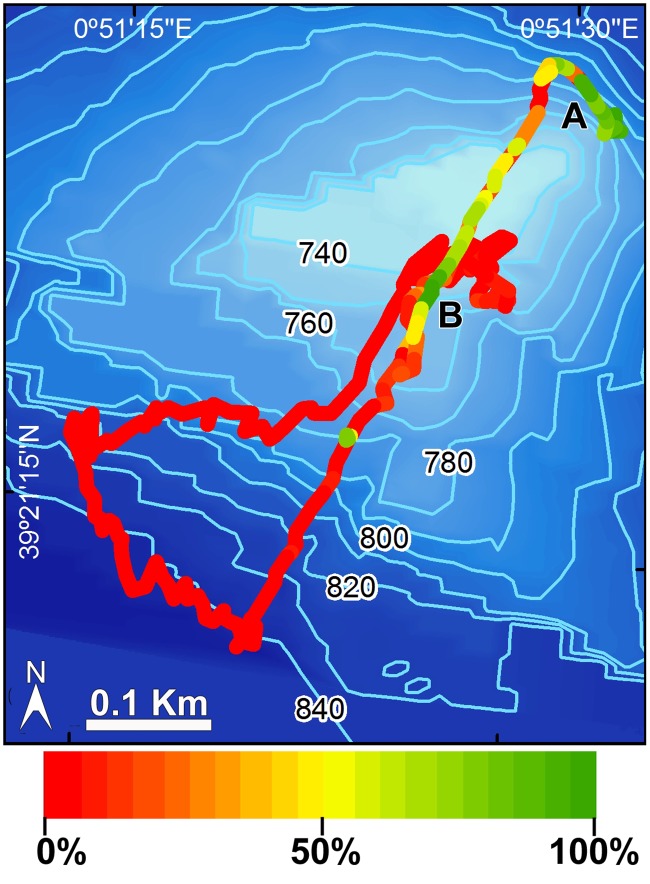
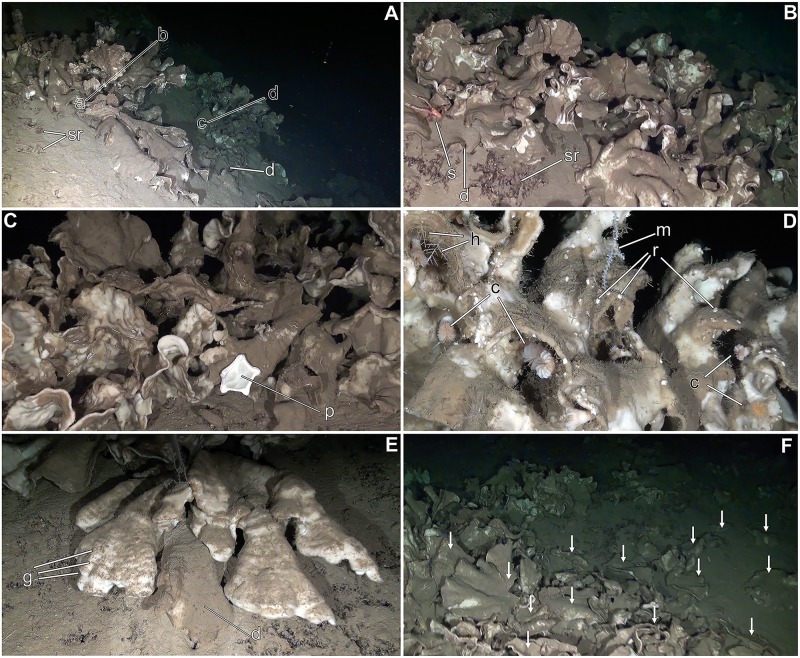
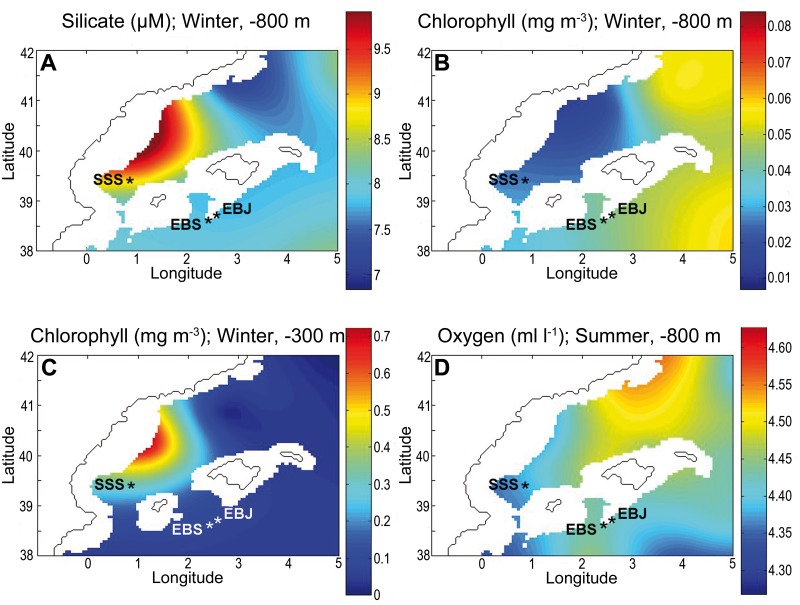
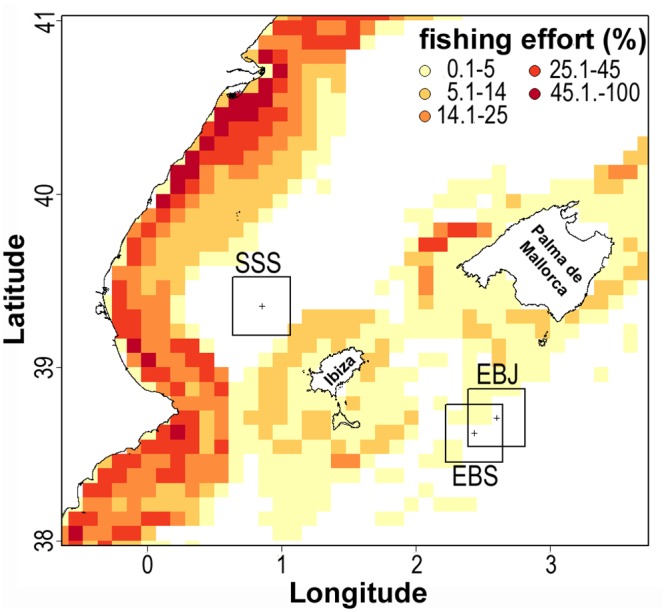
The advent of deep-sea exploration using video cameras has uncovered extensive sponge aggregations in virtually all oceans. Yet, a distinct type is herein reported from the Mediterranean: a monospecific reef-like formation built by the lithistid demosponge Leiodermatium pfeifferae. Erect, plate-like individuals (up to 80 cm) form bulky clumps, making up to 1.8 m high mounds (1.14 m on average) on the bottom, at a 760 m-deep seamount named SSS. The siliceous skeletal frameworks of the lithistids persist after sponge death, serving as a complex 3D substratum where new lithistids recruit, along with a varied fauna of other sessile and vagile organisms. The intricate aggregation of lithistid mounds functions as a "reef" formation, architecturally different from the archetypal "demosponge gardens" with disaggregating siliceous skeletons. Leiodermatium pfeifferae also occurred at two additional, close seamounts (EBJ and EBS), but, unlike at SSS, the isolated individuals never formed accretive clumps. The general oceanographic variables (temperature, salinity, dissolved nutrients, chlorophyll, and oxygen) revealed only minimal between-seamount differences, which cannot explain why sponge abundance at SSS is about two orders of magnitude higher than at EBJ or EBS. Large areas of the dense SSS aggregation were damaged, with detached and broken sponges and a few tangled fishing lines. Satellite vessel monitoring revealed low fishing activity around these seamounts. In contrast, international plans for gas and oil extraction at those locations raise serious concerns over the need for protecting urgently this unique, vulnerable habitat to avoid further alteration. Modern lithistids are a relict fauna from Jurassic and Cretaceous reefs and the roots of the very genus Leiodermatium can be traced back to those fossil formations. Therefore, understanding the causes behind the discovered lithistid aggregation is critical not only to its preservation, but also to elucidate how the extraordinary Mesozoic lithistid formations developed and functioned.
Conflict of interest statement
Figures
References
-
- Reiswig HM. Water transport, respiration and energetics of three tropical marine sponges. J Exp Mar Biol Ecol. 1974;14: 231–249.
-
- Pile AJ, Young CM. The natural diet of a hexactinellid sponge: Benthic-pelagic coupling in a deep-sea microbial food web. Deep-Sea Res. 2006;I 53: 1148–1156.
-
- Bell JJ. The functional roles of marine sponges. Estuar Coast Shelf Sci. 2008;79: 341–353.
-
- Buhl-Mortensen L, Vanreusel A, Gooday AJ, Levin LA, Priede IG, Buhl-Mortensen P, et al. Biological structures as a source of habitat heterogeneity and biodiversity on the deep ocean margins. Mar Ecol. 2010;31: 21–50.
-
- Hogg MM, Tendal OS, Conway KW, Pomponi SA, van Soest RWM, Gutt J, et al. Deep-Sea sponge grounds: Reservoirs of biodiversity. Cambridge: UNEP-WMCM; 2010.
Publication types
MeSH terms
Substances
LinkOut - more resources
Full Text Sources
Other Literature Sources
