


Impact of rapid influenza PCR testing on hospitalization and antiviral use: A retrospective cohort study
- PMID: 26017150
- PMCID: PMC4594176
- DOI: 10.1002/jmv.24279
Impact of rapid influenza PCR testing on hospitalization and antiviral use: A retrospective cohort study
Abstract
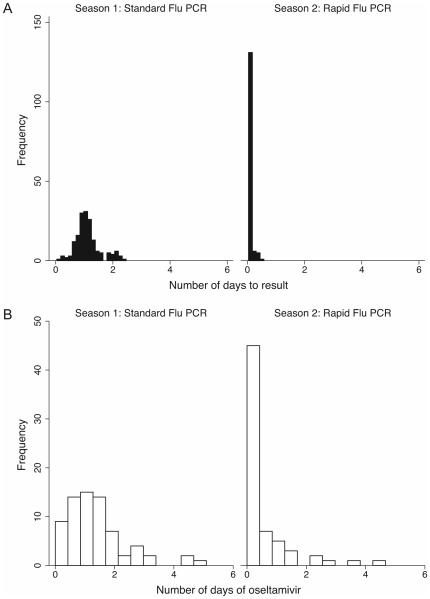
Rapid PCR-based influenza tests are increasingly used as point-of-care diagnostics in hospitals and clinics. To our knowledge, no prior studies have described clinical outcomes with implementation of rapid PCR-based influenza tests in hospitalized adult inpatients. Electronic medical records were used to assess differences in laboratory testing time and antiviral use among a subset of 175 consecutive adult inpatients tested for influenza in two respiratory seasons before and after implementation of rapid PCR-based influenza testing at an academic medical center. Of the 350 hospitalized inpatients included in this analysis, 96 (27%) were over 65 years of age and 308 (88%) had a comorbid condition. The overall time to result decreased significantly from 25.2 to 1.7 hr (P < 0.001) after implementation of rapid PCR-based influenza testing. Among influenza-negative patients, the frequency of oseltamivir initiation remained unchanged (before: 43% vs. after: 45%; P = 0.60), though the median duration of oseltamivir was significantly decreased from 1.1 to 0.0 days (P < 0.001). By providing an earlier result to clinicians, rapid PCR-based influenza tests may decrease unnecessary antiviral use among adult inpatients who test negative for influenza.
Keywords: PCR; infection control; influenza; oseltamivir.
© 2015 Wiley Periodicals, Inc.
Figures
References
-
- Bonner AB, Monroe KW, Talley LI, Klasner AE, Kimberlin DW. Impact of the rapid diagnosis of influenza on physician decision-making and patient management in the pediatric emergency department: Results of a randomized, prospective, controlled trial. Pediatrics. 2003;112:363–367. - PubMed
-
- Falsey AR, Murata Y, Walsh EE. Impact of rapid diagnosis on management of adults hospitalized with influenza. Arch Intern Med. 2007;167:354–360. - PubMed
Publication types
MeSH terms
Substances
Grants and funding
LinkOut - more resources
Full Text Sources
Other Literature Sources
Medical
