


Explaining variation in cancer survival between 11 jurisdictions in the International Cancer Benchmarking Partnership: a primary care vignette survey
- PMID: 26017370
- PMCID: PMC4452748
- DOI: 10.1136/bmjopen-2014-007212
Explaining variation in cancer survival between 11 jurisdictions in the International Cancer Benchmarking Partnership: a primary care vignette survey
Abstract
Objectives: The International Cancer Benchmarking Partnership (ICBP) is a collaboration between 6 countries and 12 jurisdictions with similar primary care-led health services. This study investigates primary care physician (PCP) behaviour and systems that may contribute to the timeliness of investigating for cancer and subsequently, international survival differences.
Design: A validated survey administered to PCPs via the internet set out in two parts: direct questions on primary care structure and practice relating to cancer diagnosis, and clinical vignettes, assessing management of scenarios relating to the diagnosis of lung, colorectal or ovarian cancer.
Participants: 2795 PCPs in 11 jurisdictions: New South Wales and Victoria (Australia), British Columbia, Manitoba, Ontario (Canada), England, Northern Ireland, Wales (UK), Denmark, Norway and Sweden.
Primary and secondary outcome measures: Analysis compared the cumulative proportion of PCPs in each jurisdiction opting to investigate or refer at each phase for each vignette with 1-year survival, and conditional 5-year survival rates for the relevant cancer and jurisdiction. Logistic regression was used to explore whether PCP characteristics or system differences in each jurisdiction affected the readiness to investigate.
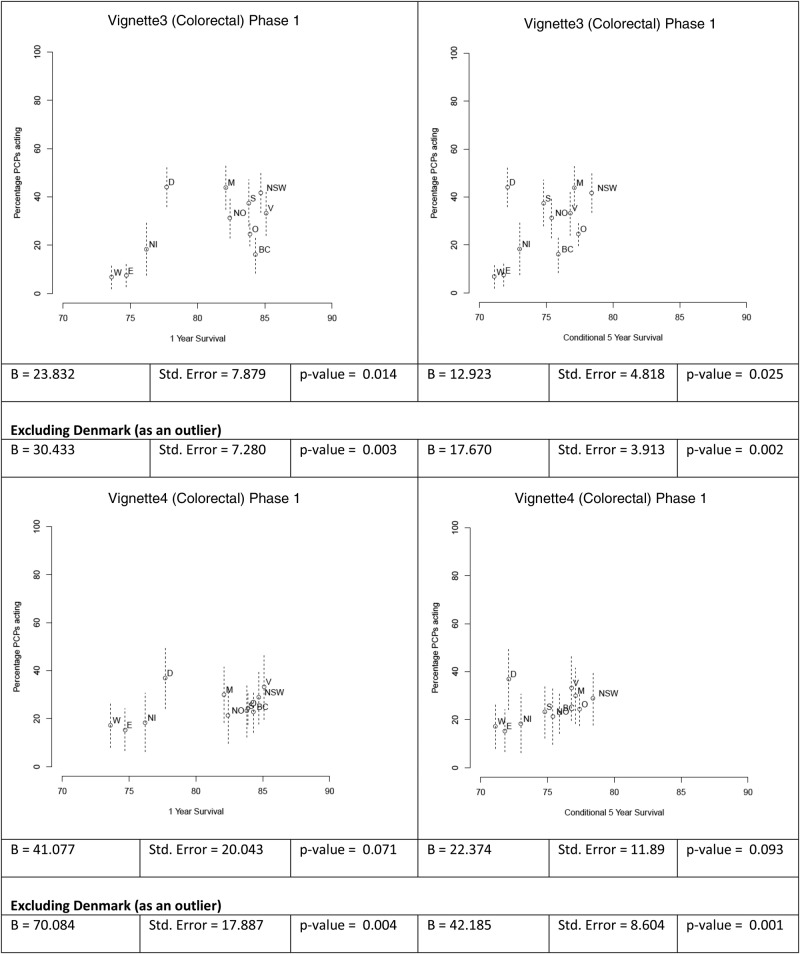
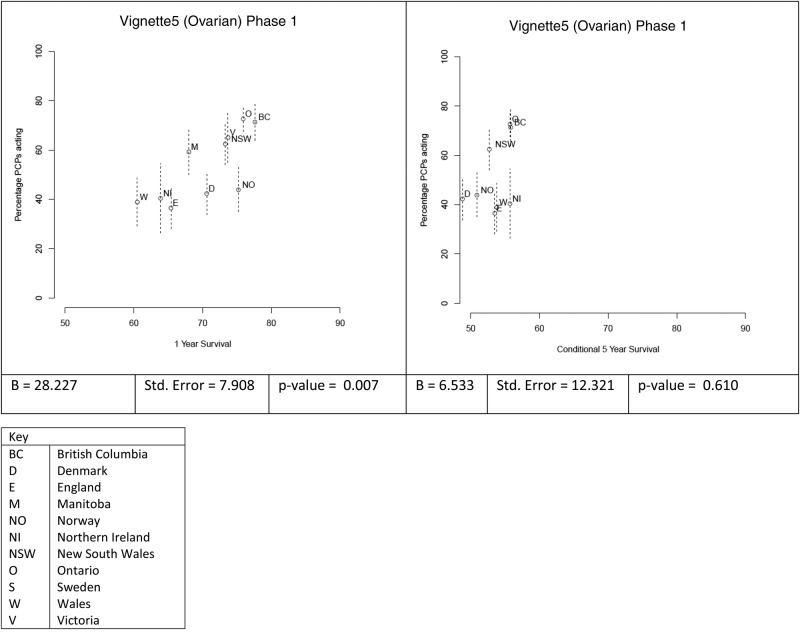
Results: 4 of 5 vignettes showed a statistically significant correlation (p<0.05 or better) between readiness to investigate or refer to secondary care at the first phase of each vignette and cancer survival rates for that jurisdiction. No consistent associations were found between readiness to investigate and selected PCP demographics, practice or health system variables.
Conclusions: We demonstrate a correlation between the readiness of PCPs to investigate symptoms indicative of cancer and cancer survival rates, one of the first possible explanations for the variation in cancer survival between ICBP countries. No specific health system features consistently explained these findings. Some jurisdictions may consider lowering thresholds for PCPs to investigate for cancer-either directly, or by specialist referral, to improve outcomes.
Keywords: HEALTH SERVICES ADMINISTRATION & MANAGEMENT; ONCOLOGY.
Published by the BMJ Publishing Group Limited. For permission to use (where not already granted under a licence) please go to http://group.bmj.com/group/rights-licensing/permissions.
Figures

Comment in
-
GP cancer referral delays may explain UK's low cancer survival rates.BMJ. 2015 May 28;350:h2926. doi: 10.1136/bmj.h2926. BMJ. 2015. PMID: 26021556 No abstract available.
References
-
- Coleman MP, Forman D, Bryant H et al. . Cancer survival in Australia, Canada, Denmark, Norway, Sweden, and the UK, 1995–2007 (the International Cancer Benchmarking Partnership): an analysis of population-based cancer registry data. Lancet 2011;377:127–38. 10.1016/S0140-6736(10)62231-3 - DOI - PMC - PubMed
-
- Walters S, Maringe C, Butler J et al. . Comparability of stage data in cancer registries in six countries: lessons from the International Cancer Benchmarking Partnership. IJC 2013;132:676–85. - PubMed
Publication types
MeSH terms
Associated data
LinkOut - more resources
Full Text Sources
Other Literature Sources
Medical
