


Endoplasmic reticulum quality control and systemic amyloid disease: Impacting protein stability from the inside out
- PMID: 26018985
- PMCID: PMC4485578
- DOI: 10.1002/iub.1386
Endoplasmic reticulum quality control and systemic amyloid disease: Impacting protein stability from the inside out
Abstract
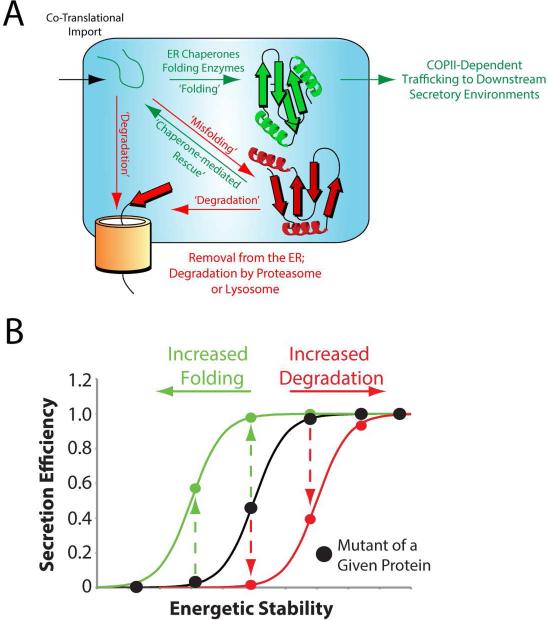
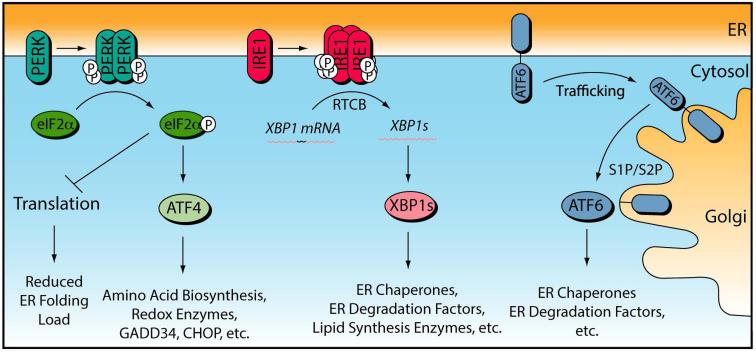
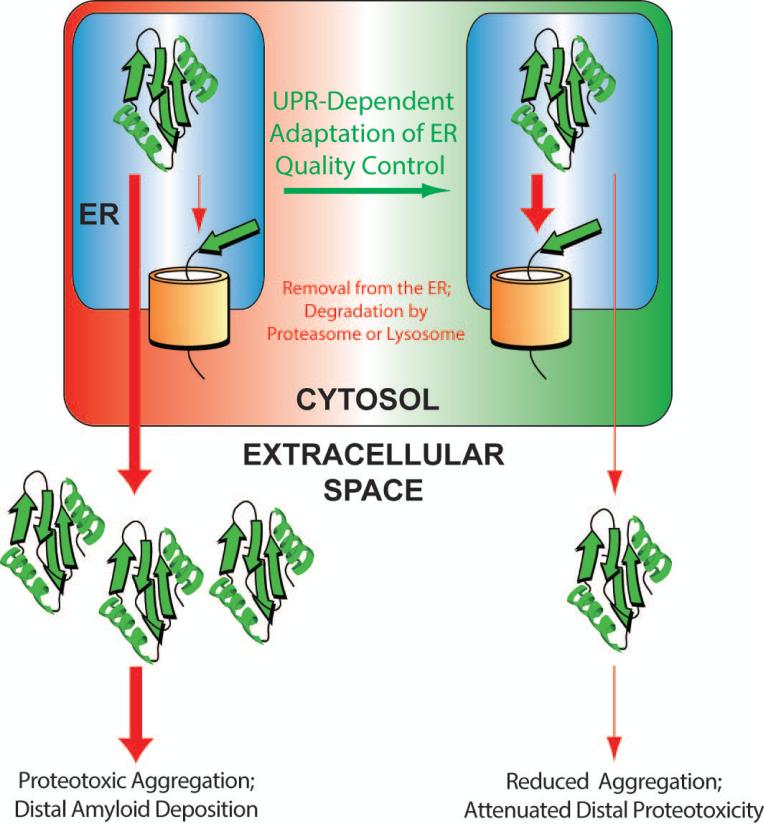
The endoplasmic reticulum (ER) is responsible for regulating proteome integrity throughout the secretory pathway. The ER protects downstream secretory environments such as the extracellular space by partitioning proteins between ER protein folding, trafficking, and degradation pathways in a process called ER quality control. In this process, ER quality control factors identify misfolded, aggregation-prone protein conformations and direct them toward ER protein folding or degradation, reducing their secretion to the extracellular space where they could further misfold or aggregate into proteotoxic conformations. Despite the general efficiency of ER quality control, many human diseases, such as the systemic amyloidoses, involve aggregation of destabilized, aggregation-prone proteins in the extracellular space. A common feature for all systemic amyloid diseases is the ability for amyloidogenic proteins to evade ER quality control and be efficiently secreted. The efficient secretion of these amyloidogenic proteins increases their serum concentrations available for the distal proteotoxic aggregation characteristic of these diseases. This indicates that ER quality control, and the regulation thereof, is a critical determinant in defining the onset and pathology of systemic amyloid diseases. Here, we discuss the pathologic and potential therapeutic relationship between ER quality control, protein secretion, and distal deposition of amyloidogenic proteins involved in systemic amyloid diseases. Furthermore, we present evidence that the unfolded protein response, the stress-responsive signaling pathway that regulates ER quality control, is involved in the pathogenesis of systemic amyloid diseases and represents a promising emerging therapeutic target to intervene in this class of human disease.
Keywords: chaperones; protein folding; stress-activated signaling.
© 2015 International Union of Biochemistry and Molecular Biology.
Figures
References
-
- Adams D, Lozeron P, Lacroix C. Amyloid neuropathies. Curr Opin Neurol. 2012;25(5):564–572. - PubMed
-
- Braakman I, Bulleid NJ. Protein folding and modification in the mammalian endoplasmic reticulum. Annu Rev Biochem. 2011;80:71–99. - PubMed
-
- Bulawa CE, Connelly S, Devit M, Wang L, Weigel C, Fleming JA, Packman J, Powers ET, Wiseman RL, Foss TR, Wilson IA, Kelly JW, Labaudiniere R. Tafamidis, a potent and selective transthyretin kinetic stabilizer that inhibits the amyloid cascade. Proc Natl Acad Sci U S A. 2012;109(24):9629–9634. - PMC - PubMed
-
- Buxbaum JN. The systemic amyloidoses. Curr Opin Rheumatol. 2004;16(1):67–75. - PubMed
Publication types
MeSH terms
Substances
Grants and funding
LinkOut - more resources
Full Text Sources
Other Literature Sources
Medical
