


Genetic evidence for differential selection of grain and embryo weight during wheat evolution under domestication
- PMID: 26019253
- PMCID: PMC4566971
- DOI: 10.1093/jxb/erv249
Genetic evidence for differential selection of grain and embryo weight during wheat evolution under domestication
Abstract
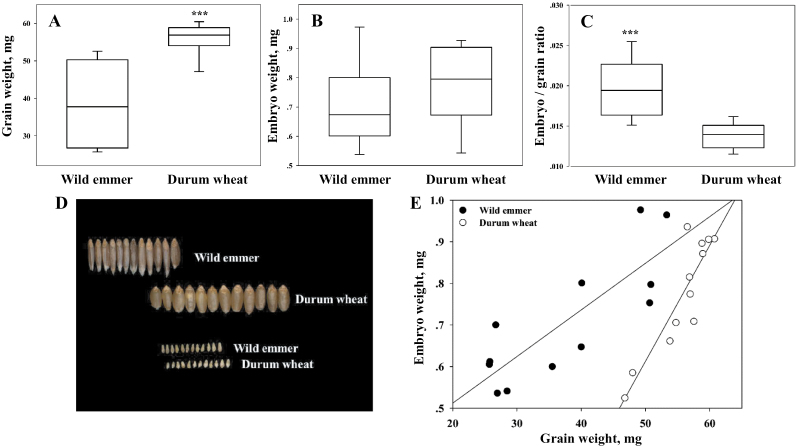
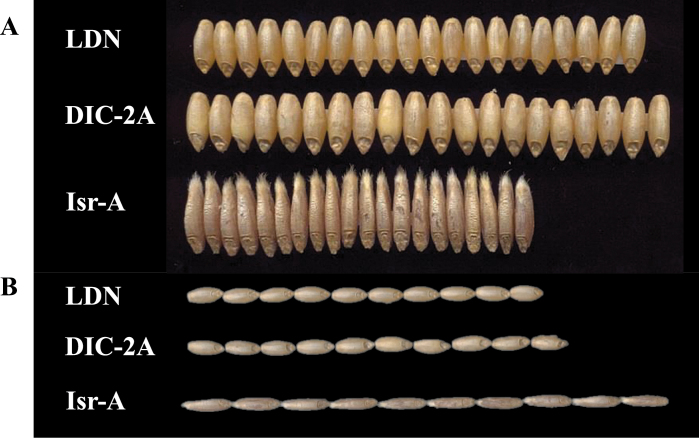
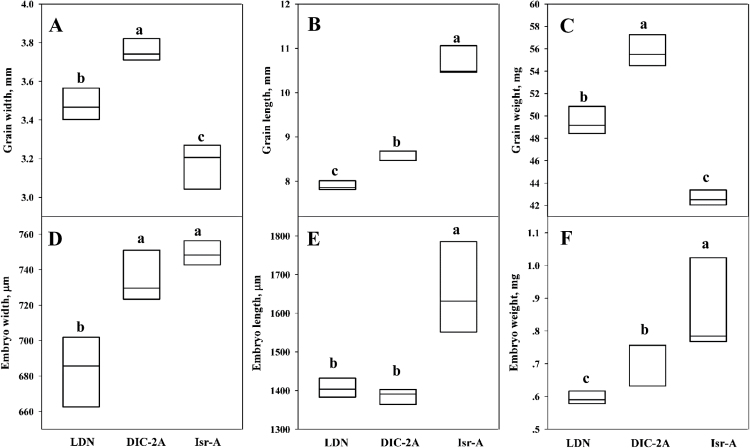
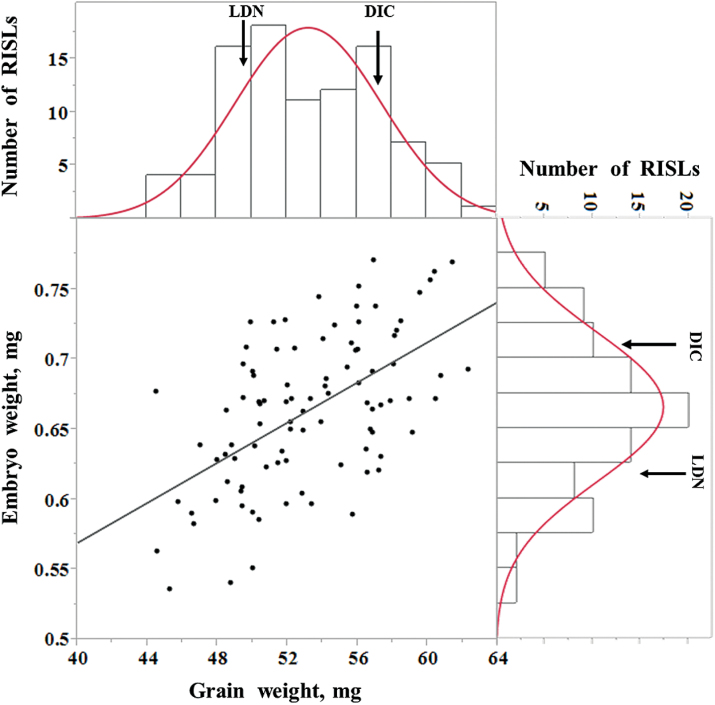
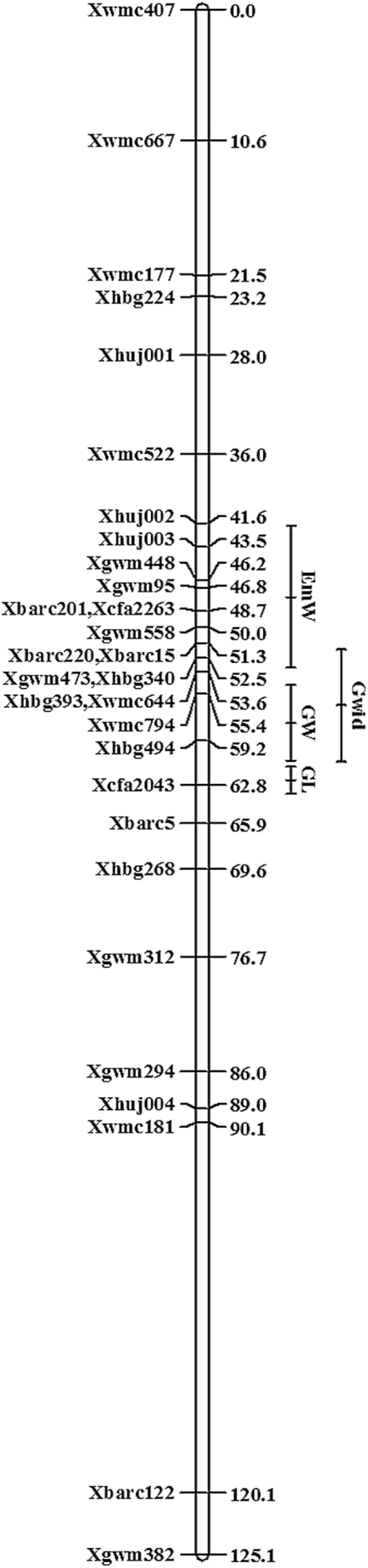
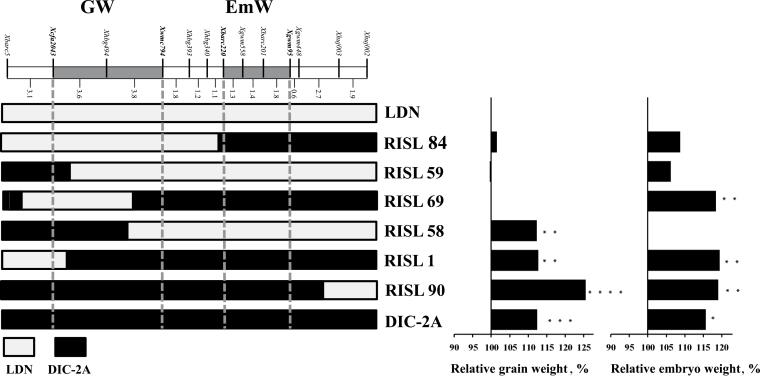
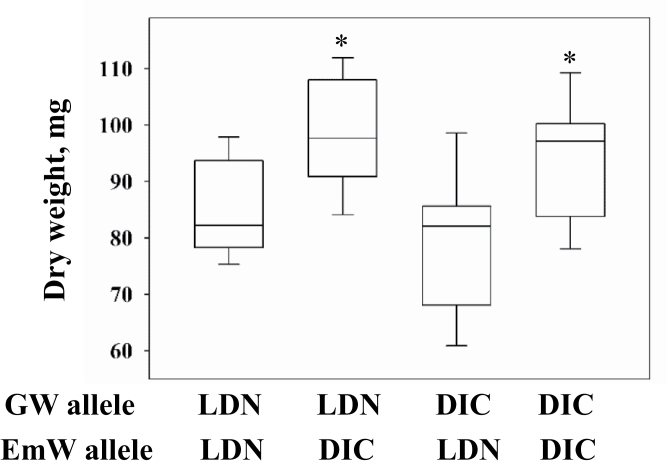
Wheat is one of the Neolithic founder crops domesticated ~10 500 years ago. Following the domestication episode, its evolution under domestication has resulted in various genetic modifications. Grain weight, embryo weight, and the interaction between those factors were examined among domesticated durum wheat and its direct progenitor, wild emmer wheat. Experimental data show that grain weight has increased over the course of wheat evolution without any parallel change in embryo weight, resulting in a significantly reduced (30%) embryo weight/grain weight ratio in domesticated wheat. The genetic factors associated with these modifications were further investigated using a population of recombinant inbred substitution lines that segregated for chromosome 2A. A cluster of loci affecting grain weight and shape was identified on the long arm of chromosome 2AL. Interestingly, a novel locus controlling embryo weight was mapped on chromosome 2AS, on which the wild emmer allele promotes heavier embryos and greater seedling vigour. To the best of our knowledge, this is the first report of a QTL for embryo weight in wheat. The results suggest a differential selection of grain and embryo weight during the evolution of domesticated wheat. It is argued that conscious selection by early farmers favouring larger grains and smaller embryos appears to have resulted in a significant change in endosperm weight/embryo weight ratio in the domesticated wheat. Exposing the genetic factors associated with endosperm and embryo size improves our understanding of the evolutionary dynamics of wheat under domestication and is likely to be useful for future wheat-breeding efforts.
Keywords: Early vigour; Triticum turgidum ssp. dicoccoides; embryo; embryo/endosperm ratio; endosperm; grain size; tetraploid wheat; wheat domestication..
© The Author 2015. Published by Oxford University Press on behalf of the Society for Experimental Biology.
Figures
References
-
- Abbo S, Lev-Yadun S, Gopher A. 2011. Origin of Near Eastern plant domestication: homage to Claude Levi-Strauss and ‘La Pensée Sauvage’. Genetic Resources and Crop Evolution 58, 175–179.
-
- Abbo S, Lev-Yadun S, Gopher A. 2012. Plant domestication and crop evolution in the Near East: on events and processes. Critical Reviews in Plant Sciences 31, 241–257.
-
- Abbo S, Lev-Yadun S, Gopher A. 2014. a The ‘Human Mind’ as a common denominator in plant domestication. Journal of Experimental Botany 65, 1917–1920. - PubMed
-
- Abbo S, Pinhasi van-Oss R, Gopher A, Saranga Y, Ofner I, Peleg Z. 2014. b Plant domestication versus crop evolution: a conceptual framework for cereals and grain legumes. Trends in Plant Science 19, 351–360. - PubMed
-
- Abbo S, Saranga Y, Peleg Z, Kerem Z, Lev-Yadun S, Gopher A. 2009. Reconsidering domestication of legumes versus cereals in the ancient Near East. The Quarterly Review of Biology 84, 29–50. - PubMed
Publication types
MeSH terms
LinkOut - more resources
Full Text Sources
Other Literature Sources
