Establishing a Personal Health Record System in an Academic Hospital: One Year's Experience
- PMID: 26019761
- PMCID: PMC4445051
- DOI: 10.4082/kjfm.2015.36.3.121
Establishing a Personal Health Record System in an Academic Hospital: One Year's Experience
Abstract
Background: Personal health records (PHRs) are web based tools that help people to access and manage their personalized medical information. Although needs for PHR are increasing, current serviced PHRs are unsatisfactory and researches on them remain limited. The purpose of this study is to show the process of developing Seoul National University Bundang Hospital (SNUBH)'s own PHR system and to analyze consumer's use pattern after providing PHR service.
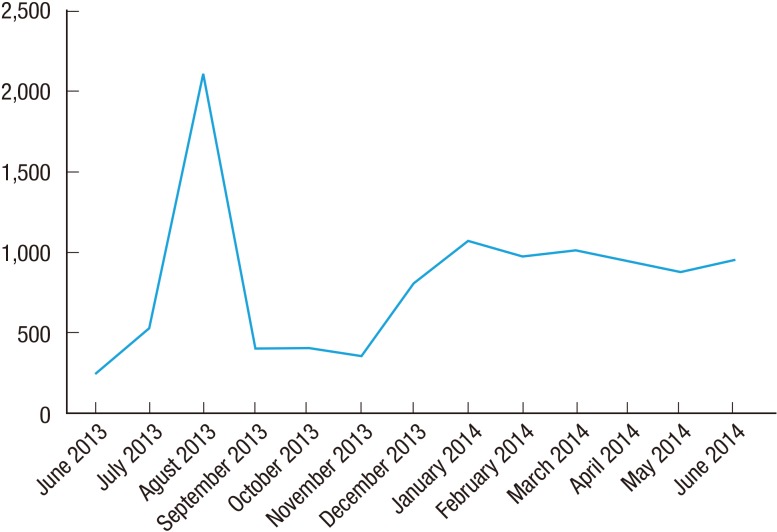
Methods: Task force team was organized to decide service range and set the program. They made the system available on both mobile application and internet web page. The study enrolled PHR consumers who assessed PHR system between June 2013 and June 2014. We analyzed the total number of users on a monthly basis and the using pattern according to each component.
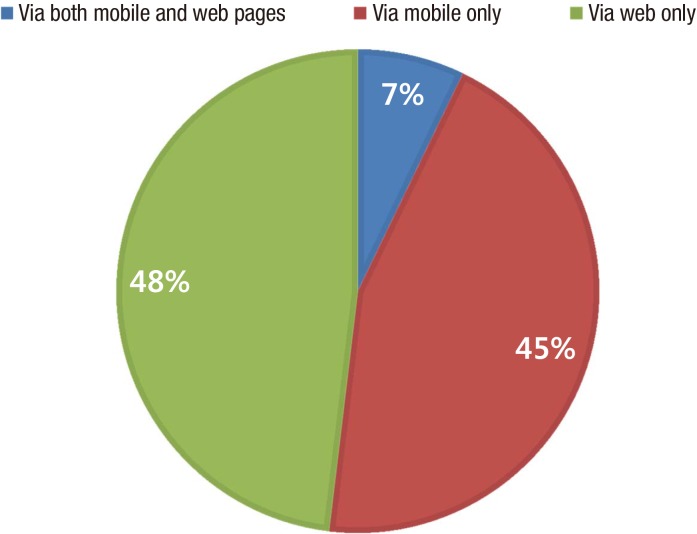
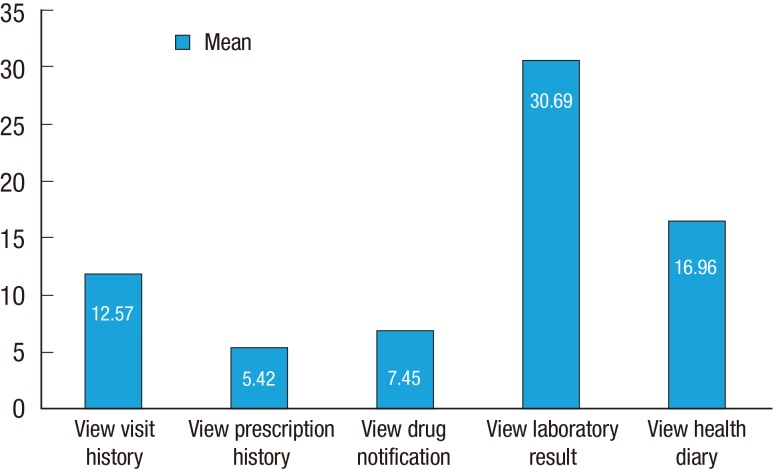
Results: The PHR service named Health4U has been provided from June 2013. Every patient who visited SNUBH could register Health4U service and view their medical data. The PHR user has been increasing, especially they tend to approach via one way of either web page or mobile application. The most frequently used service is to check laboratory test result.
Conclusion: For paradigm shift toward patient-centered care, there is a growing interest in PHR. This study about experience of establishing and servicing the Health4U would contribute to development of interconnected PHR.
Keywords: Electronic Health Records; Patient-Centered Care; Personal Health Records.
Conflict of interest statement
Figures
References
-
- O'Reilly T. What is Web 2.0: design patterns and business models for the next generation of software. Commun Strateg. 2007;65:17–37.
-
- Shin SY, Chung CK. A future of medical information system: establishment of hospital-oriented personal health record. J Korean Med Assoc. 2009;52:1115–1121.
-
- Grossman JM, Zayas-Caban T, Kemper N. Information gap: can health insurer personal health records meet patients' and physicians' needs? Health Aff (Millwood) 2009;28:377–389. - PubMed
-
- Anderson RM, Funnell MM. Patient empowerment: reflections on the challenge of fostering the adoption of a new paradigm. Patient Educ Couns. 2005;57:153–157. - PubMed
LinkOut - more resources
Full Text Sources
Other Literature Sources