Predicting unprecedented dengue outbreak using imported cases and climatic factors in Guangzhou, 2014
- PMID: 26020627
- PMCID: PMC4447292
- DOI: 10.1371/journal.pntd.0003808
Predicting unprecedented dengue outbreak using imported cases and climatic factors in Guangzhou, 2014
Abstract
Introduction: Dengue is endemic in more than 100 countries, mainly in tropical and subtropical regions, and the incidence has increased 30-fold in the past 50 years. The situation of dengue in China has become more and more severe, with an unprecedented dengue outbreak hitting south China in 2014. Building a dengue early warning system is therefore urgent and necessary for timely and effective response.
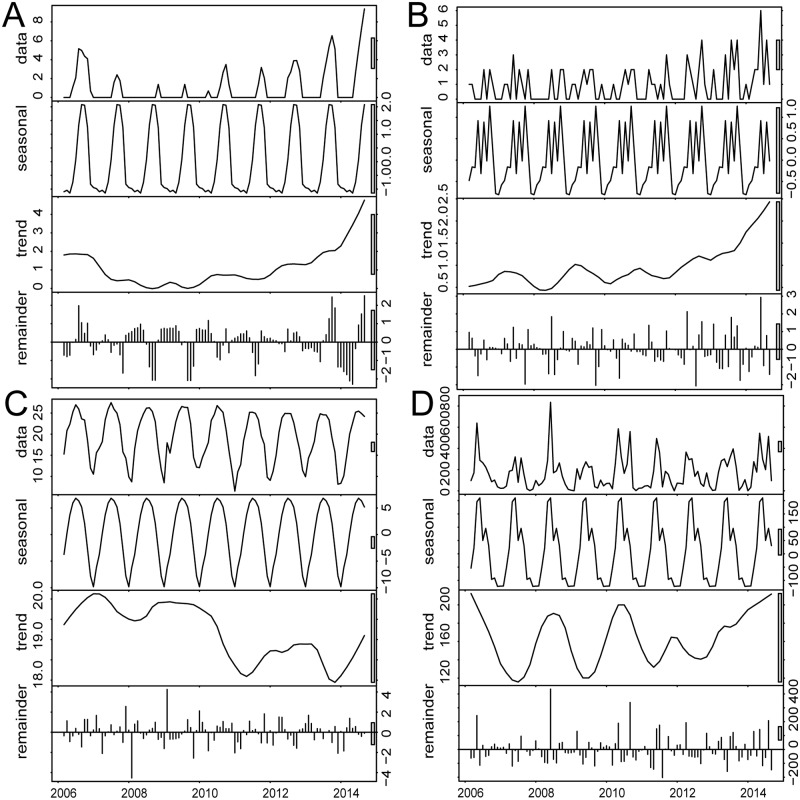
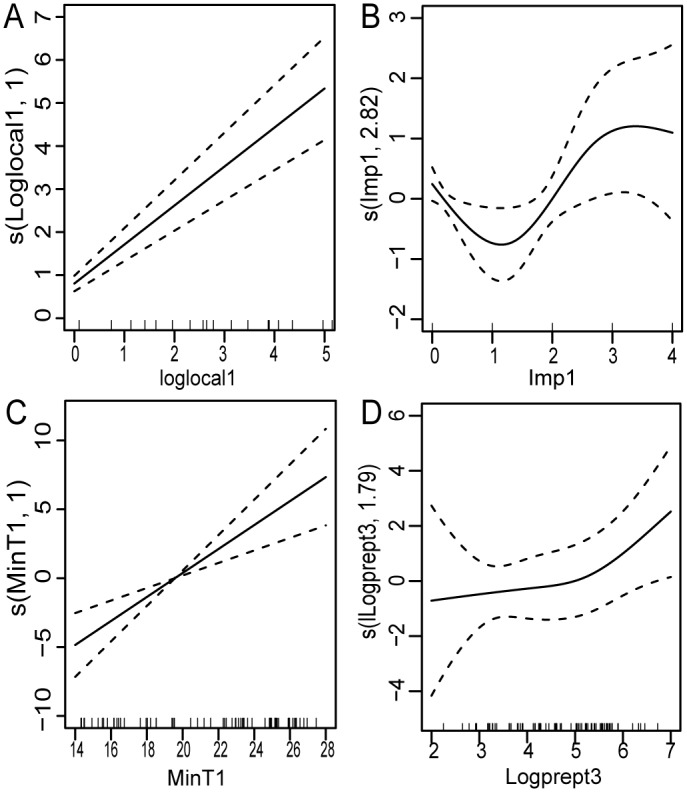
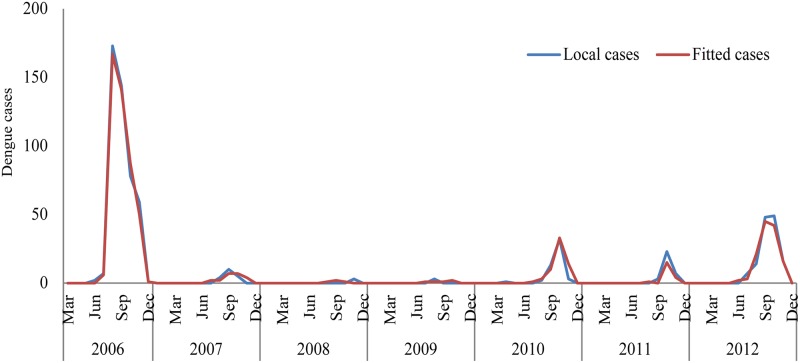
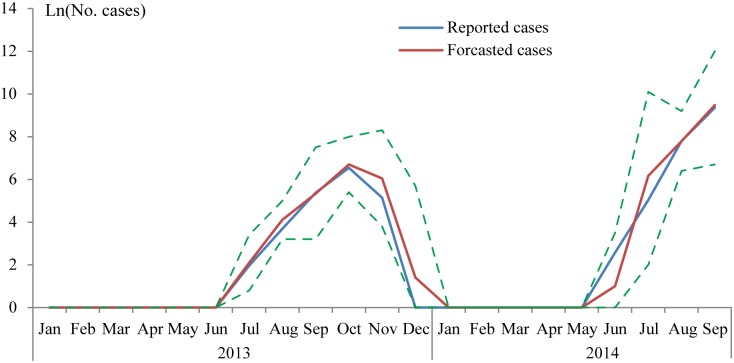
Methodology and principal findings: In the study we developed a time series Poisson multivariate regression model using imported dengue cases, local minimum temperature and accumulative precipitation to predict the dengue occurrence in four districts of Guangzhou, China. The time series data were decomposed into seasonal, trend and remainder components using a seasonal-trend decomposition procedure based on loess (STL). The time lag of climatic factors included in the model was chosen based on Spearman correlation analysis. Autocorrelation, seasonality and long-term trend were controlled in the model. A best model was selected and validated using Generalized Cross Validation (GCV) score and residual test. The data from March 2006 to December 2012 were used to develop the model while the data from January 2013 to September 2014 were employed to validate the model. Time series Poisson model showed that imported cases in the previous month, minimum temperature in the previous month and accumulative precipitation with three month lags could project the dengue outbreaks occurred in 2013 and 2014 after controlling the autocorrelation, seasonality and long-term trend.
Conclusions: Together with the sole transmission vector Aedes albopictus, imported cases, monthly minimum temperature and monthly accumulative precipitation may be used to develop a low-cost effective early warning system.
Conflict of interest statement
The authors have declared that no competing interests exist.
Figures
References
-
- WHO (2015) Global Alert and Response. Impact of Dengue. [Cited 20 January 2015]. Avaliable: http://www.who.int/csr/disease/ dengue/impact/en/.
-
- WHO (2012) Global strategy for dengue prevention and control. Geneva: World Health Organization.
Publication types
MeSH terms
LinkOut - more resources
Full Text Sources
Other Literature Sources
Medical
Miscellaneous