Association of Geroprotective Effects of Metformin and Risk of Open-Angle Glaucoma in Persons With Diabetes Mellitus
- PMID: 26022641
- PMCID: PMC4537372
- DOI: 10.1001/jamaophthalmol.2015.1440
Association of Geroprotective Effects of Metformin and Risk of Open-Angle Glaucoma in Persons With Diabetes Mellitus
Abstract
Importance: Caloric restriction mimetic drugs have geroprotective effects that delay or reduce risks for a variety of age-associated systemic diseases, suggesting that such drugs might also have the potential to reduce risks of blinding ophthalmologic conditions for which age is a major risk factor.
Objective: To determine whether the caloric restriction mimetic drug metformin hydrochloride is associated with reduced risk of open-angle glaucoma (OAG) in persons with diabetes mellitus.
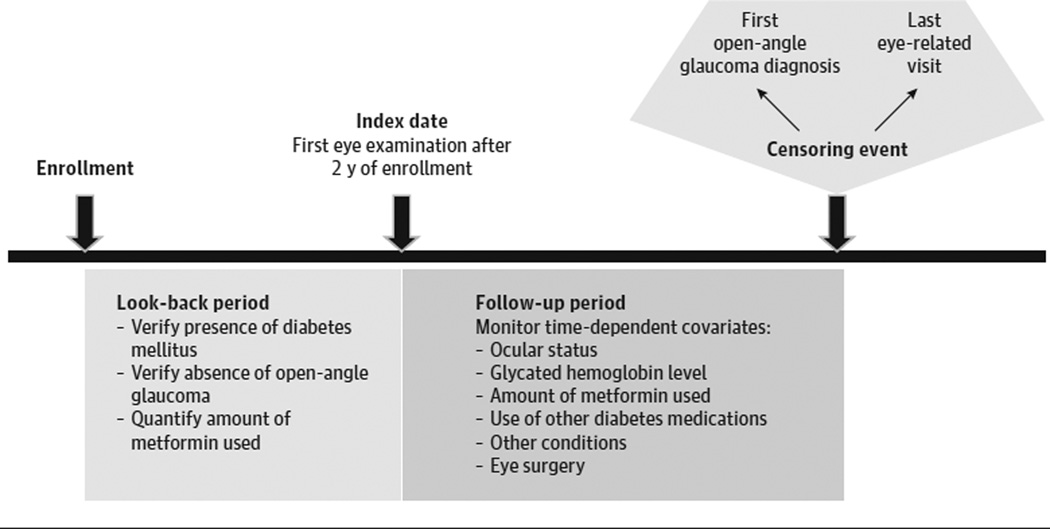
Design, setting, and patients: Retrospective cohort study of patients aged 40 years or older with diabetes mellitus and no preexisting record of OAG in a large US managed care network from January 1, 2001, through December 31, 2010.
Exposures: Quantity of metformin and other prescribed diabetes medications as captured from outpatient pharmacy records.
Main outcomes and measures: Risk of developing OAG.
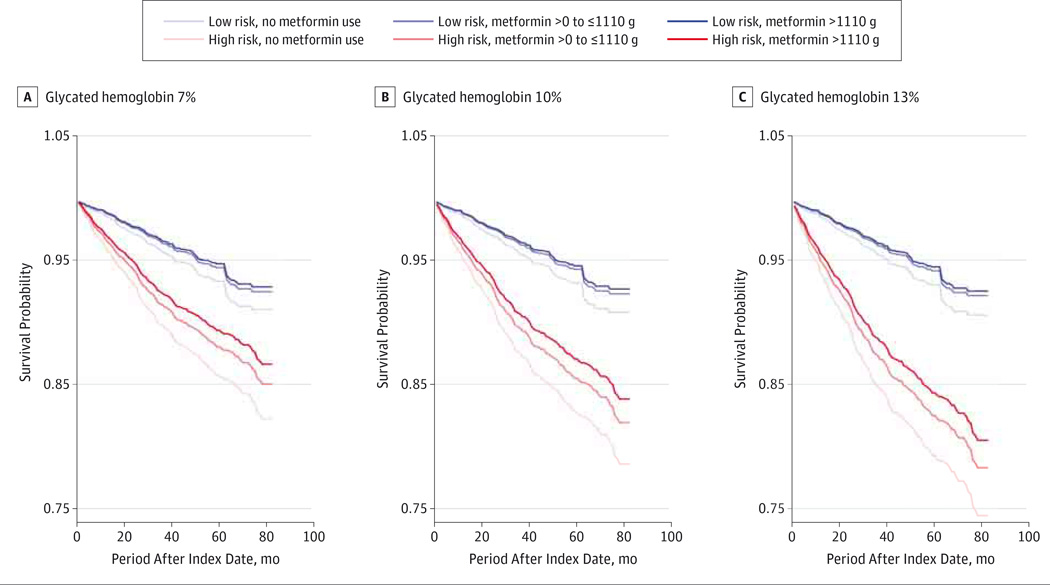
Results: Of 150 016 patients with diabetes mellitus, 5893 (3.9%) developed OAG. After adjusting for confounding factors, those prescribed the highest quartile of metformin hydrochloride (>1110 g in 2 years) had a 25% reduced OAG risk relative to those who took no metformin (hazard ratio = 0.75; 95% CI, 0.59-0.95; P = .02). Every 1-g increase in metformin hydrochloride use was associated with a 0.16% reduction in OAG risk (adjusted hazard ratio = 0.99984; 95% CI, 0.99969-0.99999; P = .04), which predicts that taking a standard dose of 2 g of metformin hydrochloride per day for 2 years would result in a 20.8% reduction in risk of OAG. After accounting for potential confounders, including metformin and diabetic medications, the risk of developing OAG was increased by 8% (hazard ratio = 1.08; 95% CI, 1.03-1.13; P = .003) for each unit of increase in glycated hemoglobin level.
Conclusions and relevance: Metformin use is associated with reduction in risk of developing OAG, and risk is reduced even when accounting for glycemic control in the form of glycated hemoglobin level. Other diabetes medications did not confer a similar OAG risk reduction. This study suggests that metformin may be affecting OAG risk on multiple levels, some involving improved glycemic control and some involving mechanisms outside glycemic control such as neurogenesis, inflammatory systems, or longevity pathways targeted by caloric restriction mimetic drugs. If confirmed by prospective clinical trials, these findings could lead to novel treatments for this sight-threatening disease.
Conflict of interest statement
Figures
References
-
- Roth LW, Polotsky AJ. Can we live longer by eating less? a review of caloric restriction and longevity. Maturitas. 2012;71(4):315–319. - PubMed
Publication types
MeSH terms
Substances
Grants and funding
LinkOut - more resources
Full Text Sources
Other Literature Sources
Medical