


The ordinal effects of ostracism: a meta-analysis of 120 Cyberball studies
- PMID: 26023925
- PMCID: PMC4449005
- DOI: 10.1371/journal.pone.0127002
The ordinal effects of ostracism: a meta-analysis of 120 Cyberball studies
Abstract
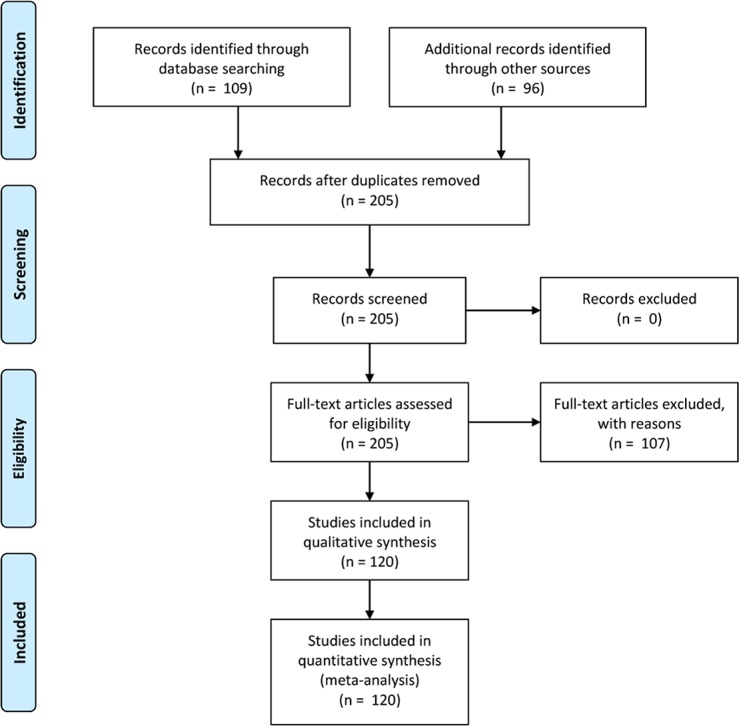
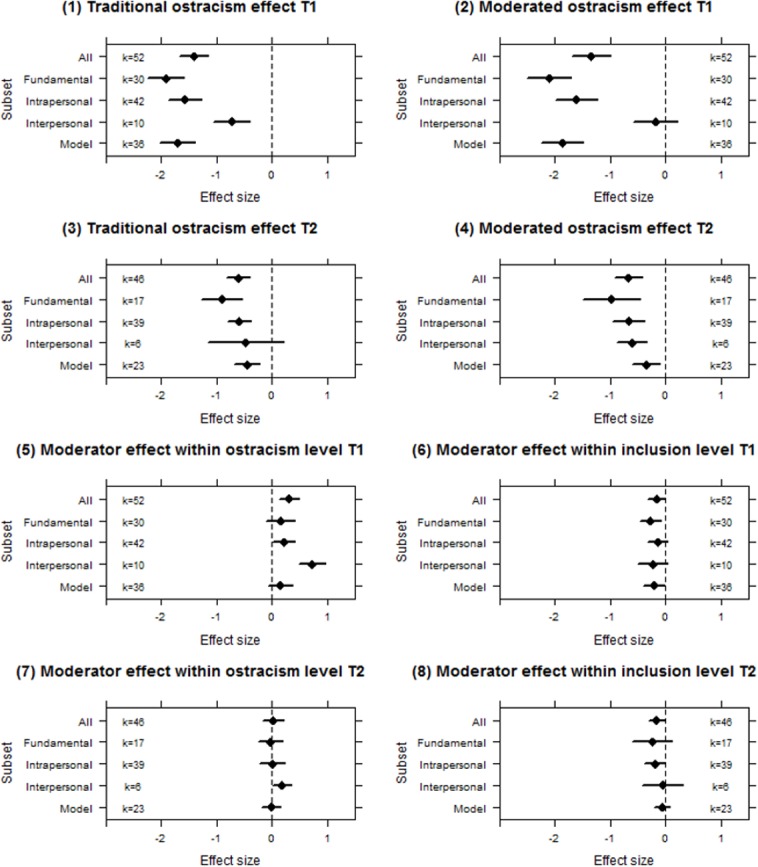
We examined 120 Cyberball studies (N = 11,869) to determine the effect size of ostracism and conditions under which the effect may be reversed, eliminated, or small. Our analyses showed that (1) the average ostracism effect is large (d > |1.4|) and (2) generalizes across structural aspects (number of players, ostracism duration, number of tosses, type of needs scale), sampling aspects (gender, age, country), and types of dependent measure (interpersonal, intrapersonal, fundamental needs). Further, we test Williams's (2009) proposition that the immediate impact of ostracism is resistant to moderation, but that moderation is more likely to be observed in delayed measures. Our findings suggest that (3) both first and last measures are susceptible to moderation and (4) time passed since being ostracized does not predict effect sizes of the last measure. Thus, support for this proposition is tenuous and we suggest modifications to the temporal need-threat model of ostracism.
Conflict of interest statement
Figures
References
-
- Williams KD, Cheung CK, Choi W (2000) Cyberostracism: effects of being ignored over the Internet. J Pers Soc Psychol 79: 748–762. - PubMed
-
- Baumeister RF, Twenge JM, Nuss CK (2002) Effects of social exclusion on cognitive processes: Anticipated aloneness reduces intelligent thought. J Pers Soc Psychol 83: 817–827. - PubMed
-
- Nezlek JB, Kowalski RM, Leary MR, Blevins T, Holgate S (1997) Personality moderators of reactions to interpersonal rejection: Depression and trait self-esteem. Personal Soc Psychol Bull 23: 1235–1244.
-
- Craighead WE, Kimball WH, Rehak PJ (1979) Mood changes, physiological responses, and self-statements during social rejection imagery. J Consult Clin Psychol 47: 385–396. - PubMed
-
- Leary MR, Kowalski RM, Smith L, Phillips S (2003) Teasing, rejection, and violence: Case studies of the school shootings. Aggress Behav 29: 202–214.
Publication types
MeSH terms
LinkOut - more resources
Full Text Sources
Other Literature Sources
