


Comparative prospective study of 2 ovarian stimulation protocols in poor responders: effect on implantation rate and ongoing pregnancy
- PMID: 26025412
- PMCID: PMC4460718
- DOI: 10.1186/s12978-015-0039-2
Comparative prospective study of 2 ovarian stimulation protocols in poor responders: effect on implantation rate and ongoing pregnancy
Abstract
Background: In patients treated with IVF, the incidence of poor ovarian response (POR) after ovarian stimulation varies from 9 to 25 %. However, at present, there are no clear guidelines for treating these poor responders. This study was designed to compare two different ovarian stimulation protocols and addresses future perspectives in the management of these unfortunate patients.
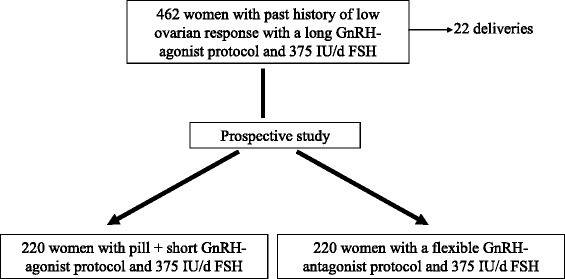
Method: Four hundred and forty poor responders were studied during their second IVF cycle. They had all failed to become pregnant during their first IVF cycle where the long GnRH-agonist stimulation protocol (P1) was used. Patients were prospectively randomly assigned to 2 protocol groups (P2 or P3, 220 patients in each arm) at the start of ovarian stimulation according to the order of entry into the study including one patient per each stimulation protocols: The P2 group was treated with a contraceptive pill + flare-up GnRH-agonist protocol and the P3 group with the GnRH-antagonist protocol. The ovarian stimulation characteristics as well as the clinical and ongoing pregnancy rates were compared.
Result(s): Although the numbers of embryos obtained and transferred were significantly higher with the P2 protocol, the implantation and ongoing pregnancy rates per transfer were the same in the two studied groups (8.9 % versus 14.6 % and 8.4 % versus 14.2 % for the P2 and P3 protocols, respectively). Good prognostic factors for ongoing pregnancy with both protocols were: a maternal age <36, no tobacco consumption, a total dose of gonadotropins injection <5000 IU and an endometrial thickness >10 mm.
Conclusion(s): In poorly responding patients treated with IVF, the implantation and ongoing pregnancy rates per transfer were not significantly different between the two protocols studied: contraceptive pill + flare-up GnRH-agonist protocol and the GnRH-antagonist protocol. It is suggested that current strategies for the management of poor responders be reconsidered in the light of the potential contribution of age and the effect of life style changes on fertility potential. A customised policy of ovarian stimulation in these patients including mild stimulation protocols, sequential IVF cycles, oocytes-embryos freeze all protocols and blastocyst transfers after screening may improve the clinical outcome.
References
-
- Ferraretti AP, Gianaroli L. The Bologna criteria for the definition of poor ovarian responders: is there a need for revision? Hum Reprod. 2014 Jul 9. deu139. [Epub ahead of print] - PubMed
-
- Land JA, Yarmolinskaya MI, Dumoulin JC, Evers JL. High-dose human menopausal gonadotrophin stimulation in poor responders does not improve in vitro fertilization outcome. Fertil Steril. 1996;65:961–965. - PubMed
Publication types
MeSH terms
Substances
LinkOut - more resources
Full Text Sources
Other Literature Sources
