


Influenza surveillance in Europe: comparing intensity levels calculated using the moving epidemic method
- PMID: 26031655
- PMCID: PMC4548993
- DOI: 10.1111/irv.12330
Influenza surveillance in Europe: comparing intensity levels calculated using the moving epidemic method
Abstract
Objectives: Although influenza-like illnesses (ILI) and acute respiratory illnesses (ARI) surveillance are well established in Europe, the comparability of intensity among countries and seasons remains an unresolved challenge. The objective is to compare the intensity of ILI and ARI in some European countries.
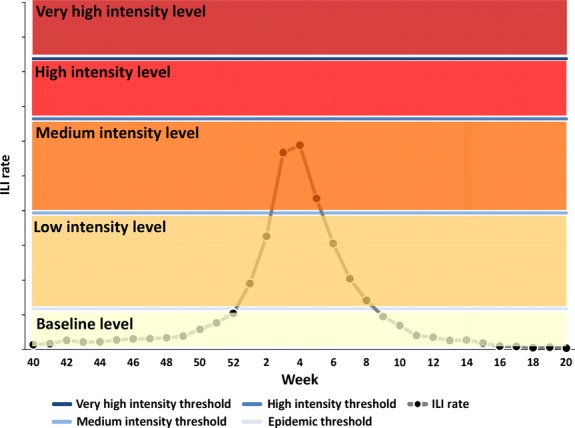
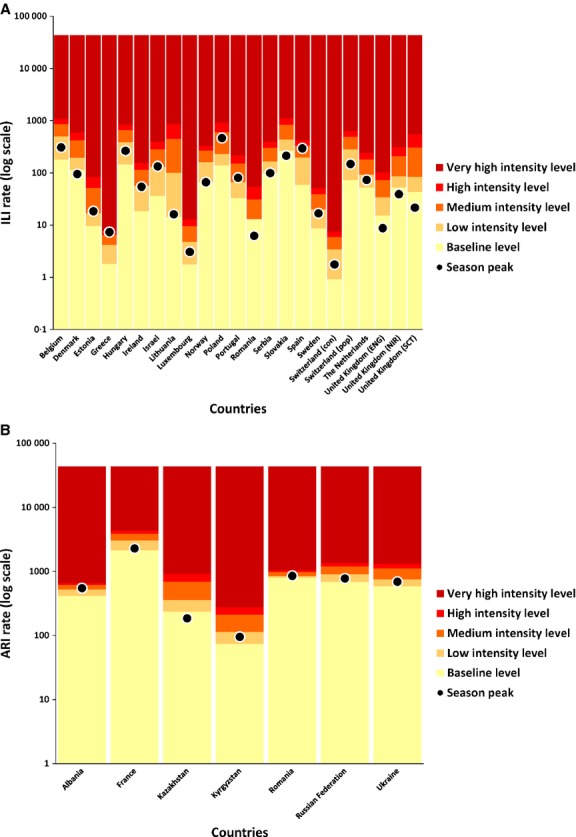
Design and setting: Weekly ILI and ARI incidence rates and proportion of primary care consultations were modeled in 28 countries for the 1996/1997-2013/2014 seasons using the moving epidemic method (MEM). We calculated the epidemic threshold and three intensity thresholds, which delimit five intensity levels: baseline, low, medium, high, and very high. The intensity of 2013/2014 season is described and compared by country.
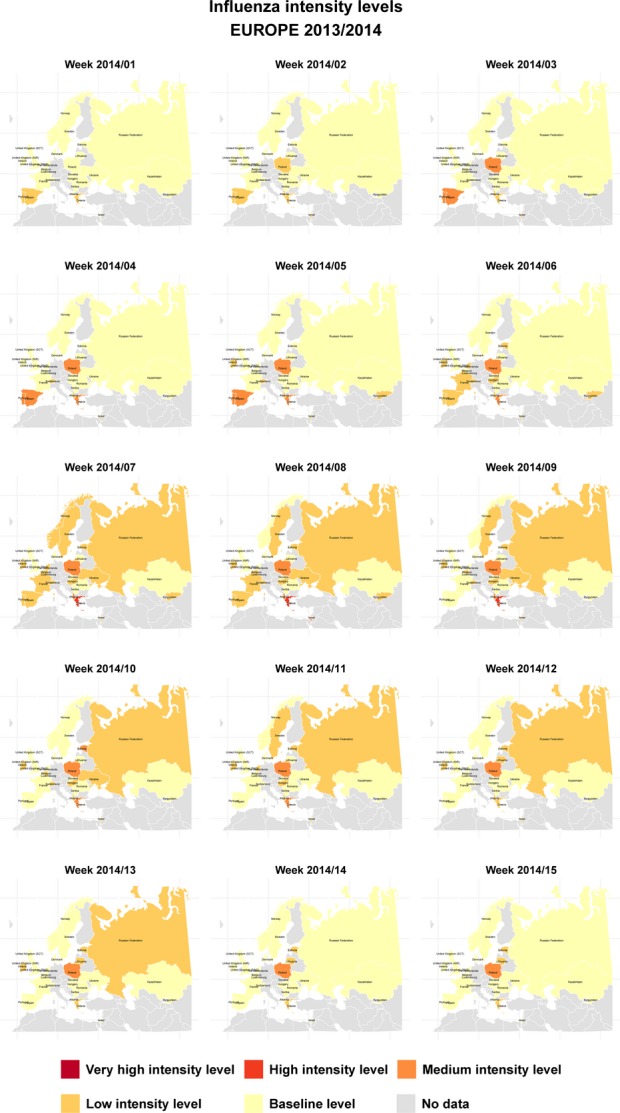
Results: The lowest ILI epidemic thresholds appeared in Sweden and Estonia (below 10 cases per 100 000) and the highest in Belgium, Denmark, Hungary, Poland, Serbia, and Slovakia (above 100 per 100 000). The 2009/2010 season was the most intense, with 35% of the countries showing high or very high intensity levels. The European epidemic period in season 2013/2014 started in January 2014 in Spain, Poland, and Greece. The intensity was between low and medium and only Greece reached the high intensity level, in weeks 7 to 9/2014. Some countries remained at the baseline level throughout the entire surveillance period.
Conclusions: Epidemic and intensity thresholds varied by country. Influenza-like illnesses and ARI levels normalized by MEM in 2013/2014 showed that the intensity of the season in Europe was between low and medium in most of the countries. Comparing intensity among seasons or countries is essential for understanding patterns in seasonal epidemics. An automated standardized model for comparison should be implemented at national and international levels.
Keywords: Incidence; influenza-like illnesses; primary care; surveillance.
© 2015 The Authors. Influenza and Other Respiratory Viruses Published by John Wiley & Sons Ltd.
Figures
References
-
- Molinari NA, Ortega-Sanchez IR, Messonnier ML, et al. The annual impact of seasonal influenza in the US: measuring disease burden and costs. Vaccine. 2007;25:5086–5096. - PubMed
-
- Fendrick AM, Monto AS, Nightengale B, Sarnes M. The economic burden of non-influenza-related viral respiratory tract infection in the United States. Arch Intern Med. 2003;163:487–494. - PubMed
-
- Cooper RJ, Hoffman JR, Bartlett JG, et al. Principles of appropriate antibiotic use for acute pharyngitis in adults: background. Ann Intern Med. 2001;134:509–517. - PubMed
-
- WHO. Vaccines against influenza WHO position paper – November 2012. Wkly Epidemiol Rec. 2012;87:461–476. - PubMed
Publication types
MeSH terms
Grants and funding
LinkOut - more resources
Full Text Sources
Other Literature Sources
Medical
