


The complete methylome of Helicobacter pylori UM032
- PMID: 26031894
- PMCID: PMC4450513
- DOI: 10.1186/s12864-015-1585-2
The complete methylome of Helicobacter pylori UM032
Abstract
Background: The genome of the human gastric pathogen Helicobacter pylori encodes a large number of DNA methyltransferases (MTases), some of which are shared among many strains, and others of which are unique to a given strain. The MTases have potential roles in the survival of the bacterium. In this study, we sequenced a Malaysian H. pylori clinical strain, designated UM032, by using a combination of PacBio Single Molecule, Real-Time (SMRT) and Illumina MiSeq next generation sequencing platforms, and used the SMRT data to characterize the set of methylated bases (the methylome).
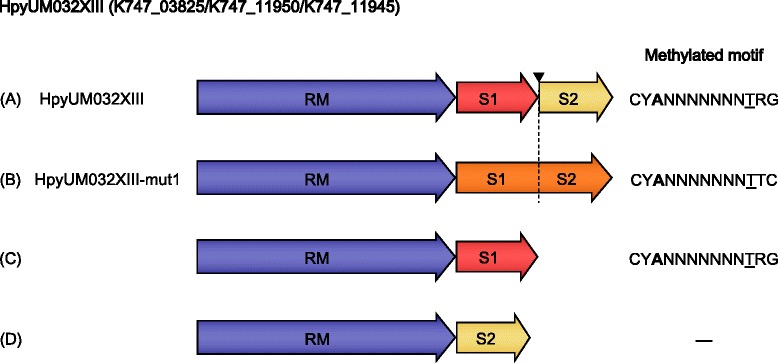
Results: The N4-methylcytosine and N6-methyladenine modifications detected at single-base resolution using SMRT technology revealed 17 methylated sequence motifs corresponding to one Type I and 16 Type II restriction-modification (R-M) systems. Previously unassigned methylation motifs were now assigned to their respective MTases-coding genes. Furthermore, one gene that appears to be inactive in the H. pylori UM032 genome during normal growth was characterized by cloning.
Conclusion: Consistent with previously-studied H. pylori strains, we show that strain UM032 contains a relatively large number of R-M systems, including some MTase activities with novel specificities. Additional studies are underway to further elucidating the biological significance of the R-M systems in the physiology and pathogenesis of H. pylori.
Figures
References
Publication types
MeSH terms
Substances
Grants and funding
LinkOut - more resources
Full Text Sources
Other Literature Sources
Molecular Biology Databases
