


Mammary-type myofibroblastoma of the right thigh: a case report and review of the literature
- PMID: 26033228
- PMCID: PMC4470027
- DOI: 10.1186/s13256-015-0601-0
Mammary-type myofibroblastoma of the right thigh: a case report and review of the literature
Abstract
Introduction: Mammary-type myofibroblastoma of the soft tissue is a very rare, benign, mesenchymal neoplasm with myofibroblastic differentiation. To date, 20 cases of extra-mammary myofibroblastoma have been described in literature. To the best of our knowledge, this is the largest extra-mammary myofibroblastoma described in the literature, and the first case reported in this location.
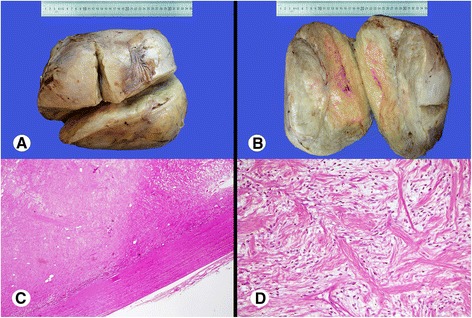
Case presentation: A 50-year-old Pakistani man presented with a long history of a painless, huge lump on his right thigh. His clinical examination showed normal-looking skin and there was no inguinal lymphadenopathy. The mass was excised with a clinical impression of soft tissue sarcoma. Gross examination showed a huge, well-circumscribed soft tissue mass measuring 34 cm in its largest dimension and weighing approximately 13 kg. It was partially covered by fat tissue. Histologically, the lesion was composed of a haphazard arrangement of bland spindle-shaped cell fascicles in a thick collagenous and myxoid background. The neoplastic cells showed diffuse and patchy positivity for CD34 and desmin, respectively. No recurrence was seen following surgical excision over a follow-up period of five months.
Conclusions: Mammary-type myofibroblastoma of the soft tissue is a benign soft tissue neoplasm, and no malignant behavior and/or recurrence after surgical resection has been described, regarding its size and location. As an extremely rare tumor, the correct diagnosis and prompt management is important, and requires careful clinical and pathological workup to rule out the possibility of a malignant neoplasm.
Figures

References
Publication types
MeSH terms
LinkOut - more resources
Full Text Sources
Other Literature Sources
Research Materials
