


A simple blind tenolysis for flexor carpi radialis tendinopathy
- PMID: 26034453
- PMCID: PMC4447664
- DOI: 10.1007/s11552-014-9631-0
A simple blind tenolysis for flexor carpi radialis tendinopathy
Abstract
Background: Flexor carpi radialis (FCR) tendinopathy is an entity with a chronic form (repetitiveness of work) and an acute form (acute overstretching of the wrist). Confirmation of this syndrome can be established by injection of a small amount of a local anesthetic in the sheet of the FCR at this tender point. Complete relieve of the symptoms after injection confirms the existence of a tendinopathy of the FCR. Whereas rest and/or local application of steroids do not have a persistent effect on the short term outcome, a tenolysis could be performed. Before performing a tenolysis underlying causes should be excluded or treated.
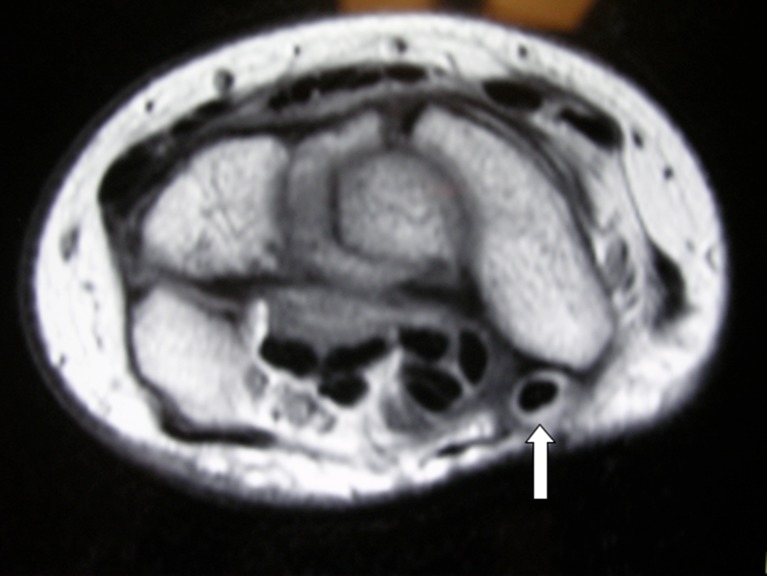
Methods: In this article a simple and save technique is described, using a small Beaver knife to open the osteofibrous tunnel of the flexor carpi radialis tendon, without opening the carpal tunnel.
Results: Relieve of complaints could be reached up to almost two third of all cases.
Conclusion: In cases in which non-operative treatment is not effective regarding FCR tendinopathy, a simple blind technique by opening the osteofibrous tunnel could be successful.
Keywords: Blind tenolysis; Flexor carpi radialis; Tendinopathy.
Figures




References
-
- Allred DW, Rayan GM. Flexor carpi radialis tendon rupture following chronic wrist osteoarthritis: a case report. J Okla State Med Assoc. 2003;96:211–212. - PubMed
-
- Bishop AT, Gabel G, Carmichael SW. Flexor carpi radialis tendinitis. Part 1 Operative Anatomy. J Bone Joint Surg. 1994;76-A:1009–1014. - PubMed
-
- DiFiori JP. Overuse injury and the young athlete: the case of chronic wrist pain in gymnasts. Curr Sports Med Rep. 2006;5:165–167. doi: 10.1097/01.CSMR.0000306500.48234.cd. - DOI - PubMed
-
- Fitton JM, Shea FW, Goldie W. Lesions of the flexor carpi radialis tendon and sheath causing pain at the wrist. J Bone Surg. 1968;50-B:359–363. - PubMed
-
- Gabel G, Bishop AT, Wood MB. Flexor carpi radialis tendinitis. Part II: results of operative treatment. J Bone Joint Surg. 1994;76-A:1015–1018. - PubMed
LinkOut - more resources
Full Text Sources
Other Literature Sources
