Longitudinal trajectories of ADHD symptomatology in offspring of parents with bipolar disorder and community controls
- PMID: 26035189
- PMCID: PMC5445724
- DOI: 10.4088/JCP.14m09095
Longitudinal trajectories of ADHD symptomatology in offspring of parents with bipolar disorder and community controls
Abstract
Objective: To compare the psychopathology and longitudinal course of attention-deficit/hyperactivity disorder (ADHD) symptomatology and global functioning between the offspring with ADHD of parents with bipolar disorder and the offspring with ADHD of community control parents.
Method: One hundred twenty-two offspring with ADHD of parents with bipolar disorder and 48 offspring with ADHD of control parents from the Pittsburgh Bipolar Offspring Study (BIOS) were included. DSM-IV lifetime psychiatric disorders were ascertained through the Kiddie Schedule for Affective Disorders and Schizophrenia for School-Age Children-Present and Lifetime version (K-SADS-PL). The outcome measures of ADHD symptoms were ascertained at intake and every other year for a period of 6 years using the ADHD section of the K-SADS-PL and the Disruptive Behavior Disorder rating scale (DBD). Global functioning was assessed using the Children's Global Assessment Scale (CGAS).
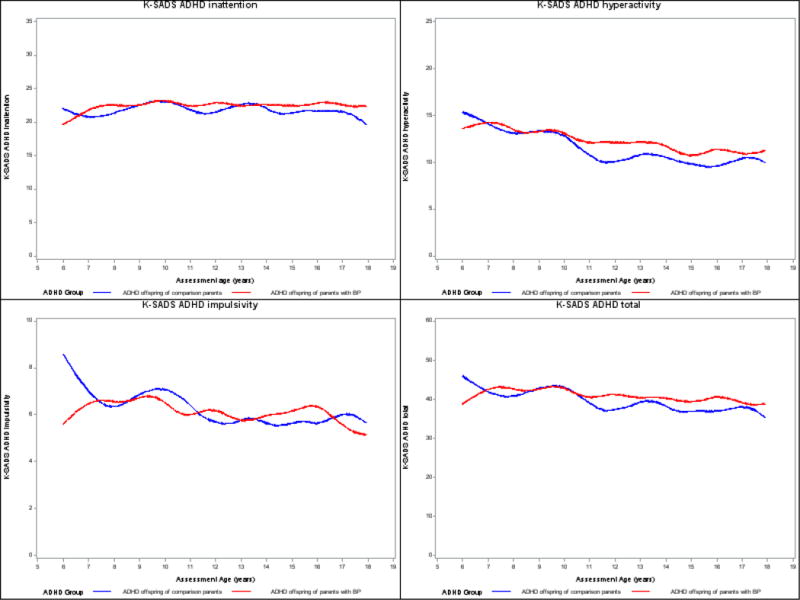
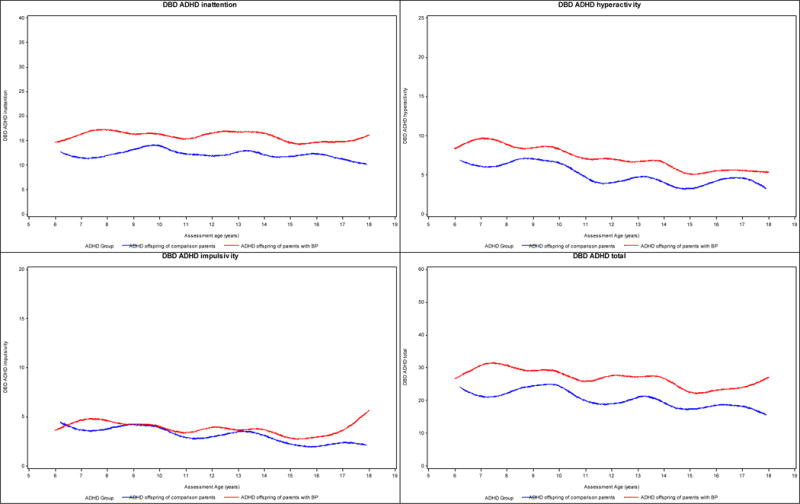
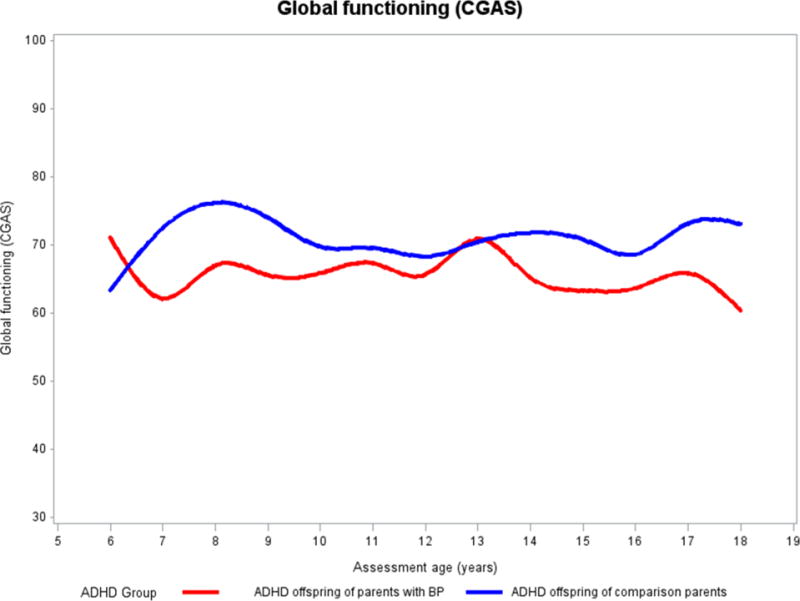
Results: The offspring with ADHD of parents with bipolar disorder showed higher lifetime prevalence of mood and anxiety disorders relative to the offspring with ADHD of control parents (P values ≤ .03). For both groups of offspring with ADHD, the hyperactivity, impulsivity, and total K-SADS-PL ADHD scores decreased over time (P values < .001) without differences between the 2 groups. There were no between- or within-group differences in the inattention scores over time. The DBD ADHD scores decreased with age in both groups (P values < .002) without differences between the 2 groups. For both groups of offspring with ADHD, the global functioning did not improve over time.
Conclusions: Offspring with ADHD of parents with bipolar disorder have more psychopathology relative to offspring with ADHD of control parents. However, there were no differences in the developmental courses of ADHD symptomatology between these 2 groups of ADHD youth.
© Copyright 2015 Physicians Postgraduate Press, Inc.
Conflict of interest statement
Ms. Gill reports no biomedical financial interests or potential conflicts of interest.
Figures
References
-
- Faraone SV, Biederman J, Wozniak J. Examining the comorbidity between attention deficit hyperactivity disorder and bipolar I disorder: a meta-analysis of family genetic studies. Am J Psychiatry. 2012 Dec 1;169(12):1256–1266. - PubMed
-
- Kowatch RA, Youngstrom EA, Danielyan A, Findling RL. Review and meta-analysis of the phenomenology and clinical characteristics of mania in children and adolescents. Bipolar Disord. 2005 Dec;7(6):483–496. - PubMed
-
- Skirrow C, Hosang GM, Farmer AE, Asherson P. An update on the debated association between ADHD and bipolar disorder across the lifespan. J Affect Disord. 2012 Dec 10;141(2–3):143–159. - PubMed