


Cardiac arrhythmias during or after epileptic seizures
- PMID: 26038597
- PMCID: PMC4717443
- DOI: 10.1136/jnnp-2015-310559
Cardiac arrhythmias during or after epileptic seizures
Abstract
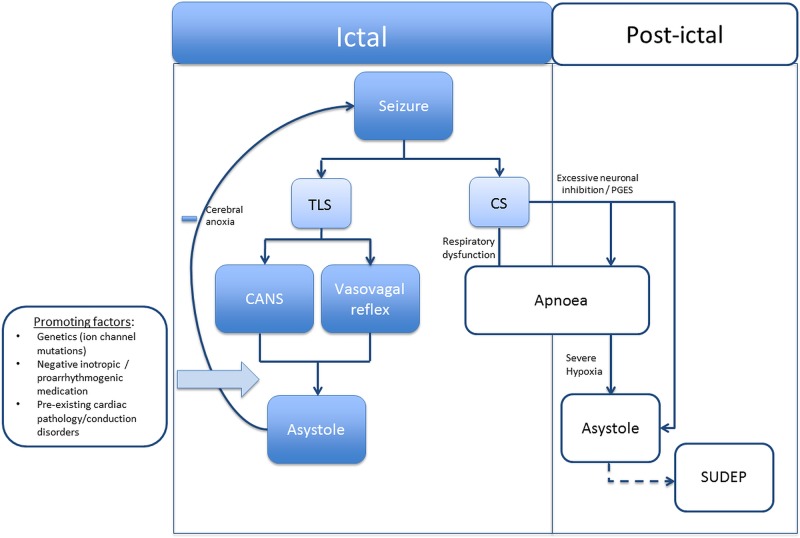
Seizure-related cardiac arrhythmias are frequently reported and have been implicated as potential pathomechanisms of Sudden Unexpected Death in Epilepsy (SUDEP). We attempted to identify clinical profiles associated with various (post)ictal cardiac arrhythmias. We conducted a systematic search from the first date available to July 2013 on the combination of two terms: 'cardiac arrhythmias' and 'epilepsy'. The databases searched were PubMed, Embase (OVID version), Web of Science and COCHRANE Library. We attempted to identify all case reports and case series. We identified seven distinct patterns of (post)ictal cardiac arrhythmias: ictal asystole (103 cases), postictal asystole (13 cases), ictal bradycardia (25 cases), ictal atrioventricular (AV)-conduction block (11 cases), postictal AV-conduction block (2 cases), (post)ictal atrial flutter/atrial fibrillation (14 cases) and postictal ventricular fibrillation (3 cases). Ictal asystole had a mean prevalence of 0.318% (95% CI 0.316% to 0.320%) in people with refractory epilepsy who underwent video-EEG monitoring. Ictal asystole, bradycardia and AV-conduction block were self-limiting in all but one of the cases and seen during focal dyscognitive seizures. Seizure onset was mostly temporal (91%) without consistent lateralisation. Postictal arrhythmias were mostly found following convulsive seizures and often associated with (near) SUDEP. The contrasting clinical profiles of ictal and postictal arrhythmias suggest different pathomechanisms. Postictal rather than ictal arrhythmias seem of greater importance to the pathophysiology of SUDEP.
Keywords: CARDIOLOGY; EPILEPSY; SUDDEN DEATH.
Published by the BMJ Publishing Group Limited. For permission to use (where not already granted under a licence) please go to http://www.bmj.com/company/products-services/rights-and-licensing/
Figures
References
-
- Russell AE. Cessation of the pulse during the onset of epileptic fits, with remarks on the mechanism of fits. Lancet 1906;168:152–4. 10.1016/S0140-6736(01)30477-4 - DOI
Publication types
MeSH terms
Grants and funding
LinkOut - more resources
Full Text Sources
Other Literature Sources
Medical
