. 2015 Jun 3;10(6):e0128823.
doi: 10.1371/journal.pone.0128823. eCollection 2015.

Characterization of a Large Panel of Rabbit Monoclonal Antibodies against HIV-1 gp120 and Isolation of Novel Neutralizing Antibodies against the V3 Loop

Affiliations

Characterization of a Large Panel of Rabbit Monoclonal Antibodies against HIV-1 gp120 and Isolation of Novel Neutralizing Antibodies against the V3 Loop

Yali Qin et al. PLoS One. .

Abstract

We recently reported the induction of potent, cross-clade neutralizing antibodies (nAbs) against Human Immunodeficiency Virus type-1 (HIV-1) in rabbits using gp120 based on an M-group consensus sequence. To better characterize these antibodies, 93 hybridomas were generated, which represent the largest panel of monoclonal antibodies (mAbs) ever generated from a vaccinated rabbit. The single most frequently recognized epitope of the isolated mAbs was at the very C-terminal end of the protein (APTKAKRRVVEREKR), followed by the V3 loop. A total of seven anti-V3 loop mAbs were isolated, two of which (10A3 and 10A37) exhibited neutralizing activity. In contrast to 10A3 and most other anti-V3 loop nAbs, 10A37 was atypical with its epitope positioned more towards the C-terminal half of the loop. To our knowledge, 10A37 is the most potent and broadly neutralizing anti-V3 loop mAb induced by vaccination. Interestingly, all seven anti-V3 loop mAbs competed with PGT121, suggesting a possibility that early induction of potent anti-V3 loop antibodies could prevent induction of more broadly neutralizing PGT121-like antibodies that target the conserved base of the V3 loop stem.


Conflict of interest statement

Competing Interests: The authors have read the journal's policy and the authors of this manuscript have the following competing interests: MWC has an equity interest in NeoVaxSyn Inc., and serves as CEO/President. NeoVaxSyn Inc. did not contribute to this work or the interpretation of the data. This does not alter the authors’ adherence to PLOS ONE policies on sharing data and materials.

Figures

Fig 1
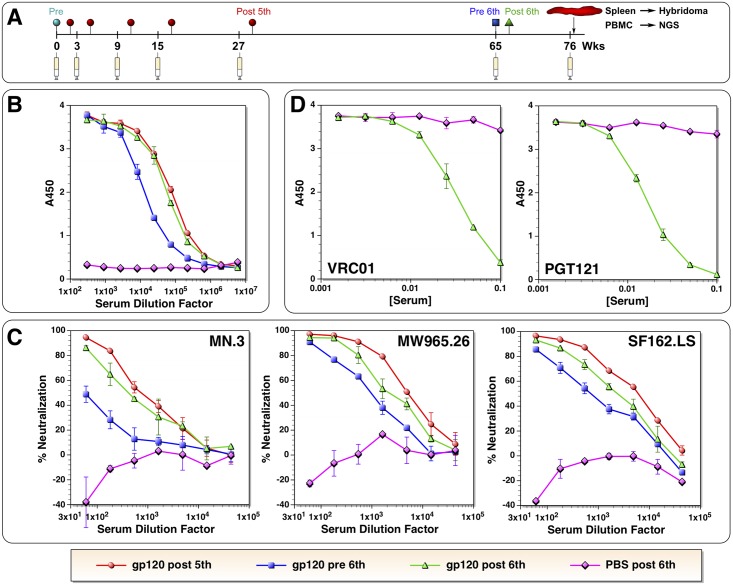
Fig 1. Characterization of antibodies induced after the 6th immunization.
(A) Timeline of immunization and sample collection. (B) Comparison of antigen-specific antibody titers after the 5th, before 6th, and after 6th immunization. A serum sample from an age matched, mock-immunized animal, indicated as “PBS”, was used as a negative control. A450 represents absorbance value at 450 nm. The same legend at the bottom is used for all of the panels. (C) Neutralizing activity against MN.3, MW965.26 and SF162.LS. (D) The serum sample after the 6th immunization was tested for competition against VRC01 and PGT121. The values on the x-axis represent serum concentration (1/dilution factor).
Fig 2
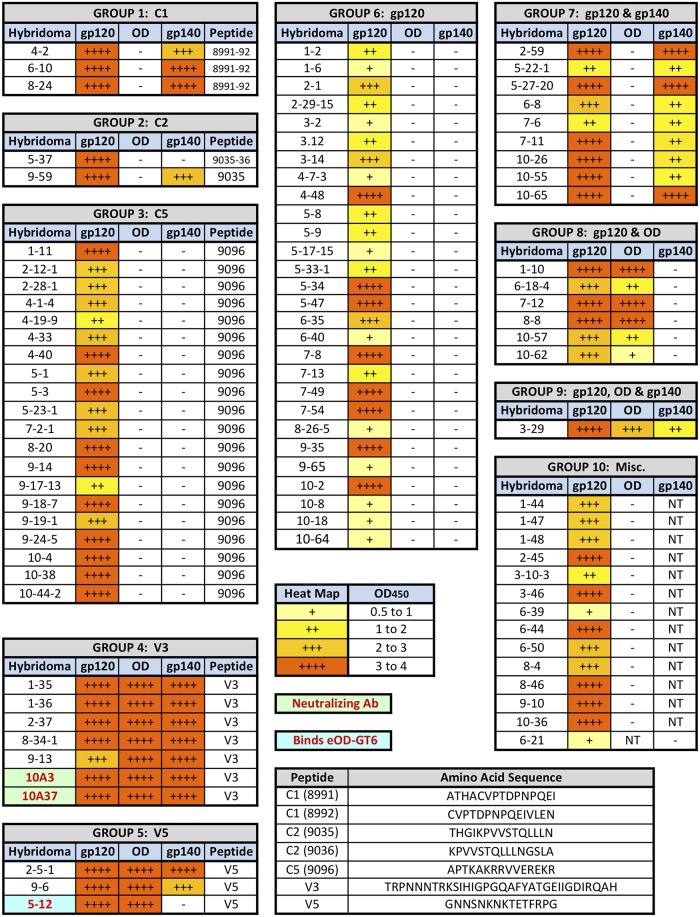
Fig 2. Epitope mapping analyses of hybridomas generated.
Hybridomas were evaluated for reactivity against gp120, gp120-OD, BG505 SOSIP gp140, as well as eOD-GT6 and a large panel of peptides. Hybridomas are arranged in groups based on their linear epitopes or their reactivity to three proteins. NT: Not Tested.
Fig 3
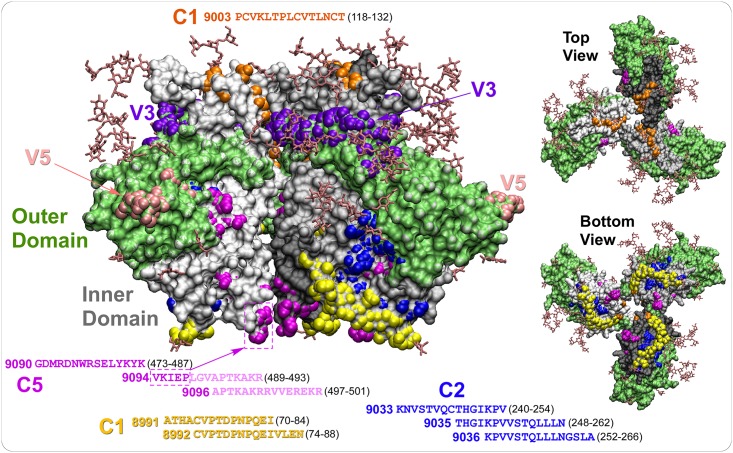
Fig 3. Locations of immunogenic peptides in the inner domain.
A crystal structure of trimeric BG505 SOSIP gp140 (pdb: 4NCO) was used to illustrate locations of the immunogenic peptides. Only the gp120 portion is shown for clarity. The outer domain is shown in lime and the inner domain is shown in three shades of gray. A part of peptide 9094 and 9096 from the C5 region (indicated in a lighter magenta shade) is not shown in the crystal structure. The arrow points to the position of the five amino acids (VKIEP) on peptide 9094. For simplicity, the locations of the V3 and V5 loops are shown only on the side view.
Fig 4
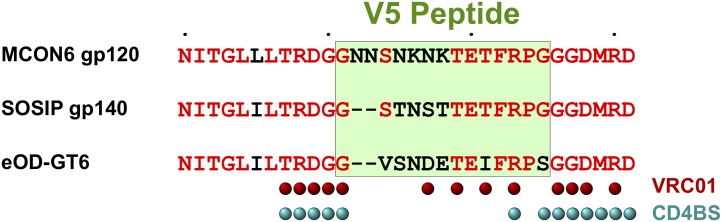
Fig 4. Sequence alignment of a region around the V5 loop.
Sequences for the three antigens used for ELISA are shown (MCON6 gp120, BG505 SOSIP gp140 and eOD-GT6). The V5 loop peptide used for ELISA is boxed in. Identical amino acid residues are indicated in red. The residues that make contact with bnAb VRC01 or CD4 are indicated as red or cyan circles.
Fig 5
Fig 5. Antibody competition against PGT121.
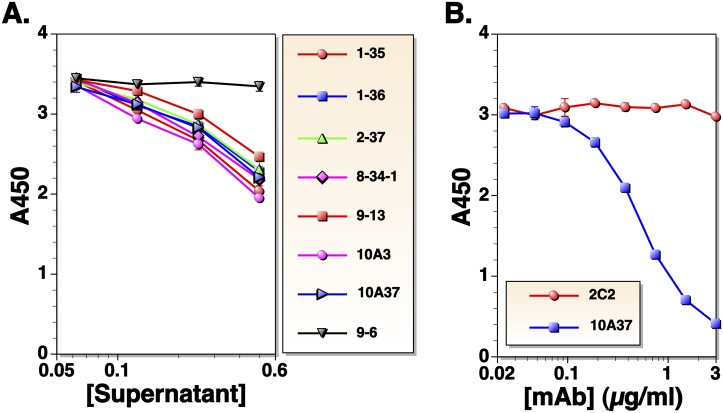
(A) Culture supernatants of hybridomas specific against the V3 loop were evaluated for competing activity against PGT121 for binding gp120. The values on the x-axis represent supernatant concentration (1/dilution factor). (B) Recombinant mAb 10A37 was used for the competition assay. Anti-gp41, recombinant mAb 2C2 was used as a negative control.
Fig 6
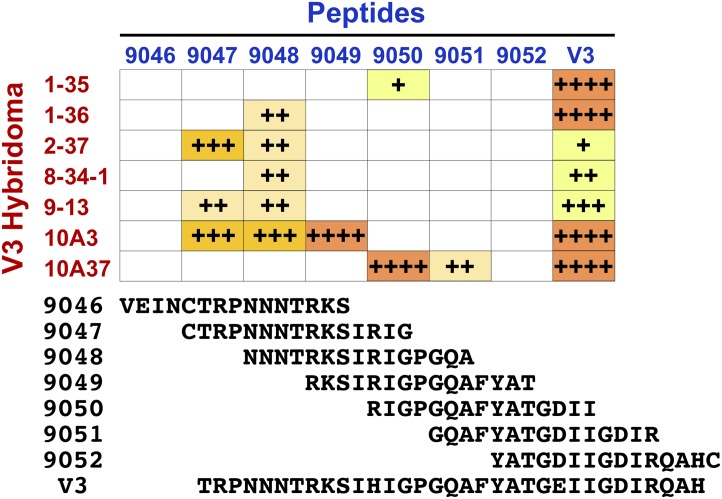
Fig 6. Epitope mapping analyses of anti-V3 loop mAbs.
The V3 loop-positive antibodies were tested for binding to overlapping 15-mer peptides spanning the entire loop by ELISA. The sequences of the peptides are shown at the bottom.
Fig 7
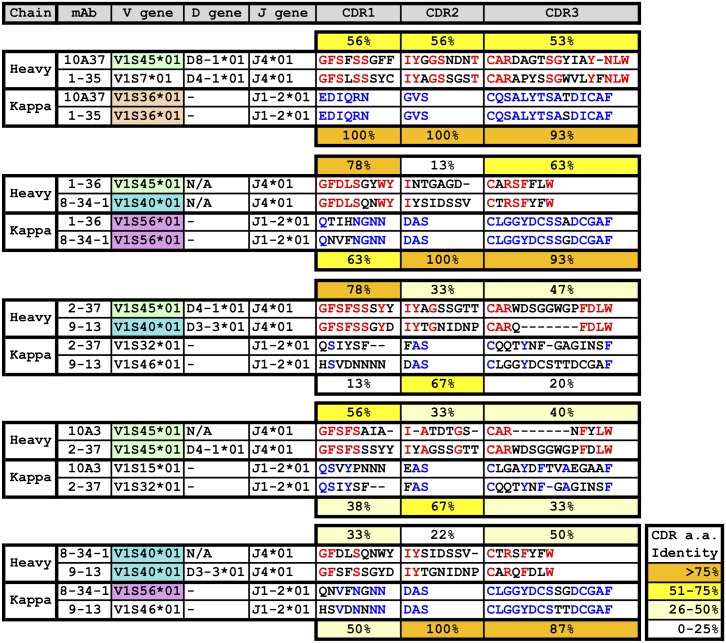
Fig 7. Comparison of CDR regions of the anti-V3 loop mAbs.
The heavy and light chains of the seven V3 loop-positive mAbs were aligned for analysis. Comparison was done based on peptide reactivity shown in Fig 6. Percentages indicate % amino acid identity between the two CDR being compared.
Fig 8
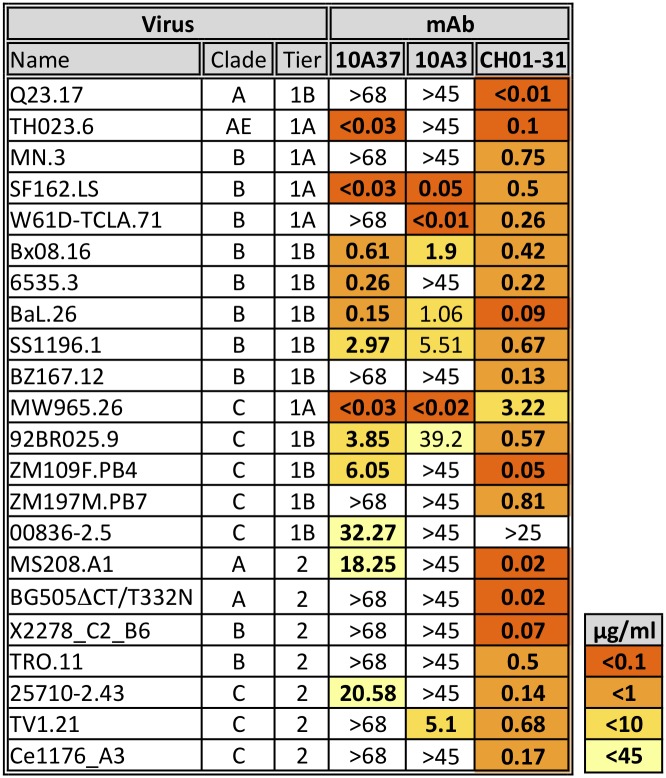
Fig 8. Neutralizing activity of anti-V3 loop mAbs 10A3 and 10A37.
V3 positive mAbs 10A37 and 10A3 were tested for neutralization against pseudoviruses belonging to different clades and tiers of HIV-1 and their IC50 values (μg/ml) are shown. These mAbs were compared to a combination of two mAbs (CH01 and VRC-CH31) that are known to show broad cross-clade neutralization [56].

References

    1. Mascola JR, Haynes BF. HIV-1 neutralizing antibodies: understanding nature's pathways. Immunol Rev [Internet]. 2013. June 16;254(1):225–44. Available: http://eutils.ncbi.nlm.nih.gov/entrez/eutils/elink.fcgi?dbfrom=pubmed&id... 10.1111/imr.12075 - DOI - PMC - PubMed
    1. Haynes BF, Kelsoe G, Harrison SC, Kepler TB. B-cell-lineage immunogen design in vaccine development with HIV-1 as a case study. Nat Biotechnol. 2012. May;30(5):423–33. 10.1038/nbt.2197 - DOI - PMC - PubMed
    1. Haynes BF, Moody MA, Alam M, Bonsignori M, Verkoczy L, Ferrari G, et al. Progress in HIV-1 vaccine development. Journal of Allergy and Clinical Immunology [Internet]. Elsevier Ltd; 2014. July 1;134(1):3–10. Available: http://eutils.ncbi.nlm.nih.gov/entrez/eutils/elink.fcgi?dbfrom=pubmed&id... - PMC - PubMed
    1. Burton DR, Desrosiers RC, Doms RW, Koff WC, Kwong PD, Moore JP, et al. HIV vaccine design and the neutralizing antibody problem. Nat Immunol. 2004. March;5(3):233–6. - PubMed
    1. Haynes BF, Montefiori DC. Aiming to induce broadly reactive neutralizing antibody responses with HIV-1 vaccine candidates. Expert Rev Vaccines. 2006. August;5(4):579–95. - PubMed

Publication types

MeSH terms