


The Complete Mitochondrial Genome of the Foodborne Parasitic Pathogen Cyclospora cayetanensis
- PMID: 26042787
- PMCID: PMC4455993
- DOI: 10.1371/journal.pone.0128645
The Complete Mitochondrial Genome of the Foodborne Parasitic Pathogen Cyclospora cayetanensis
Expression of concern in
-
Expression of Concern: The Complete Mitochondrial Genome of the Foodborne Parasitic Pathogen Cyclospora cayetanensis.PLoS One. 2023 Feb 21;18(2):e0282228. doi: 10.1371/journal.pone.0282228. eCollection 2023. PLoS One. 2023. PMID: 36809444 Free PMC article. No abstract available.
Abstract
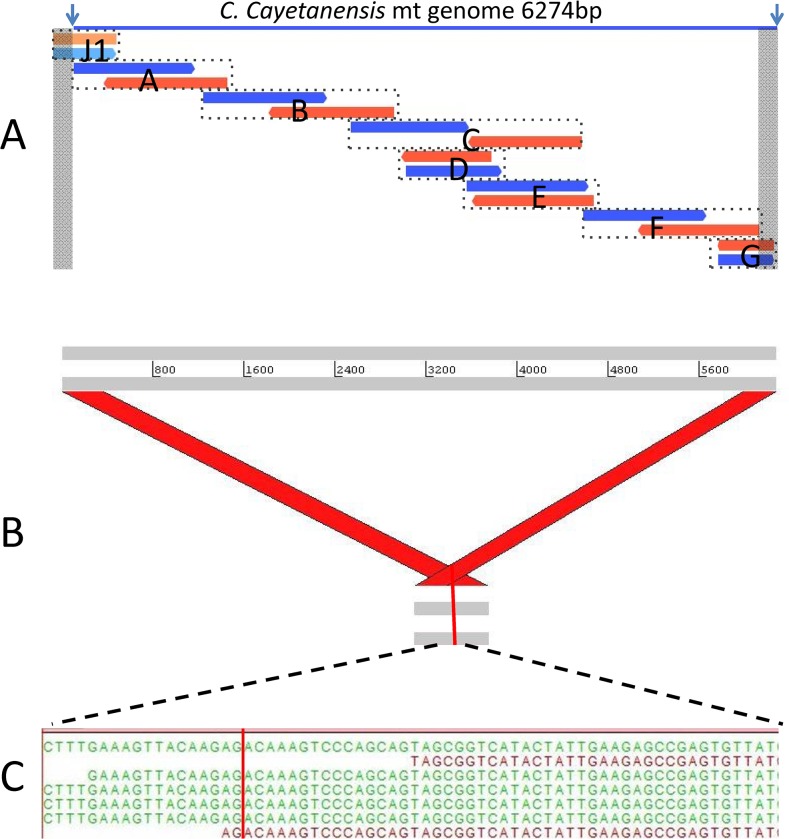
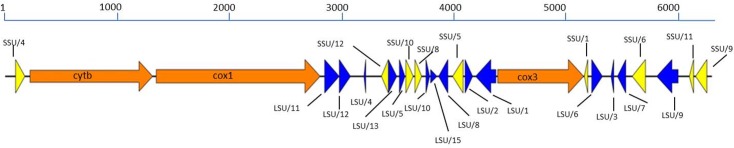
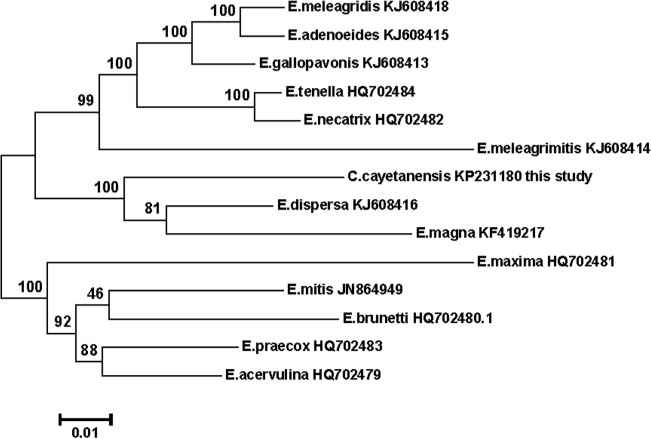
Cyclospora cayetanensis is a human-specific coccidian parasite responsible for several food and water-related outbreaks around the world, including the most recent ones involving over 900 persons in 2013 and 2014 outbreaks in the USA. Multicopy organellar DNA such as mitochondrion genomes have been particularly informative for detection and genetic traceback analysis in other parasites. We sequenced the C. cayetanensis genomic DNA obtained from stool samples from patients infected with Cyclospora in Nepal using the Illumina MiSeq platform. By bioinformatically filtering out the metagenomic reads of non-coccidian origin sequences and concentrating the reads by targeted alignment, we were able to obtain contigs containing Eimeria-like mitochondrial, apicoplastic and some chromosomal genomic fragments. A mitochondrial genomic sequence was assembled and confirmed by cloning and sequencing targeted PCR products amplified from Cyclospora DNA using primers based on our draft assembly sequence. The results show that the C. cayetanensis mitochondrion genome is 6274 bp in length, with 33% GC content, and likely exists in concatemeric arrays as in Eimeria mitochondrial genomes. Phylogenetic analysis of the C. cayetanensis mitochondrial genome places this organism in a tight cluster with Eimeria species. The mitochondrial genome of C. cayetanensis contains three protein coding genes, cytochrome (cytb), cytochrome C oxidase subunit 1 (cox1), and cytochrome C oxidase subunit 3 (cox3), in addition to 14 large subunit (LSU) and nine small subunit (SSU) fragmented rRNA genes.
Conflict of interest statement
Figures
References
-
- Ortega YR, Gilman RH, Sterling CR (1994) A new coccidian parasite (Apicomplexa: Eimeriidae) from humans. J Parasitol 80: 625–629. - PubMed
-
- Fast NM, Xue L, Bingham S, Keeling PJ (2002) Re-examining alveolate evolution using multiple protein molecular phylogenies. J Eukaryot Microbiol 49: 30–37. - PubMed
MeSH terms
Associated data
- Actions
LinkOut - more resources
Full Text Sources
Other Literature Sources
Molecular Biology Databases
Miscellaneous
