


Metabolomic Endotype of Asthma
- PMID: 26048149
- PMCID: PMC4490949
- DOI: 10.4049/jimmunol.1500736
Metabolomic Endotype of Asthma
Abstract
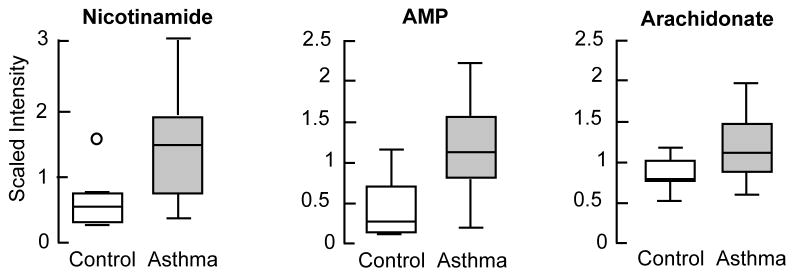
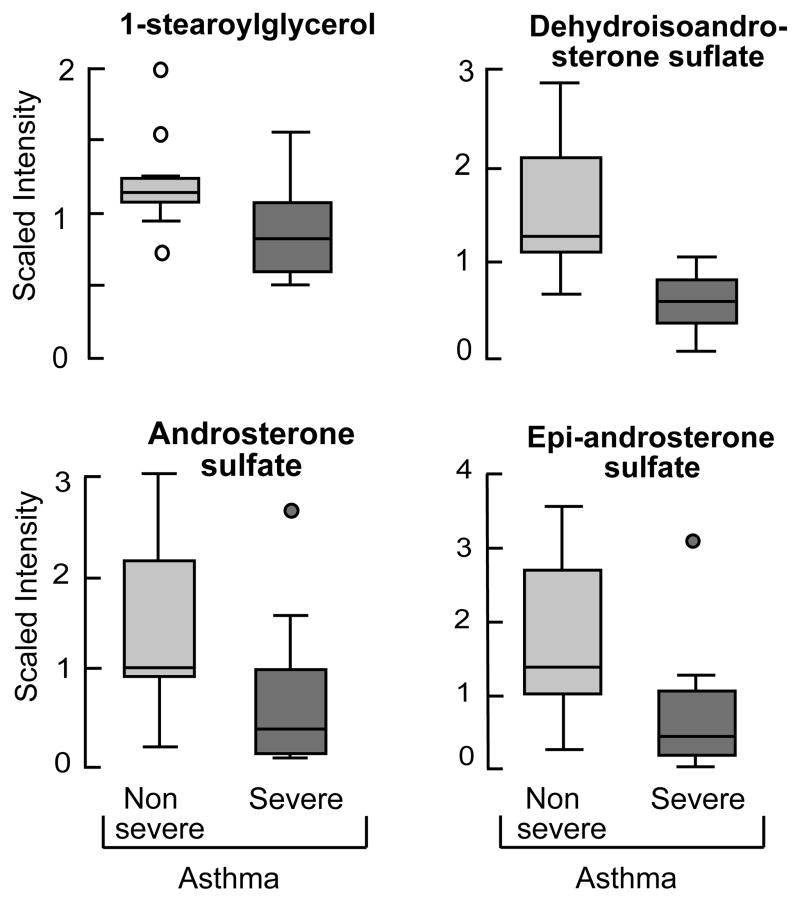
Metabolomics, the quantification of small biochemicals in plasma and tissues, can provide insight into complex biochemical processes and enable the identification of biomarkers that may serve as therapeutic targets. We hypothesized that the plasma metabolome of asthma would reveal metabolic consequences of the specific immune and inflammatory responses unique to endotypes of asthma. The plasma metabolomic profiles of 20 asthmatic subjects and 10 healthy controls were examined using an untargeted global and focused metabolomic analysis. Individuals were classified based on clinical definitions of asthma severity or by levels of fraction of exhaled NO (FENO), a biomarker of airway inflammation. Of the 293 biochemicals identified in the plasma, 25 were significantly different among asthma and healthy controls (p < 0.05). Plasma levels of taurine, lathosterol, bile acids (taurocholate and glycodeoxycholate), nicotinamide, and adenosine-5-phosphate were significantly higher in asthmatics compared with healthy controls. Severe asthmatics had biochemical changes related to steroid and amino acid/protein metabolism. Asthmatics with high FENO, compared with those with low FENO, had higher levels of plasma branched-chain amino acids and bile acids. Asthmatics have a unique plasma metabolome that distinguishes them from healthy controls and points to activation of inflammatory and immune pathways. The severe asthmatic and high FENO asthmatic have unique endotypes that suggest changes in NO-associated taurine transport and bile acid metabolism.
Copyright © 2015 by The American Association of Immunologists, Inc.
Figures

References
-
- Busse W, Elias J, Sheppard D, Banks-Schlegel S. Airway remodeling and repair. American journal of respiratory and critical care medicine. 1999;160:1035–1042. - PubMed
-
- Calhoun WJ, Reed HE, Moest DR, Stevens CA. Enhanced superoxide production by alveolar macrophages and air-space cells, airway inflammation, and alveolar macrophage density changes after segmental antigen bronchoprovocation in allergic subjects. Am Rev Respir Dis. 1992;145:317–325. - PubMed
-
- Dweik RA, Boggs PB, Erzurum SC, Irvin CG, Leigh MW, Lundberg JO, Olin AC, Plummer AL, Taylor DR American Thoracic Society Committee on Interpretation of Exhaled Nitric Oxide Levels for Clinical A. An official ATS clinical practice guideline: interpretation of exhaled nitric oxide levels (FENO) for clinical applications. American journal of respiratory and critical care medicine. 2011;184:602–615. - PMC - PubMed
-
- Dweik RA, Laskowski D, Ozkan M, Farver C, Erzurum SC. High levels of exhaled nitric oxide (NO) and NO synthase III expression in lesional smooth muscle in lymphangioleiomyomatosis. Am J Respir Cell Mol Biol. 2001;24:414–418. - PubMed
Publication types
MeSH terms
Substances
Grants and funding
LinkOut - more resources
Full Text Sources
Other Literature Sources
Medical
