


Difficult intubation and outcome after out-of-hospital cardiac arrest: a registry-based analysis
- PMID: 26048574
- PMCID: PMC4457979
- DOI: 10.1186/s13049-015-0124-0
Difficult intubation and outcome after out-of-hospital cardiac arrest: a registry-based analysis
Abstract
Background: Airway management during resuscitation attempts is pivotal for treating hypoxia, and endotracheal intubation is the standard procedure. This German Resuscitation Registry analysis investigates the influence of airway management on primary outcomes after out-of-hospital cardiac arrest, in a physician-based emergency system.
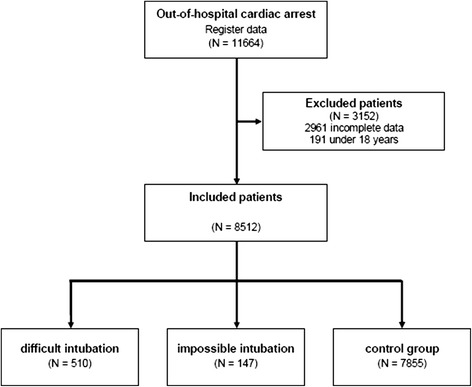
Methods: A total of 8512 patients recorded in the German Resuscitation Registry (2007-2011) were analyzed. The Return of Spontaneous Circulation After Cardiac Arrest (RACA) score was used to compare observed return of spontaneous circulation (ROSC) rates with the ROSC predicted by the score and to analyze factors influencing the primary outcome. Patients were classified into three groups: difficult intubation, impossible intubation, and a control group with normal airways.
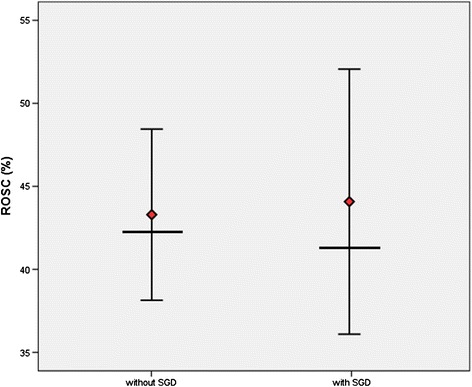
Results: The observed ROSC matched the predicted ROSC in the group with difficult airways. The impossible intubation group had lower ROSC rates (31.3% vs. 40.5%; P < 0.05). Impossible intubation was more frequent in men (OR 2.28; 95% CI, 1.43-3.63; P = 0.001), young patients (OR 2.18; 95% CI, 1.26-3.76; P = 0.005) and those with trauma (OR 2.22; 95% CI, 1.01-4.85; P = 0.046). Fewer impossible intubations were reported when the emergency physicians were anesthesiologists (OR 0.65; 95% CI, 0.44-0.96; P = 0.028). If a supraglottic airway device was not used in the impossible intubation group, the observed ROSC (18.0%; 95% CI, 7.4-28.6%) was poorer than predicted (38.2%) (P < 0.05).
Conclusions: Outcomes after resuscitation attempts are poorer when endotracheal intubation is not possible. Predictive factors for impossible intubation are male gender, younger age, and trauma. Supraglottic airway devices should be used at an early stage whenever these negative factors are present.
Figures

References
-
- Fernandez Castelao E, Russo SG, Cremer S, et al. Positive impact of crisis resource management training on no-flow time and team member verbalisations during simulated cardiopulmonary resuscitation: a randomised controlled trial. Resuscitation. 2011;82:1338–43. doi: 10.1016/j.resuscitation.2011.05.009. - DOI - PubMed
-
- Lund-Kordahl I, Olasveengen TM, Lorem T, Samdal M, Wik L, Sunde K. Improving outcome after out-of-hospital cardiac arrest by strengthening weak links of the local chain of survival; quality of advanced life support and post-resuscitation care. Resuscitation. 2010;81:422–6. doi: 10.1016/j.resuscitation.2009.12.020. - DOI - PubMed
MeSH terms
LinkOut - more resources
Full Text Sources
Other Literature Sources
