


Blunted hypertrophic response in aged skeletal muscle is associated with decreased ribosome biogenesis
- PMID: 26048973
- PMCID: PMC4538281
- DOI: 10.1152/japplphysiol.00296.2015
Blunted hypertrophic response in aged skeletal muscle is associated with decreased ribosome biogenesis
Abstract
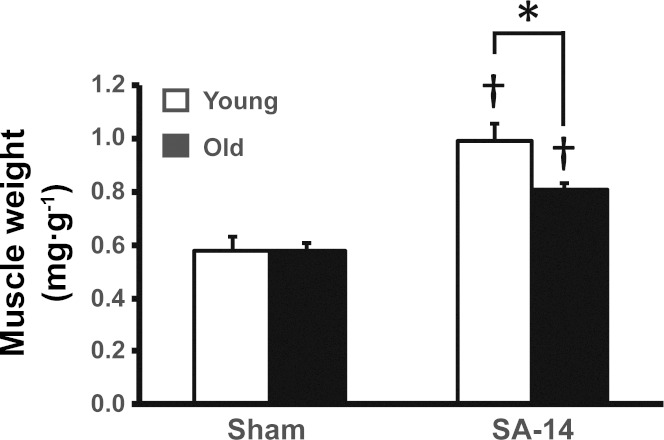
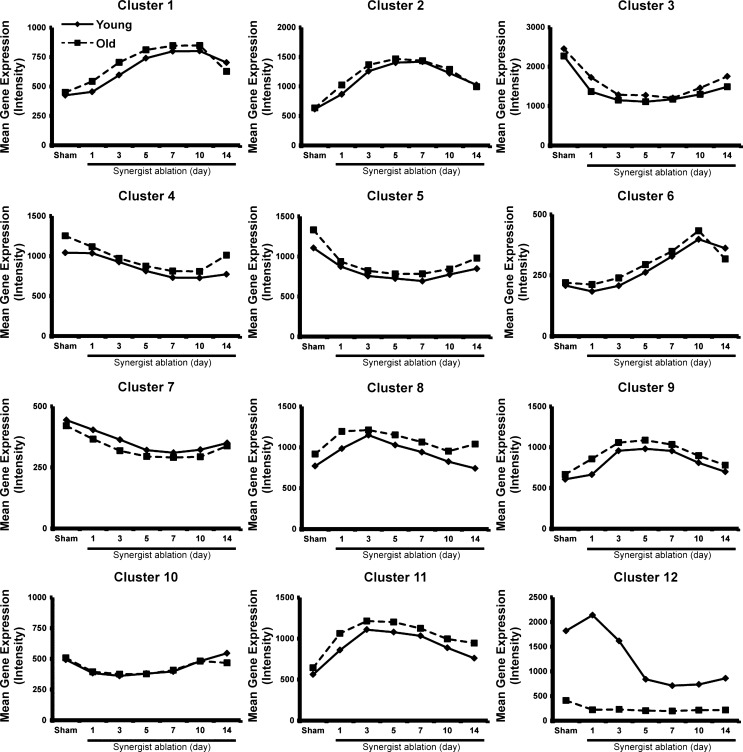
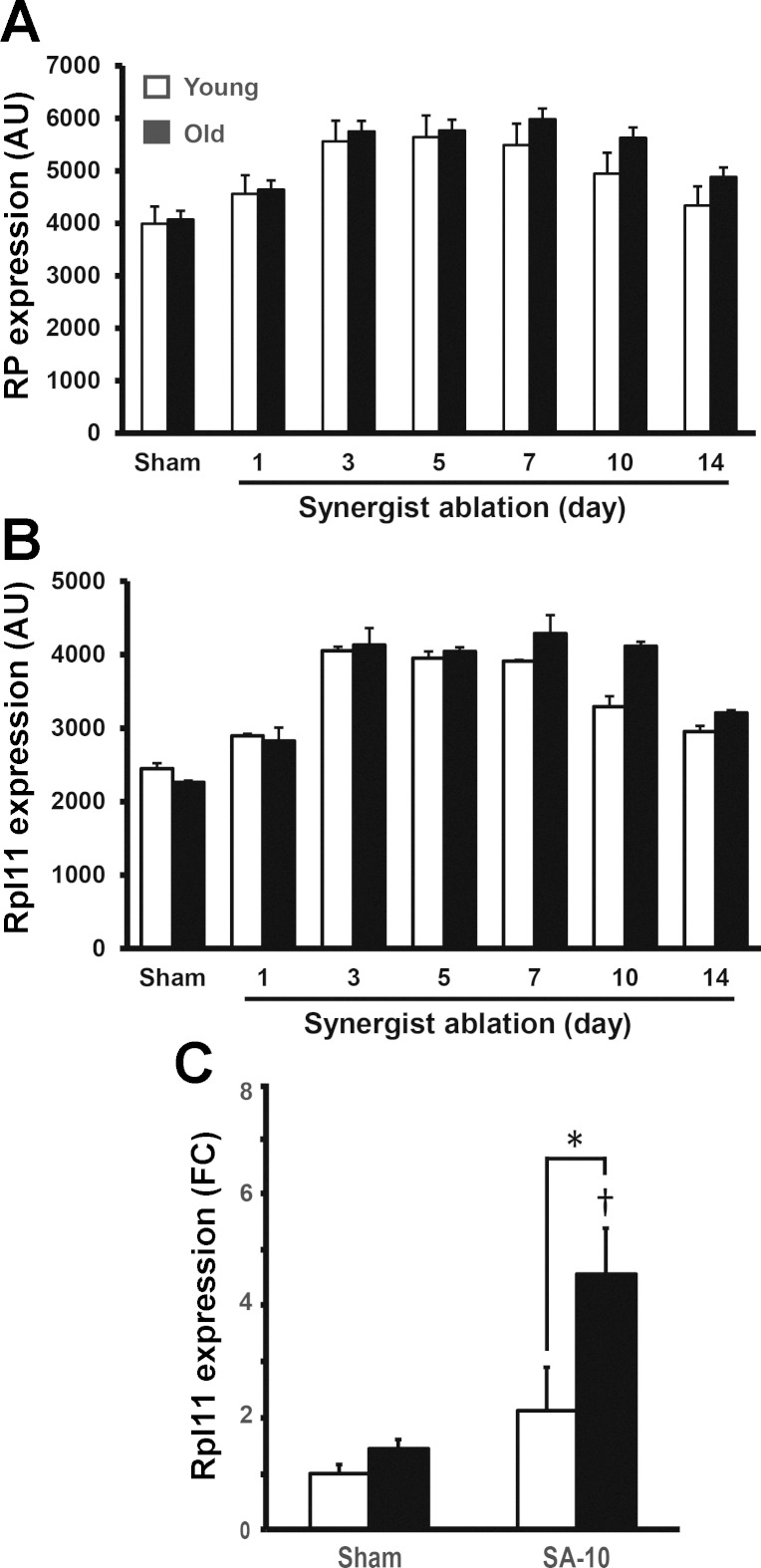
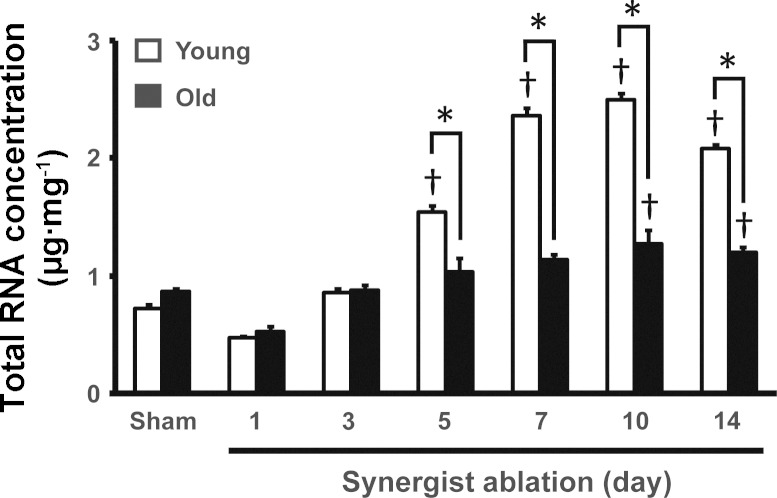
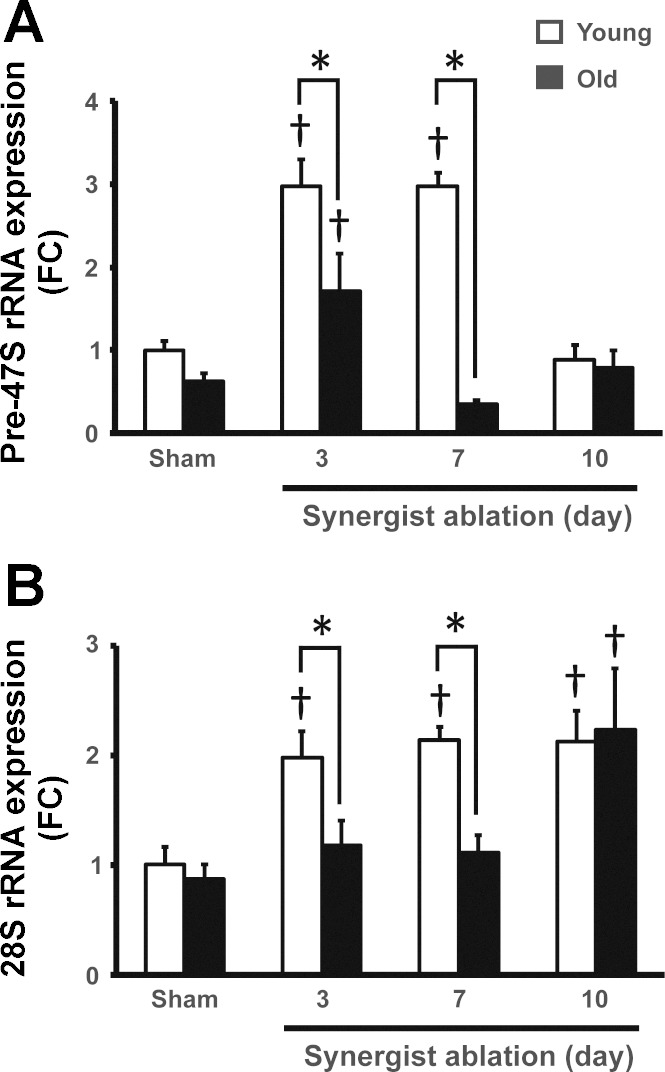
The ability of skeletal muscle to hypertrophy in response to a growth stimulus is known to be compromised in older individuals. We hypothesized that a change in the expression of protein-encoding genes in response to a hypertrophic stimulus contributes to the blunted hypertrophy observed with aging. To test this hypothesis, we determined gene expression by microarray analysis of plantaris muscle from 5- and 25-mo-old mice subjected to 1, 3, 5, 7, 10, and 14 days of synergist ablation to induce hypertrophy. Overall, 1,607 genes were identified as being differentially expressed across the time course between young and old groups; however, the difference in gene expression was modest, with cluster analysis showing a similar pattern of expression between the two groups. Despite ribosome protein gene expression being higher in the aged group, ribosome biogenesis was significantly blunted in the skeletal muscle of aged mice compared with mice young in response to the hypertrophic stimulus (50% vs. 2.5-fold, respectively). The failure to upregulate pre-47S ribosomal RNA (rRNA) expression in muscle undergoing hypertrophy of old mice indicated that rDNA transcription by RNA polymerase I was impaired. Contrary to our hypothesis, the findings of the study suggest that impaired ribosome biogenesis was a primary factor underlying the blunted hypertrophic response observed in skeletal muscle of old mice rather than dramatic differences in the expression of protein-encoding genes. The diminished increase in total RNA, pre-47S rRNA, and 28S rRNA expression in aged muscle suggest that the primary dysfunction in ribosome biogenesis occurs at the level of rRNA transcription and processing.
Keywords: age; hypertrophy; microarray; ribosome biogenesis; skeletal muscle.
Copyright © 2015 the American Physiological Society.
Figures
References
-
- Adams GR, Bamman MM. Characterization and regulation of mechanical loading-induced compensatory muscle hypertrophy. Comp Physiol 2: 2829–2870, 2012. - PubMed
-
- Blough ER, Linderman JK. Lack of skeletal muscle hypertrophy in very aged male Fischer 344 × Brown Norway rats. J Appl Physiol 88: 1265–1270, 2000. - PubMed
-
- Bodine SC, Stitt TN, Gonzalez M, Kline WO, Stover GL, Bauerlein R, Zlotchenko E, Scrimgeour A, Lawrence JC, Glass DJ, Yancopoulos GD. Akt/mTOR pathway is a crucial regulator of skeletal muscle hypertrophy and can prevent muscle atrophy in vivo. Nat Cell Biol 3: 1014–1019, 2001. - PubMed
-
- Carson JA, Alway SE, Yamaguchi M. Time course of hypertrophic adaptations of the anterior latissimus dorsi muscle to stretch overload in aged Japanese quail. J Gerontol A Biol Sci Med Sci 50: B391–B398, 1995. - PubMed
Publication types
MeSH terms
Substances
Grants and funding
LinkOut - more resources
Full Text Sources
Other Literature Sources
Medical
Molecular Biology Databases
