


Salt, chloride, bleach, and innate host defense
- PMID: 26048979
- PMCID: PMC4763953
- DOI: 10.1189/jlb.4RU0315-109R
Salt, chloride, bleach, and innate host defense
Abstract
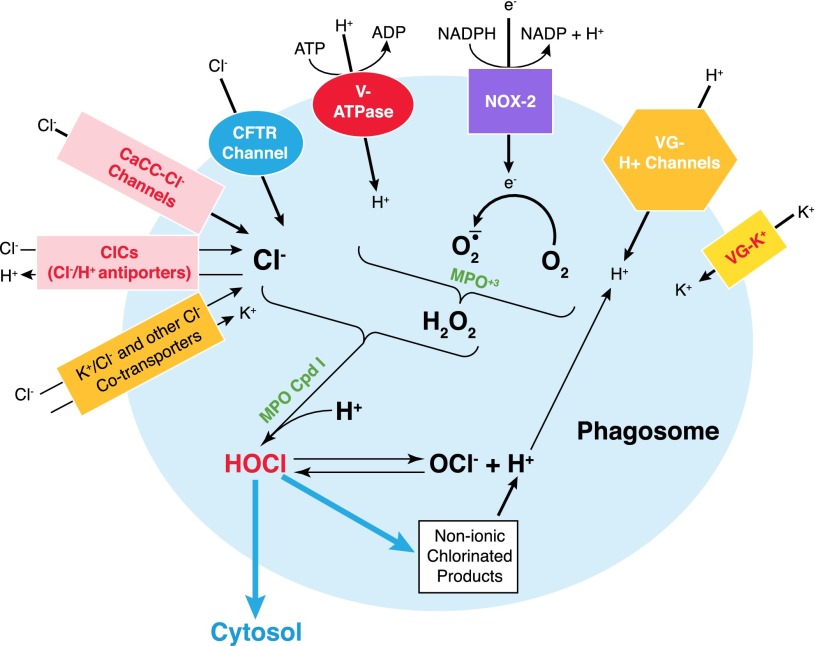
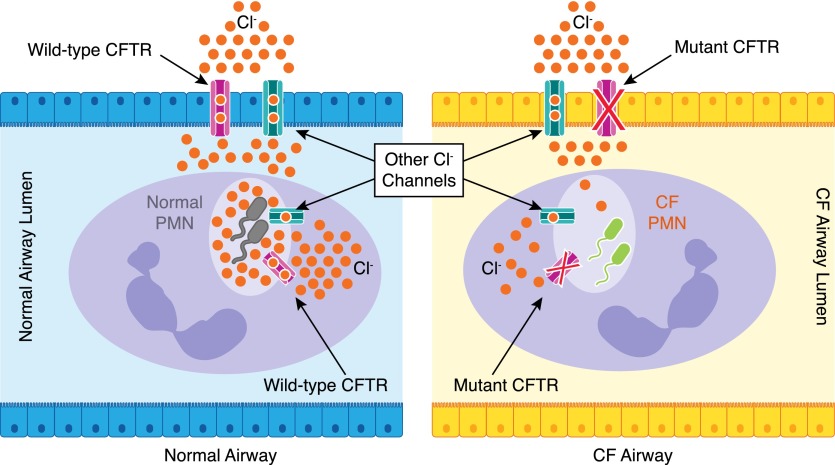
Salt provides 2 life-essential elements: sodium and chlorine. Chloride, the ionic form of chlorine, derived exclusively from dietary absorption and constituting the most abundant anion in the human body, plays critical roles in many vital physiologic functions, from fluid retention and secretion to osmotic maintenance and pH balance. However, an often overlooked role of chloride is its function in innate host defense against infection. Chloride serves as a substrate for the generation of the potent microbicide chlorine bleach by stimulated neutrophils and also contributes to regulation of ionic homeostasis for optimal antimicrobial activity within phagosomes. An inadequate supply of chloride to phagocytes and their phagosomes, such as in CF disease and other chloride channel disorders, severely compromises host defense against infection. We provide an overview of the roles that chloride plays in normal innate immunity, highlighting specific links between defective chloride channel function and failures in host defense.
Keywords: hypochlorous acid; myeloperoxidase; neutrophil oxidants; phagocytes.
© Society for Leukocyte Biology.
Figures
References
-
- Frisoli T. M., Schmieder R. E., Grodzicki T., Messerli F. H. (2012) Salt and hypertension: is salt dietary reduction worth the effort? Am. J. Med. 125, 433–439. - PubMed
-
- Cirillo M., Capasso G., Di Leo V. A., De Santo N. G. (1994) A history of salt. Am. J. Nephrol. 14, 426–431. - PubMed
-
- Kotchen T. A., Cowley A. W. Jr., Frohlich E. D. (2013) Salt in health and disease—a delicate balance. N. Engl. J. Med. 368, 1229–1237. - PubMed
-
- Weller O., Dumitroaia G. (2005) The earliest salt production in the world: an early Neolithic exploitation in Poiana Slatinei-Lunca, Romania. Antiquity 79, 1–4.
-
- Kurlansky M. (2002) Salt: A World History. Walker and Co., New York.
Publication types
MeSH terms
Substances
Grants and funding
LinkOut - more resources
Full Text Sources
Medical
Research Materials
