


Stress-Related Changes in Attentional Bias to Social Threat in Young Adults: Psychobiological Associations with the Early Family Environment
- PMID: 26052167
- PMCID: PMC4456034
- DOI: 10.1007/s10608-014-9659-z
Stress-Related Changes in Attentional Bias to Social Threat in Young Adults: Psychobiological Associations with the Early Family Environment
Abstract
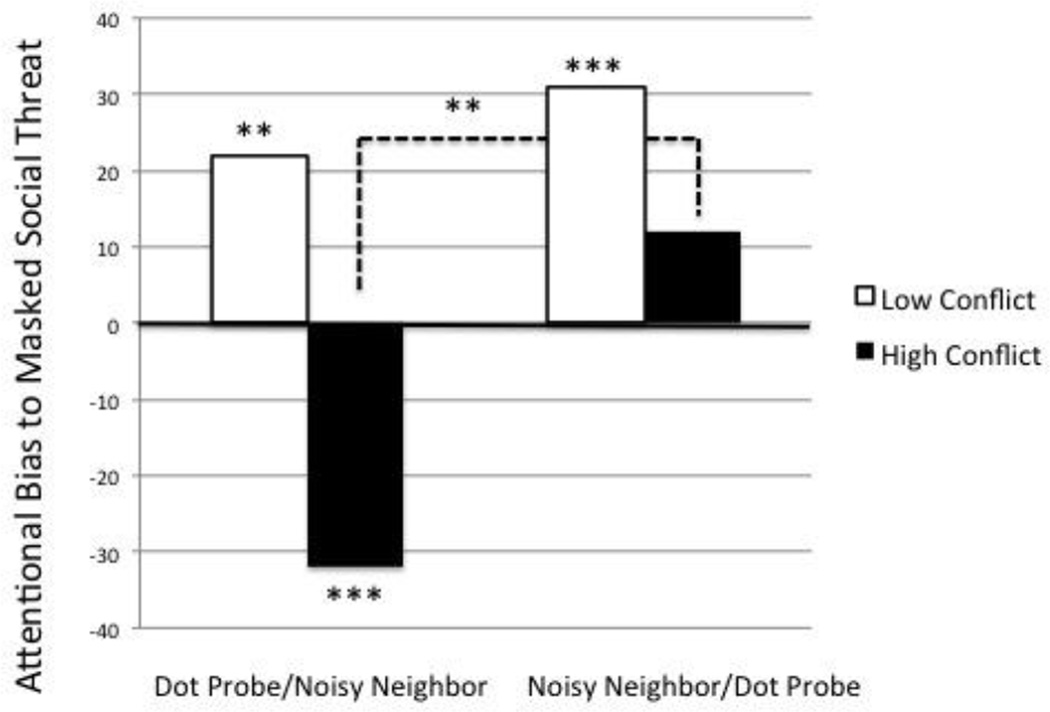
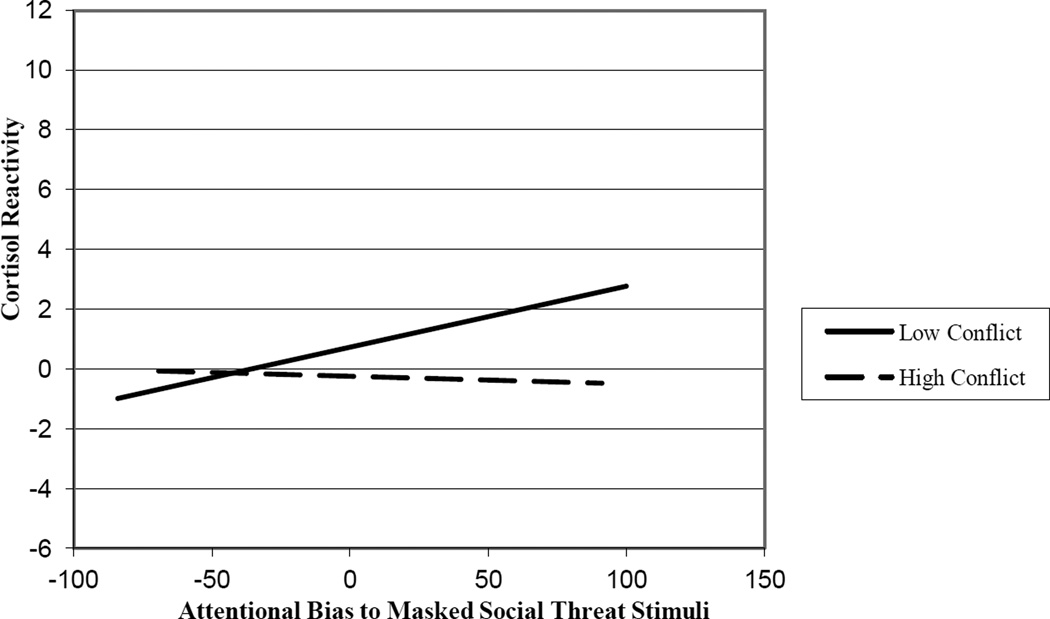
This study investigated the association of chronic childhood stress exposure with acute stress-related attentional alterations that have been previously linked to vulnerability to mental and physical illness in early adulthood. Participants were randomized in a crossover design to complete both a mild laboratory social stress task and a computerized task assessing attentional bias to socially threatening words. Salivary cortisol was measured throughout the study. Exposure to acute laboratory stress altered attentional processing, and this relationship was moderated by chronic childhood stress exposure. Also, a positive association between cortisol reactivity and attentional bias was observed, with cortisol reactivity negatively related to childhood chronic stress exposure. While previous work has supported a role for early chronic stress exposure in influencing acute stress reactivity, this work provides initial insight into how both prior chronic childhood stress and current acute stress together relate to the attentional gateway and may be associated with stress adaptation and psychological vulnerability into adulthood.
Keywords: Chronic stress; acute stress; attentional bias; cortisol; family conflict.
Conflict of interest statement
Conflict of Interest: Authors C.A., P.G., S.V., and B.C. declare that they have no conflict of interest.
Figures
References
-
- Achenbach TM, Rescorla LA. Manual for the ASEBA Adult Forms & Profiles. Burlington, VT: University of Vermont, Research Center for Children, Youth, and Families; 2003.
-
- Aiken LS, West SG. Multiple Regression: Testing and Interpreting Interactions. Thousand Oaks, CA: SAGE Publications, Inc; 1991.
-
- Applehans BM, Luecken LJ. Attentional processes, anxiety, and the regulation of cortisol reactivity. Anxiety, Stress & Coping: An International Journal. 2006;19:81–92.
-
- Bar-Haim Y, Lamy D, Pergamin L, Bakermans-Kranenburg MJ, van IJzendoorn MH. Threat-related attentional bias in anxious and nonanxious individuals: a meta-analytic study. Psychological Bulletin. 2007;133:1–24. - PubMed
Grants and funding
LinkOut - more resources
Full Text Sources
Other Literature Sources