


A new role for α-ketoglutarate dehydrogenase complex: regulating metabolism through post-translational modification of other enzymes
- PMID: 26052752
- PMCID: PMC4945114
- DOI: 10.1111/jnc.13150
A new role for α-ketoglutarate dehydrogenase complex: regulating metabolism through post-translational modification of other enzymes
Abstract
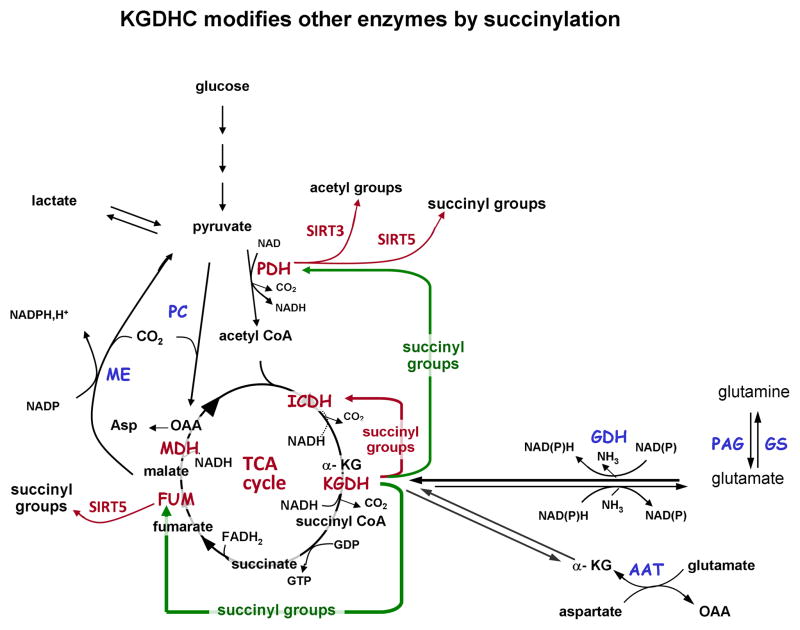
This Editorial highlights a study by Gibson et al. published in this issue of JNeurochem, in which the authors reveal a novel role for the α-ketoglutarate dehydrogenase complex (KGDHC) in post-translational modification of proteins. KGDHC may catalyze post-translational modification of itself as well as several other proteins by succinylation of lysine residues. The authors' report of an enzyme responsible for succinylation of key mitochondrial enzymes represents a major step toward our understanding of the complex functional metabolome. TCA, tricarboxylic acid; KG, α-ketoglutarate; KGDHC, α-ketoglutarate dehydrogenase complex; FUM, fumarase; MDH, malate dehydrogenase; ME, malic enzyme; GDH, glutamate dehydrogenase; AAT, aspartate aminotransferase; GS, glutamine synthetase; PAG, phosphate-activated glutaminase; SIRT3, silent information regulator 3; SIRT5, silent information regulator 5.
© 2015 International Society for Neurochemistry.
Figures
Comment on
-
Alpha-ketoglutarate dehydrogenase complex-dependent succinylation of proteins in neurons and neuronal cell lines.J Neurochem. 2015 Jul;134(1):86-96. doi: 10.1111/jnc.13096. Epub 2015 Apr 8. J Neurochem. 2015. PMID: 25772995 Free PMC article.
References
-
- Choudhary C, Weinert BT, Nishida Y, Verdin E, Mann M. The growing landscape of lysine acetylation links metabolism and cell signalling. Nat Rev Mol Cell Biol. 2014;15:536–550. - PubMed
-
- Fell D. Understanding the control of metabolism. Portland Press; London: 1997. pp. 15–16.
Publication types
MeSH terms
Substances
Grants and funding
LinkOut - more resources
Full Text Sources
Other Literature Sources
Research Materials
Miscellaneous
