


A consumer-targeted, pharmacist-led, educational intervention to reduce inappropriate medication use in community older adults (D-PRESCRIBE trial): study protocol for a cluster randomized controlled trial
- PMID: 26058676
- PMCID: PMC4512085
- DOI: 10.1186/s13063-015-0791-1
A consumer-targeted, pharmacist-led, educational intervention to reduce inappropriate medication use in community older adults (D-PRESCRIBE trial): study protocol for a cluster randomized controlled trial
Abstract
Background: Medication safety for older persons represents an ongoing challenge. Inappropriate prescriptions--those with a high risk of evidence-based harm--persist in up to 25% of seniors, and account for a significant proportion of avoidable emergency department visits. This project is the sequel to the EMPOWER study, in which a novel consumer-targeted written knowledge transfer tool aimed at empowering older adults to act as drivers of benzodiazepine de-prescription resulted in a 27% reduction of inappropriate benzodiazepine use at 6-month follow-up (number needed to treat (NNT) = 4). Failure to discontinue in the EMPOWER study was attributable to re-emerging symptoms among participants, prescribing inertia, and lack of knowledge and skills for substituting alternate therapy among physicians and pharmacists. To maximize de-prescription of inappropriate therapy, educational medication-risk reduction initiatives should be tested that simultaneously include patients, physicians and pharmacists. The objective of this trial is to: 1) test the beneficial effect of a new de-prescribing paradigm enlisting pharmacists to transfer knowledge to both patients and prescribers in a 2-pronged approach to reduce inappropriate prescriptions, compared to usual care and 2) evaluate the transferability of the EMPOWER study concept to other classes of inappropriate prescriptions.
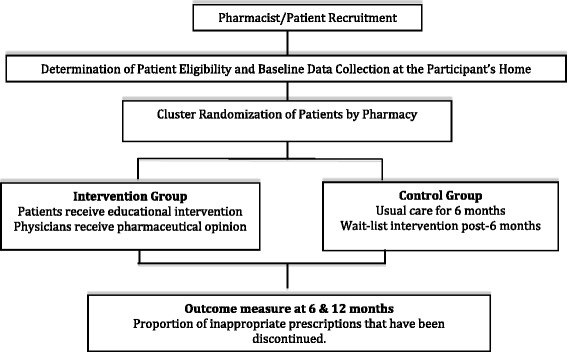
Methods: We intend to conduct a 3-year pragmatic cluster randomized parallel-group controlled trial to test the effect of the new de-prescribing intervention compared to usual care for reducing 4 classes of inappropriate prescriptions from the 2012 Beers criteria among 450 community-dwelling older adults with polypharmacy. Inappropriate prescriptions will include benzodiazepines, sulfonylurea hypoglycemic agents, first generation antihistamines and non-steroidal anti-inflammatory drugs. The study population is community-dwelling older adults recruited from community pharmacies in Quebec, Canada. The intervention was developed based on a systematic review of the evidence for each medication. Participants in the experimental group will receive the written educational program following randomization and have their pharmacist send their physicians an evidence-based pharmaceutical opinion to recommend de-prescription and be followed for a year. The control group will be wait-listed for 6 months.
Discussion: System change to effectively reduce medication risk among community-dwelling seniors requires a coordinated approach targeting physicians, pharmacists and patients. This trial will test the feasibility and effectiveness of a tripartite approach to de-prescribing.
Trial registration: Registered via ClinicalTrials.gov on 31 January 2014, identifier: NCT02053194.
References
Publication types
MeSH terms
Associated data
LinkOut - more resources
Full Text Sources
Other Literature Sources
Medical
