


Amyloid burden is associated with self-reported sleep in nondemented late middle-aged adults
- PMID: 26059712
- PMCID: PMC4523445
- DOI: 10.1016/j.neurobiolaging.2015.05.004
Amyloid burden is associated with self-reported sleep in nondemented late middle-aged adults
Abstract
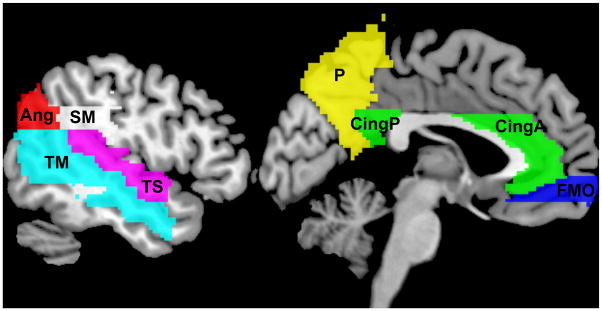
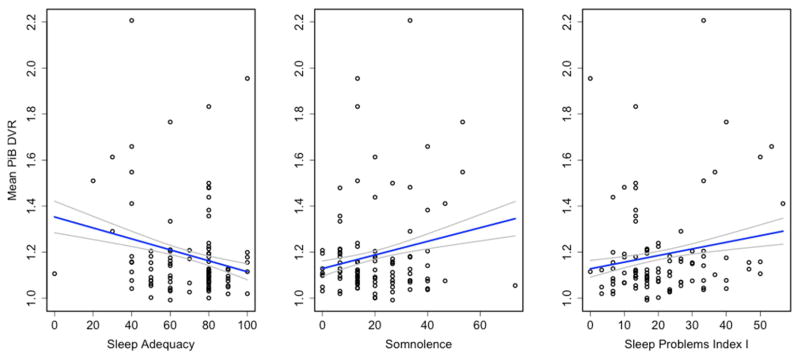
Midlife may be an ideal window for intervention in Alzheimer's disease (AD). To determine whether sleep is associated with early signs of AD neuropathology (amyloid deposition) in late midlife, we imaged brain amyloid deposits using positron emission tomography with [C-11]Pittsburgh Compound B (PiB), and assessed sleep with the Epworth Sleepiness Scale and the Medical Outcomes Study Sleep Scale in 98 cognitively healthy adults (aged 62.4 ± 5.7 years) from the Wisconsin Registry for Alzheimer's Prevention. We used multiple regressions to test the extent to which sleep scores predicted regional amyloid burden. Participants reporting less adequate sleep, more sleep problems, and greater somnolence on the Medical Outcomes Study had greater amyloid burden in AD-sensitive brain regions (angular gyrus, frontal medial orbital cortex, cingulate gyrus, and precuneus). Amyloid was not associated with reported sleep amount, symptoms of sleep-disordered breathing, trouble falling asleep, or Epworth Sleepiness Scale. Poor sleep may be a risk factor for AD and a potential early marker of AD or target for preventative interventions in midlife.
Keywords: Alzheimer's disease; Amyloid; Midlife; PET; Self-report; Sleep.
Copyright © 2015 Elsevier Inc. All rights reserved.
Figures
References
-
- Ancoli-Israel S, Palmer BW, Cooke JR, Corey-Bloom J, Fiorentino L, Natarajan L, Liu L, Ayalon L, He F, Loredo JS. Cognitive effects of treating obstructive sleep apnea in Alzheimer’s disease: a randomized controlled study. J Am Geriatr Soc. 2008;56:2076–2081. doi: 10.1111/j.1532-5415.2008.01934.x. - DOI - PMC - PubMed
Publication types
MeSH terms
Substances
Grants and funding
LinkOut - more resources
Full Text Sources
Other Literature Sources
Medical
