


Effect of vaginal self-sampling on cervical cancer screening rates: a community-based study in Newfoundland
- PMID: 26060041
- PMCID: PMC4461929
- DOI: 10.1186/s12905-015-0206-1
Effect of vaginal self-sampling on cervical cancer screening rates: a community-based study in Newfoundland
Abstract
Background: Cervical cancer is highly preventable and treatable if detected early through regular screening. Women in the Canadian province of Newfoundland & Labrador have relatively low rates of cervical cancer screening, with rates of around 40 % between 2007 and 2009. Persistent infection with oncogenic human papillomavirus (HPV) is a necessary cause for the development of cervical cancer, and HPV testing, including self-sampling, has been suggested as an alternative method of cervical cancer screening that may alleviate some barriers to screening. Our objective was to determine whether offering self-collected HPV testing screening increased cervical cancer screening rates in rural communities.
Methods: During the 2-year study, three community-based cohorts were assigned to receive either i) a cervical cancer education campaign with the option of HPV testing; ii) an educational campaign alone; iii) or no intervention. Self-collection kits were offered to eligible women at family medicine clinics and community centres, and participants were surveyed to determine their acceptance of the HPV self-collection kit. Paired proportions testing for before-after studies was used to determine differences in screening rates from baseline, and Chi Square analysis of three dimensional 2 × 2 × 2 tables compared the change between communities.
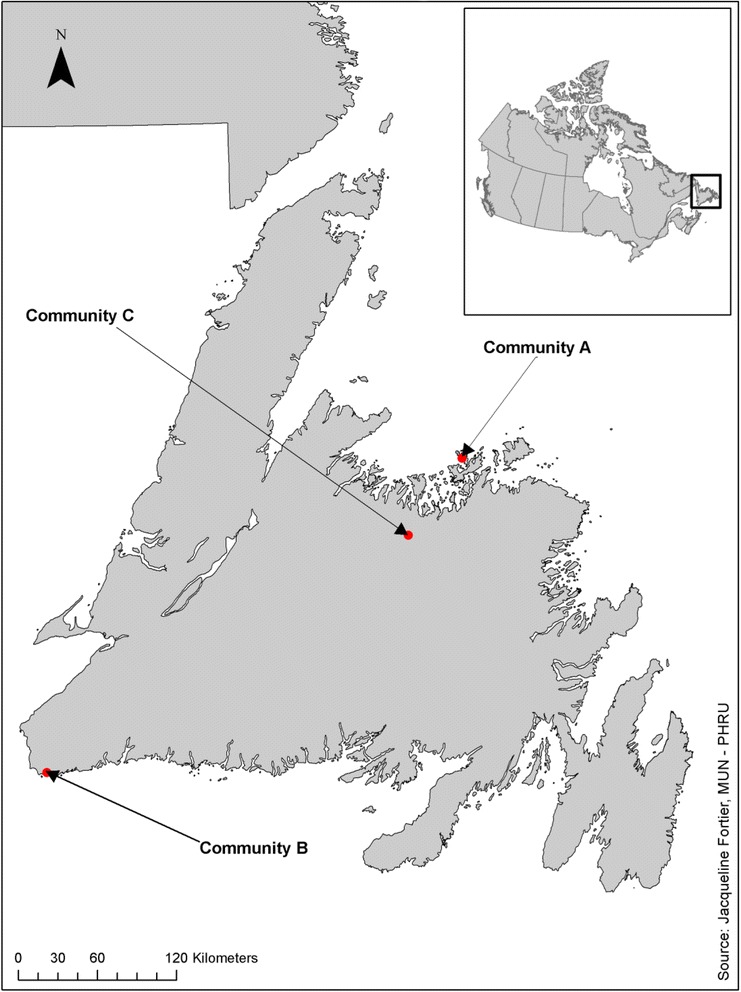
Results: Cervical cancer screening increased by 15.2 % (p < 0.001) to 67.4 % in the community where self-collection was available, versus a 2.9 % increase (p = 0.07) in the community that received educational campaigns and 8.5 % in the community with no intervention (p = 0.193). The difference in change in rates was statistically significant between communities A and B (p < 0.001) but not between communities A and C (p = 0.193). The response rate was low, with only 9.5 % (168/1760) of eligible women opting to self-collect for HPV testing. Of the women who completed self-collection, 15.5 % (26) had not had a Pap smear in the last 3 years, and 88.7 % reported that they were somewhat or very satisfied with self-collection.
Conclusions: Offering self-collected HPV testing increased the cervical cancer screening rate in a rural NL community. Women who completed self-collection had generally positive feelings about the experience. Offering HPV self-collection may increase screening compliance, particularly among women who do not present for routine Pap smears.
Figures

References
-
- Walboomers JM, Jacobs MV, Manos MM, Bosch FX, Kummer JA, Shah KV, Snijders PJ, Peto J, Meijer CJ, Muñoz N. Human papillomavirus is a necessary cause of invasive cervical cancer worldwide. J Pathol. 1999;189(1):12–9. doi: 10.1002/(SICI)1096-9896(199909)189:1<12::AID-PATH431>3.0.CO;2-F. - DOI - PubMed
Publication types
MeSH terms
Grants and funding
LinkOut - more resources
Full Text Sources
Other Literature Sources
Medical
Research Materials
